Commercial Roofing Along the 79th Street Corridor in Overland Park, KS
Home / Service Areas / Commercial Roofing Along the 79th Street Corridor
Get a Free Roof Assessment - Call 555-555-5555
What Property Owners Should Know
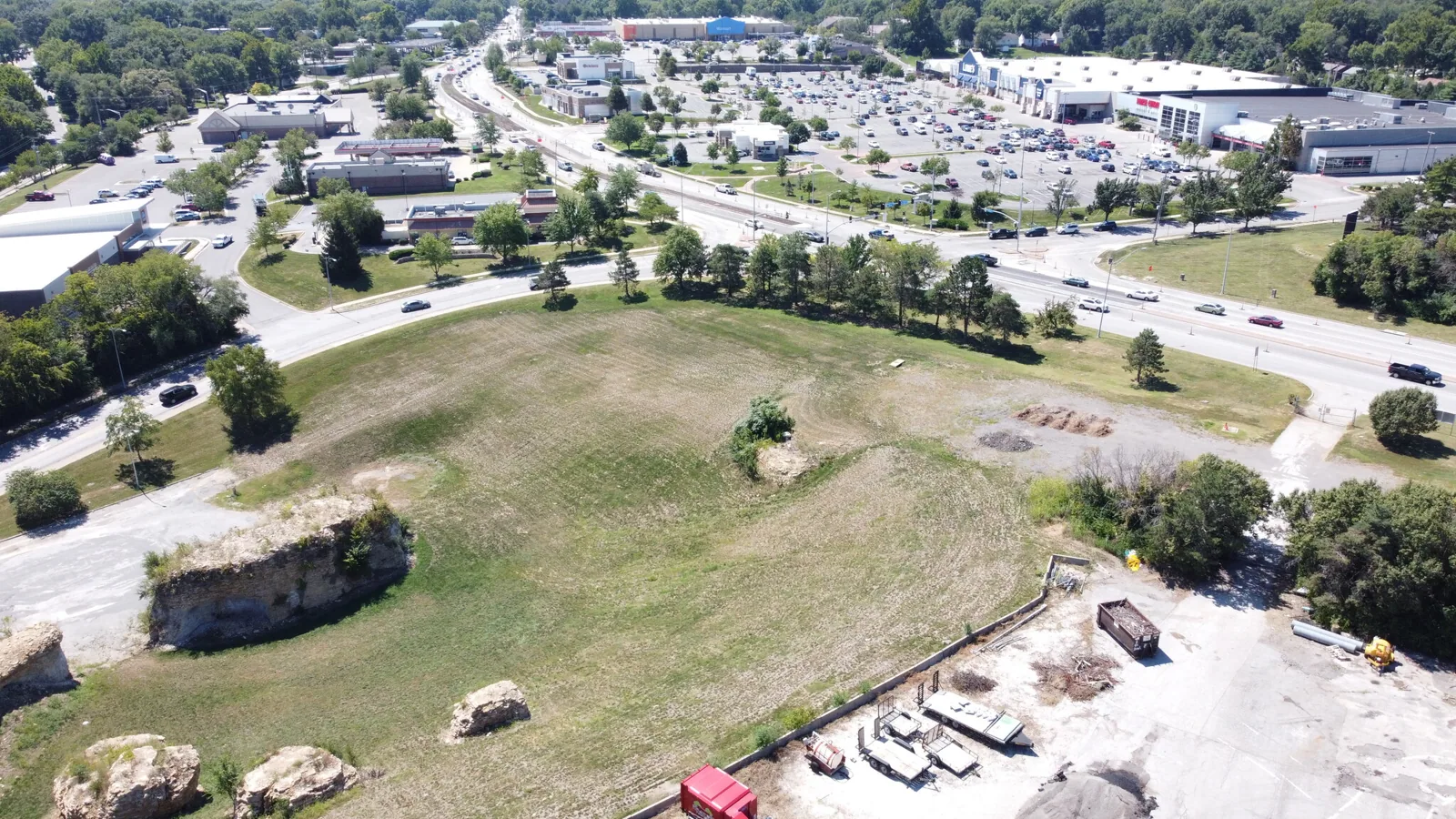
Roof work near Downtown Overland Park has to fit a close mix of businesses, civic spaces, entertainment and multifamily housing. A repair schedule that ignores the use below can block access or leave an opening exposed at the wrong time. We inspect the reported wet area, trace the roof detail that may be feeding it and set a work window that accounts for the property’s operating hours. The manager gets a defined repair footprint and a daily closure plan before the crew opens the assembly.
The city’s 79th Street study follows the corridor from Lamar Avenue to Frontage Road for about 2.5 miles, connecting downtown, Metcalf Avenue and Antioch Road. It also identifies multifamily housing near Frontage Road, downtown and east of Metcalf. Those facts support a practical focus on access and occupied use; they do not identify any one building’s roof type. We inspect the roof itself and compare conditions with the interior report. Schedule an inspection along 79th Street when a leak returns or a repair boundary is unclear.
Set a work window that fits
Buildings around the corridor can have separate schedules for storefronts, offices, residential entries and service areas. We ask which routes must stay open, where deliveries occur and whether the roof work could affect an exhaust or rooftop unit. Those details influence access and sequence. Before work begins, we identify the area below the roof opening, establish material staging and agree on who checks closure at the end of each workday.
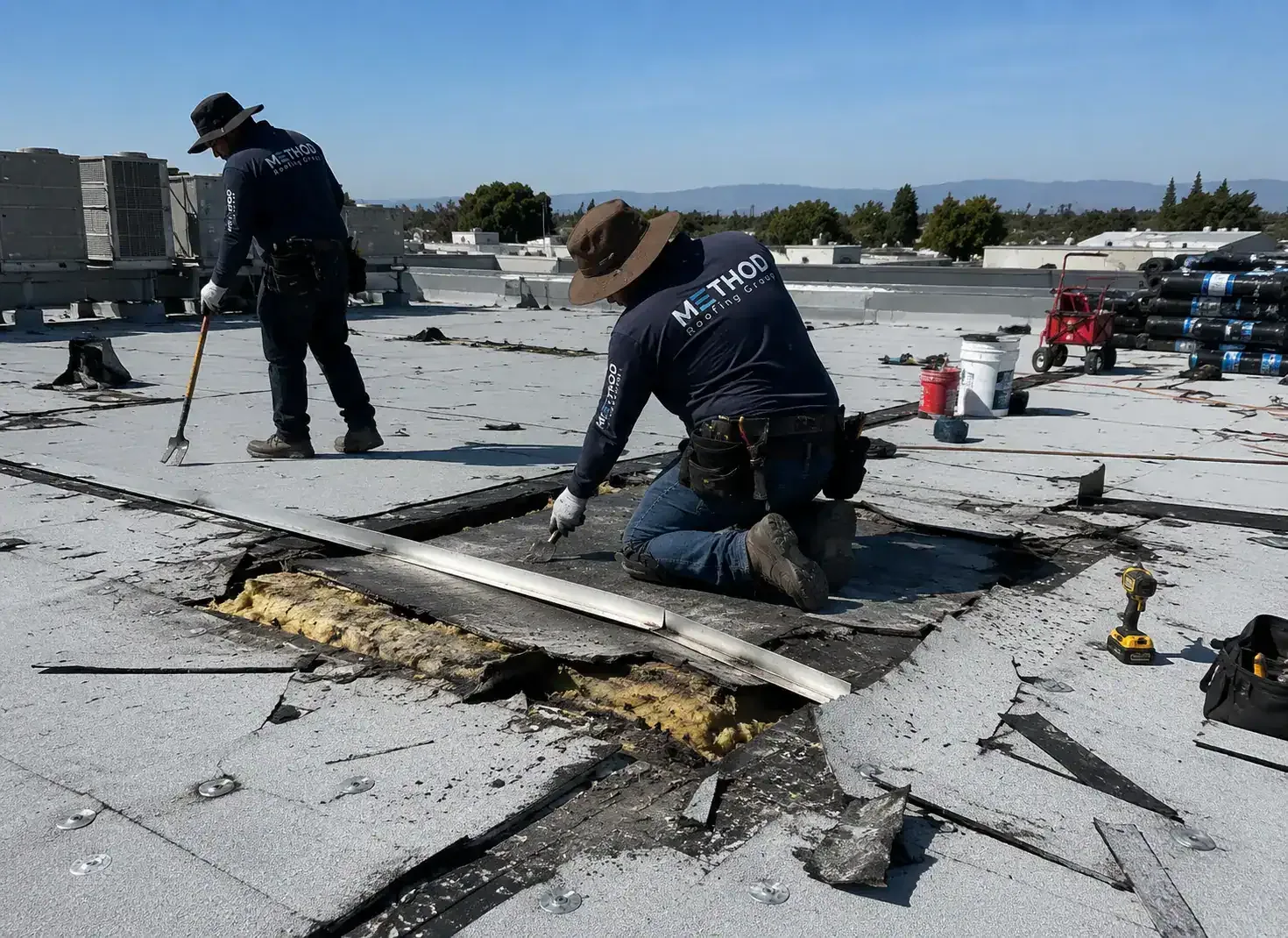
A narrow repair may keep disruption limited when the surrounding roof is dry and stable. If a wet area spreads beneath the membrane, the opening may need to extend to sound material. The manager should know that boundary before authorizing removal. We document the inspection findings and recommend either a contained patch or a larger scope based on the assembly. For recurring water entry, commercial leak repair starts with tracing the path, not covering the interior symptom. A clear plan matters as much as access when businesses and homes share a corridor.
Follow water past the stain
A ceiling mark does not locate the roof opening. Water may follow a deck, insulation joint or structural member before appearing inside. We inspect seams, penetrations, drains, walls and roof transitions around the reported area. On a property near the Lamar Avenue to Frontage Road corridor, the roof plan and prior repair notes can help identify additions or old tie-ins that deserve attention. We compare those records with current conditions and photograph what can be seen.
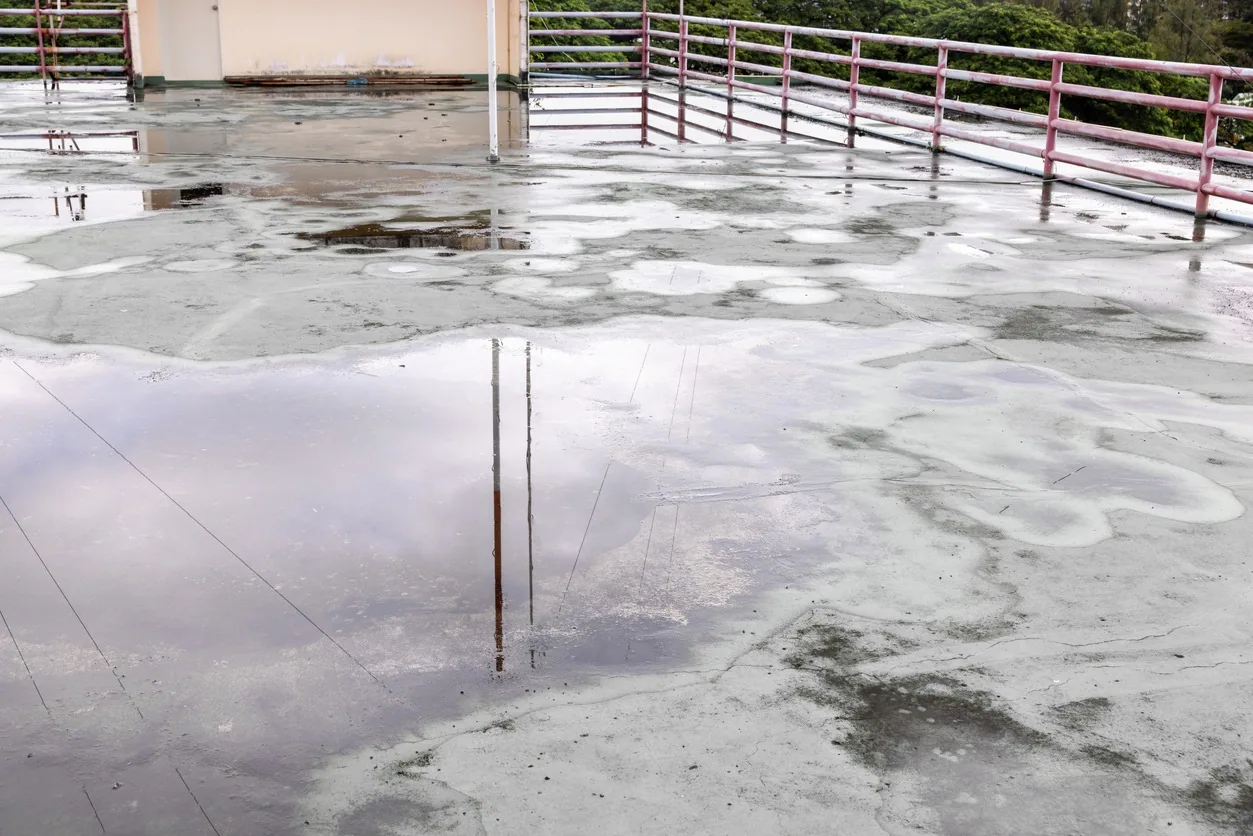
Drainage affects the diagnosis. A blocked drain or altered flow path can hold water at a low point and stress a seam or flashing. We check whether water can reach the drain and whether the roof surface or nearby curb changes that route. The inspection separates an active leak source from surrounding wear that may need future planning. If the problem includes ponding, ponding-water repair needs to address the drainage condition as well as the membrane symptom. The repair should stop at a sound transition and leave a record of any unresolved concealed area.
Choose work that fits the roof
A roof surface can conceal different layers below. We identify the membrane, inspect seams and check flashing at walls, curbs and drains. A patch must suit the material and preparation needs. If moisture reached insulation, the scope must include removal and replacement. The quote should state its footprint and separate known conditions from what may appear after opening.
If the roof is approaching broader renewal, compare a localized repair with sectional replacement and a possible recover. A recover is appropriate only when the existing assembly, moisture condition, attachment and drainage support another layer. It does not solve wet insulation or a failed deck. A recover assessment should include those checks.
Protect the opening
January’s Kansas City normals include 4.9 inches of average monthly snowfall, with early-month days in the upper 30s and nights near 20 degrees. For July, normal highs progress from 87 degrees early in the month to 89 later on, alongside 4.58 inches of normal precipitation. These station-based values provide seasonal context for Overland Park, not a specific-day forecast for the 79th Street corridor. Cold, heat and rain all change how a crew protects an opening and handles materials.
We set the work sequence around the actual forecast and the requirements of the selected roof system. The plan states how large an area can be opened, what temporary cover is available and how the crew verifies closure. A change in conditions can shift the daily work limit. For a membrane repair, a properly prepared, dry surface is part of the tie-in. For metal details, secure fastening and water-shedding laps need clear access. Managers should receive a status before a weather delay changes the next work window.
Keep routes and records clear
The 79th Street study connects downtown with Metcalf Avenue and Antioch Road, and the city plan documents bus stops in Downtown Overland Park. The city also identifies 151st Street as a retail corridor farther south. That corridor context makes street access and safe material handling part of early coordination. We confirm the approved staging point, roof access route and any property rules for delivery or lift equipment. Public transit and nearby activity do not determine a building’s private access arrangement, so the manager confirms the site-specific requirements.
Keep the inspection record with the repair authorization. It should identify roof areas, photos, observed material condition, the defined repair limit and any open question. If a storm or insurance file is involved, separate the reported event from conditions actually observed on the roof. The city has also documented downtown infill and redevelopment along the Metcalf corridor, making clear records useful where building work occurs alongside other property activity. We can inspect nearby Downtown Overland Park properties or the Metcalf Avenue corridor using the same roof-specific process.
Decide from visible conditions
Start with the leak, roof change or maintenance concern that affects the building today. Share where water appears, when it occurs, what repairs are already recorded and any access limits. We will inspect the related roof area, identify visible conditions and say what additional opening or testing would resolve uncertainty. The inspection can support a repair authorization, a broader replacement comparison or a maintenance plan without treating one stain as a full roof diagnosis.
For 79th Street properties, the work plan should fit the use below and the actual roof assembly. We document whether the proposed scope is a patch, a defined wet-area removal or a larger project, then identify a reasonable work window and daily closure step. If the roof cannot be safely opened during the requested period, the manager receives the limiting condition and a next option. Book the check before approving an expanding repair or delaying a leak that continues to affect occupied space.
Commercial Roofing Questions
Can you inspect a roof when apartments and businesses share the property?
Yes. We coordinate roof access and identify the work zone below before inspecting. If repair is needed, the work window should protect required entries and service routes and include a daily closure check.
Why might water show up far from the roof defect?
Water can travel through layers or along a structural path before it reaches a ceiling. We compare interior evidence with roof seams, penetrations, walls and drainage. The written findings identify the likely entry area and any uncertainty that remains.
Does the 79th Street study identify roof types?
No. It identifies the corridor, connections and multifamily housing locations. Roof type and condition are property-specific, so we inspect the membrane and details before recommending a repair method.
What belongs in a repair scope for a recurring leak?
The scope should state where the roof will be opened, how wet material will be handled, what compatible repair will tie into the existing system and how the area will close each day. We also note conditions that cannot be confirmed before opening.
How does weather affect a roof opening?
The forecast and material requirements set the work limit. Rain can require a smaller opening or delay, while cold or heat can change installation conditions. We build temporary protection and a closure check into the sequence.
Related Roofing Work

Set the inspection window
Schedule a 79th Street roof check. We will trace the reported water path, inspect the roof details and map access and closure around occupied use.