Commercial Roof Replacement in Overland Park, KS
Home / Commercial Roofing Services / Commercial Roof Replacement
Get a Free Roof Assessment - Call 555-555-5555
What Property Owners Should Know
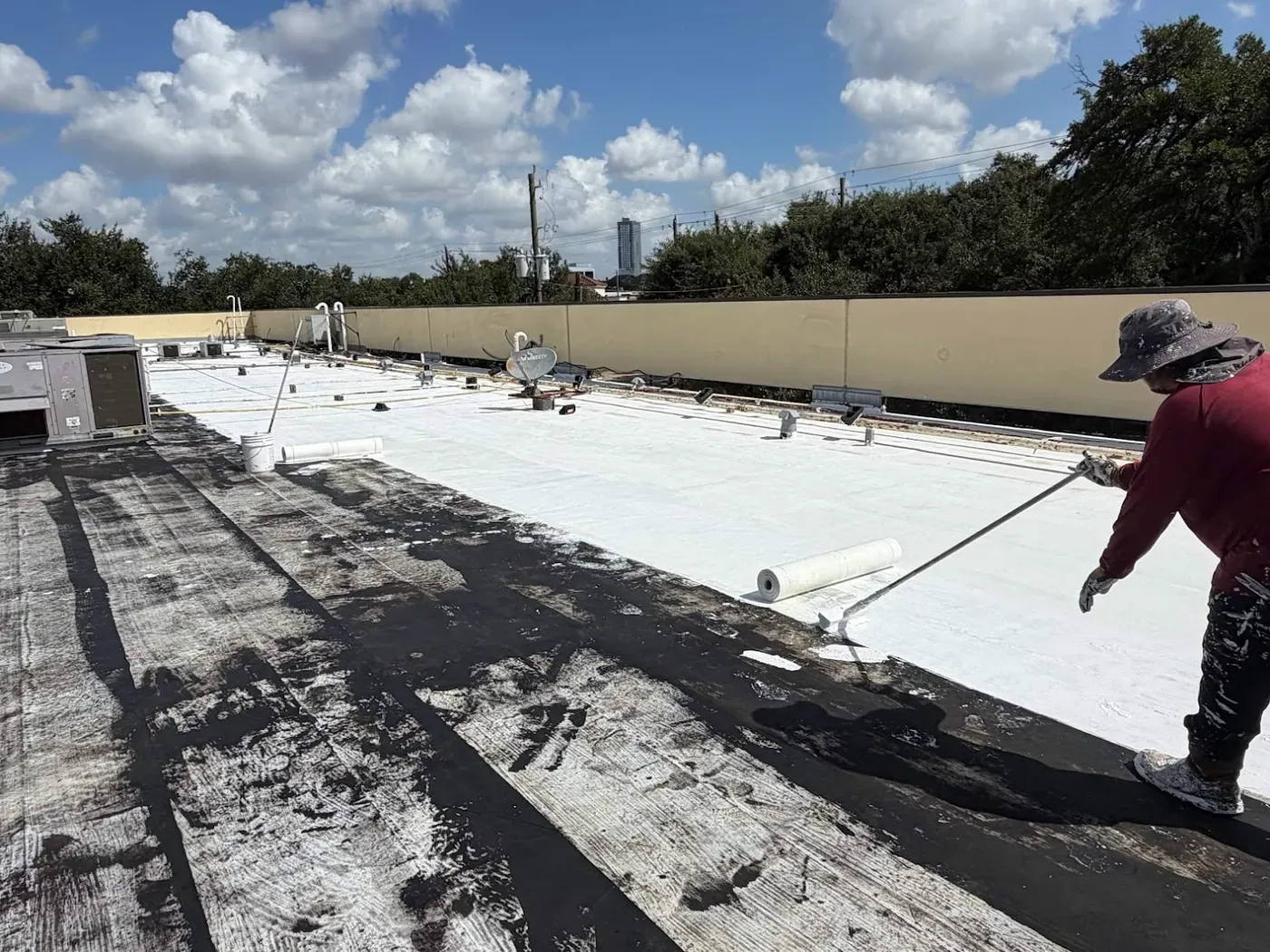
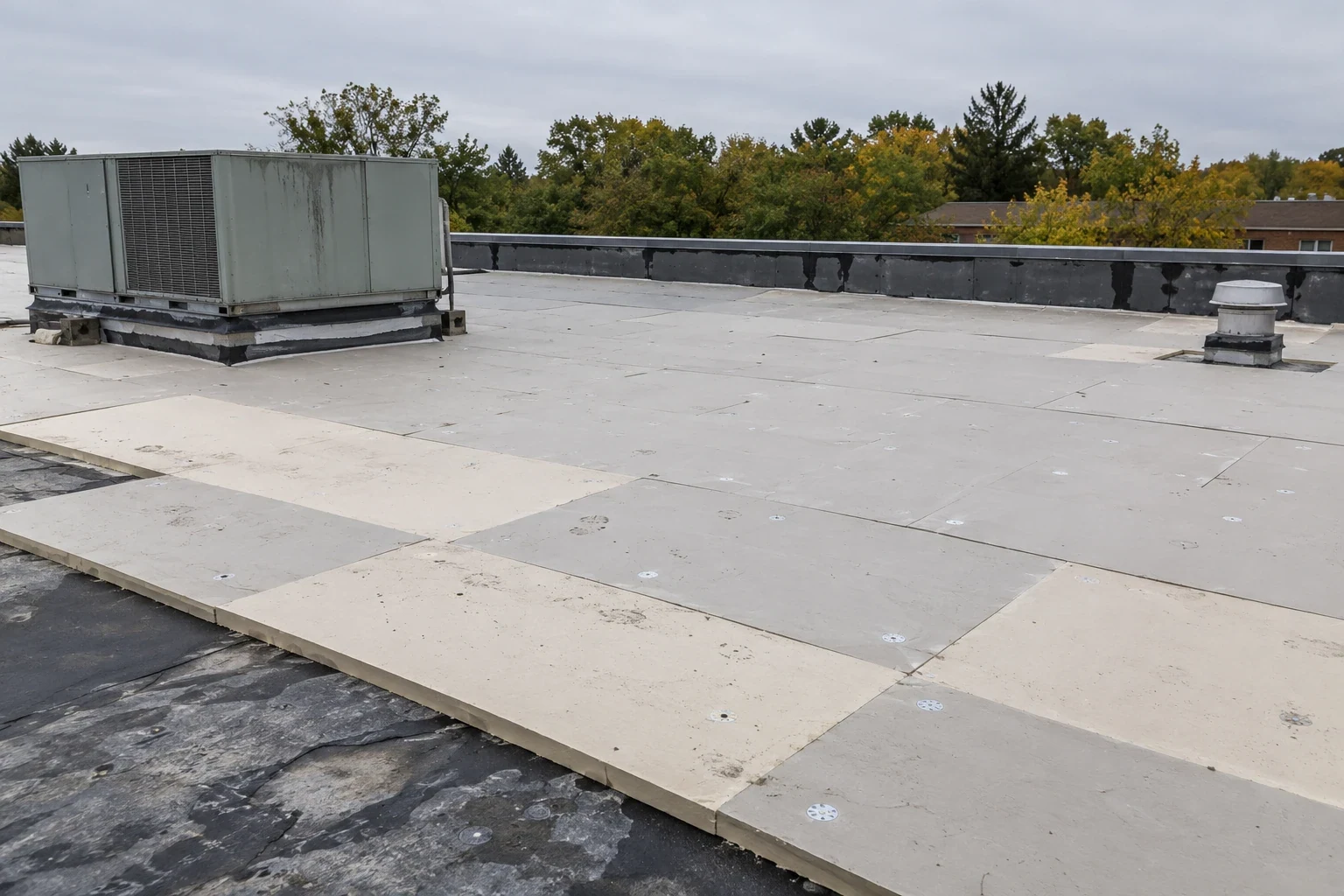
An exhaust curb sets a boundary for roof removal around it. Check the equipment operation and contaminated material before deciding where the replacement opening will stop. Commercial roof replacement in Overland Park, KS, needs a scope for these connections as well as the field membrane. We inspect the existing layers, identify wet areas and assess the details beside rooftop equipment. An old patch near discharge can require different preparation from a clean section farther away.
The estimate should explain which layers leave the building and how the curb connection will be rebuilt. Added insulation can reduce the available flashing height, so the equipment relationship needs checking before material is ordered. Downtown Overland Park combines business, multifamily and civic uses. The occupied space below helps set the shutdown window and daily protection requirement. We establish those limits with the manager and responsible equipment trade. A hands-on condition inspection can settle the supporting layers and curb detail before the replacement scope is selected.
Inspect what supports the new roof
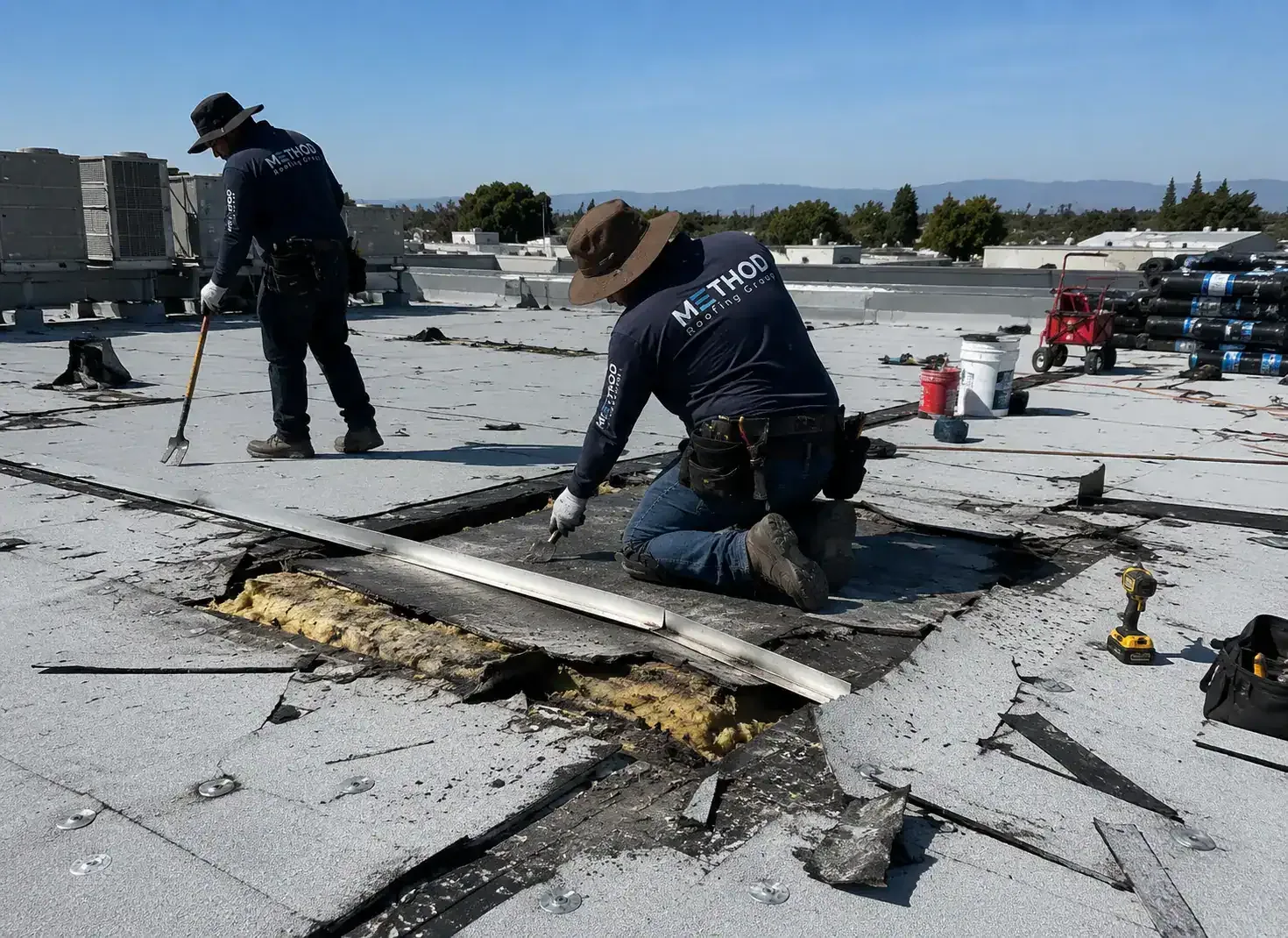
A soft area underfoot can indicate an assembly that has lost support. It can also conceal more than the surface suggests. We inspect the membrane, insulation, cover board and accessible deck conditions together. Seams, fasteners and perimeter attachment receive separate attention. Old patching tells us where failures have repeated. Drainage patterns show where water stays after rainfall. Roof openings, where appropriate and authorized, help establish the layers present and their condition.
Wet insulation cannot simply disappear beneath a new surface. It can affect thermal performance, attachment and the ability to form a stable substrate. We define its removal footprint and explain how that footprint will be confirmed as work advances. Corrosion, cracked decking or deteriorated wood changes the next step. Structural concerns may need evaluation before a roofing assembly is selected. These findings distinguish replacement from a recover over a suitable existing assembly. The two approaches have different exposure, disposal and preparation requirements.
Keep the known scope separate from conditions that are concealed. We describe an allowance or decision process for deck damage discovered during removal. You can then review what triggers additional work and how it will be recorded. That is more useful than an estimate that quietly assumes every concealed component is sound.
Compare the complete assemblies
A membrane name does not settle the replacement. Insulation thickness, drainage, fastening, perimeter details and rooftop equipment connections affect the result. We compare assemblies against the actual building use. A heated office and an unconditioned storage building may require different thermal decisions. Access for equipment service affects the protection needed on the roof surface. Chemical exposure or restaurant exhaust can narrow material choices around particular equipment.
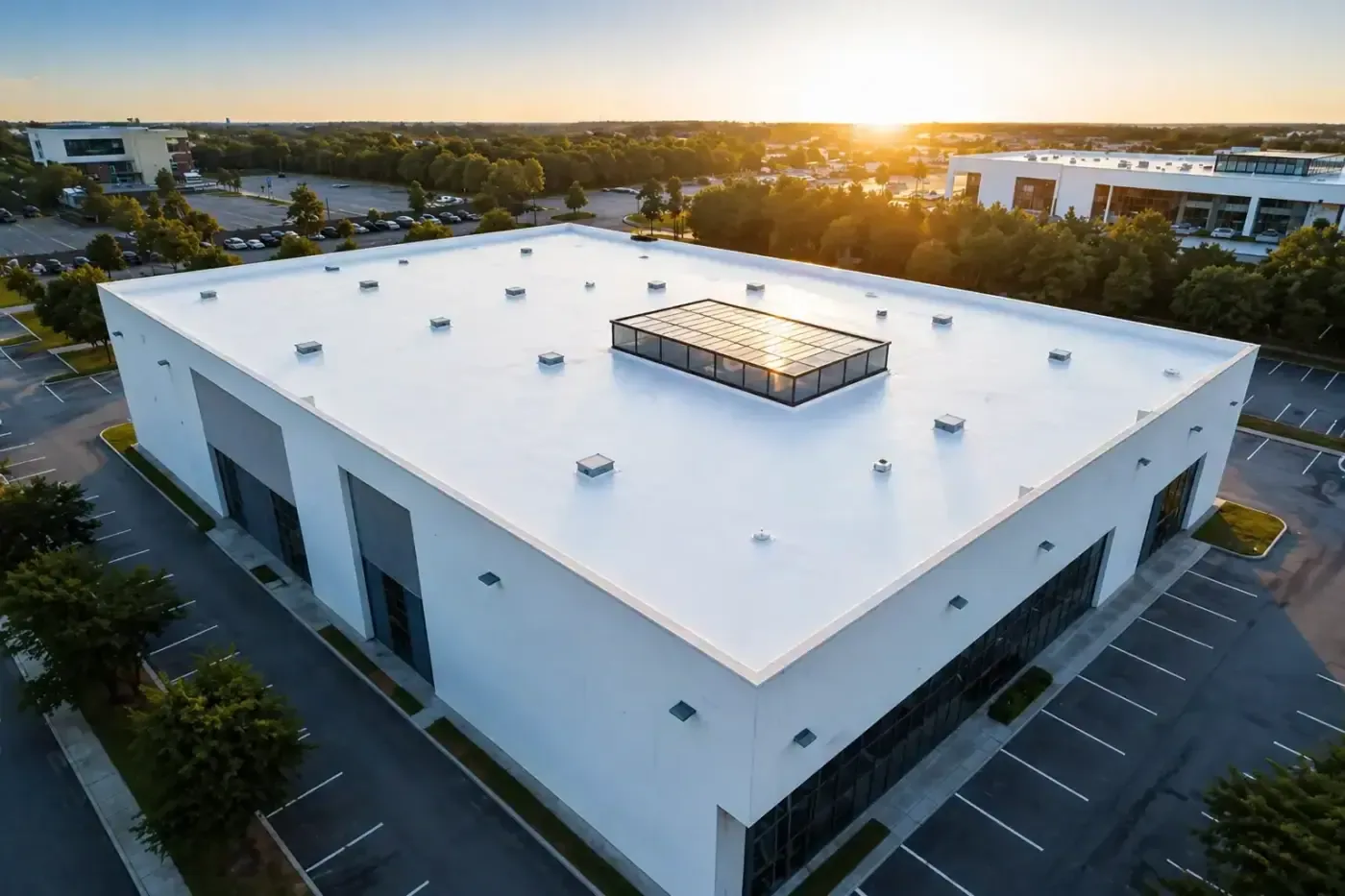
A TPO roofing assembly may suit a building when its attachment, seam work and flashing details are properly designed. Other conditions may call for a different membrane or metal solution. We explain those choices in terms of the roof you have. Product compatibility matters at adhesives, sealants and transitions. Existing equipment supports need enough clearance for the finished roof height. Raising the surface without adjusting curbs can create a short flashing detail that becomes difficult to maintain.
Overland Park has adopted the 2024 IBC and 2024 IECC with local amendments. We check the applicable requirements for the proposed work rather than treating a previous roof specification as current. The scope also needs to address insulation and cover-board preparation. Ask us to compare complete assemblies, including the supporting layers, so the proposals can be assessed on the same basis.
Limit the daily opening
An open roof section needs a defined closing method. We set the area that can be removed, rebuilt and protected within the available work window. The limit depends on weather, assembly details, roof access and the building activities below. A difficult curb or drain transition can take longer than an unobstructed field area. We account for that difference before setting a daily removal target.
Regional January temperatures include daytime readings above freezing and overnight lows below it. Cold affects adhesive application and makes exposed water a more serious concern. Regional July heat brings a different handling and scheduling problem. We select the work window against the material instructions and actual forecast. Temporary protection must address runoff as well as the opening itself. Rain can travel from an adjacent section toward unfinished work if the drain path is ignored.
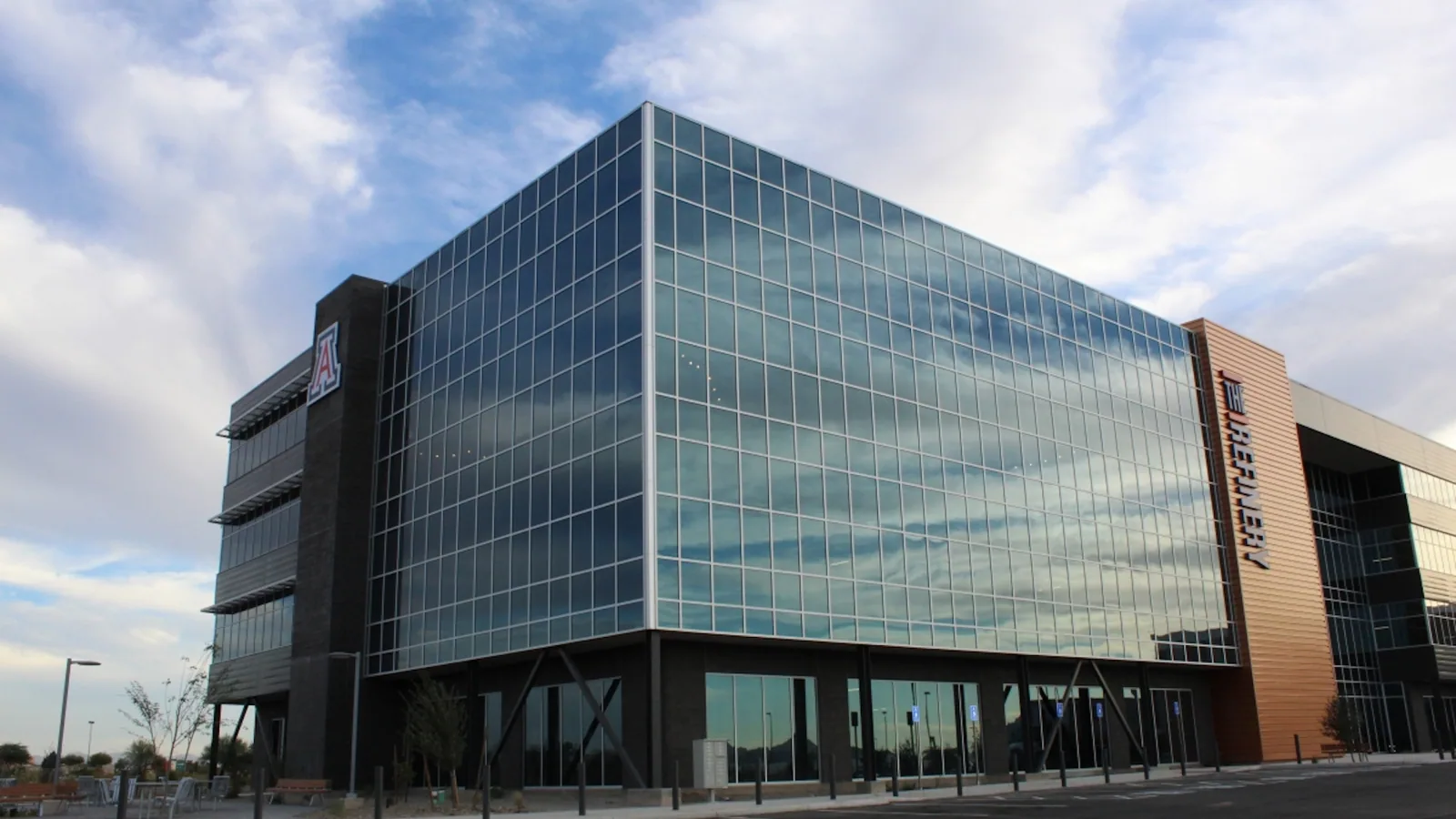
The property manager needs the daily closure procedure, delivery route and occupied-use restrictions before demolition starts. For office building roof work, we coordinate with sensitive rooms, deliveries and employee access. Noise and odor may require different hours in particular spaces. Equipment shutdowns need separate agreement. These are working limits, not a promise that roofing can happen without disruption. Clear limits make the disruption manageable and identify who needs notice before each stage.
Price the removal and detail work
Multiple existing roof layers increase removal and disposal work. Wet areas enlarge the insulation replacement scope. Limited lift access, restricted loading areas and complicated equipment layouts can increase handling time. Drain relocation, tapered insulation and curb adjustments add work beyond installing the field membrane. We identify those drivers so the manager can see what is being purchased.
An occupied retail corridor creates additional timing decisions. Along 95th Street and Metcalf Avenue, retail activity and corporate offices share the broader area. Delivery access and employee parking can compete with roofing staging. We review the particular property, then place the staging where it can function. At properties near 95th Street and Metcalf, we settle delivery and parking access before defining where roofing materials can be staged.
A low initial price can omit preparation that another proposal includes. Compare deck assumptions, disposal, edge treatment, insulation and temporary protection before comparing totals. We describe the work sequence and how concealed findings will be handled. Waiting after widespread deterioration can extend moisture damage into supporting layers. Where replacement can be planned, scheduling the investigation early leaves more time to resolve material choices and access constraints before an active leak forces the timetable.
Close out the roof for maintenance
The finished roof still needs drains cleared and details checked. We walk the completed work, review transitions and assemble photos that help the manager understand the assembly. Product and warranty documents should match the work installed and any coverage actually issued. The issuing manufacturer or other warranty provider sets those terms.
We also identify access routes for future equipment service. A new surface can be damaged by unprotected trade traffic or abandoned debris. Planned roof maintenance helps keep drainage and vulnerable details in view. Schedule the replacement check with the building use, recent leak history and access restrictions ready. We will establish the work limits before the old roof is opened.
Commercial Roofing Questions
Can we replace only one roof section?
A separate roof area may be a practical phase if its edges, drains and connections can be closed correctly. We inspect the tie-in and explain how the retained section will be protected.
What happens if the deck is damaged under the insulation?
We document the exposed condition and stop at the agreed decision point. The repair must provide a suitable support before the new assembly is installed. Structural damage may require additional evaluation.
Should the new roof copy the old insulation thickness?
The proposed assembly needs a fresh check of applicable energy requirements, drainage and curb clearance. Copying an old dimension can carry an old shortcoming into the replacement.
Can equipment service continue during removal?
Access can be scheduled where safe routes remain available. Work near a unit may restrict service temporarily. We settle those restrictions with the manager and equipment trade before opening that area.
Related Roofing Work
Set the work limits
Schedule a replacement inspection with your occupancy hours and roof records. We will define removal, access and daily closure.