
Commercial Roof Inspection in Overland Park, KS
Home / Commercial Roofing Services / Commercial Roof Inspection
Get a Free Roof Assessment - Call 555-555-5555
What Property Owners Should Know
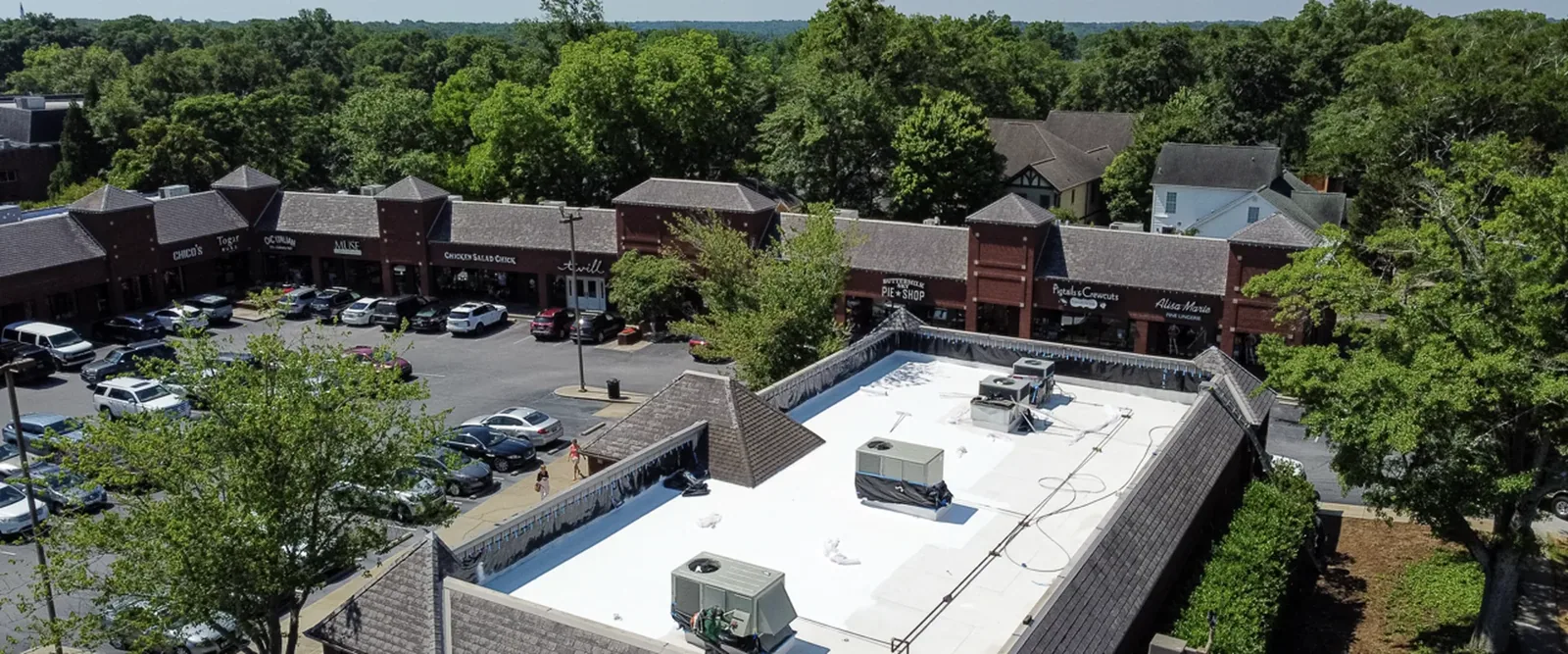
A property manager needs a work decision before renewing a roof budget. Start with the condition of the assembly, then put each finding against the building use. A commercial roof inspection in Overland Park, KS, should identify the components that need attention and explain what the inspection establishes. We examine the roof surface, details and drainage. We also ask about leaks, repairs and restrictions on access. Those records help connect a visible defect with the way the building has performed.
Downtown Overland Park combines business, multifamily and civic uses. A roof above mixed occupancy can need different access arrangements from a corporate office along College Boulevard. We settle those arrangements before the visit. The result is a written condition report with photos and practical next actions. The report can support a repair scope, a maintenance plan or further investigation. It should not turn one observation into a whole-roof replacement recommendation without the supporting findings.
Read the roof as an assembly
An uneven seam, loose termination or damaged sheet needs inspection in its surrounding context. We look at the field membrane and the supporting conditions visible from the roof. We check penetrations, curbs, edges and wall connections. Drain inlets and overflow paths receive separate attention. These components work together. A surface defect can become more serious where water remains or maintenance traffic repeatedly crosses it.
Existing patches tell part of the story. We compare their condition with previous repair records where available. A good-looking surface can still conceal wet material, while surface weathering may not by itself establish a need for removal. We identify which findings are direct observations and which require another investigation method. A targeted repair should follow the actual defect and its extent.
Rooftop equipment needs space for service and enough flashing clearance. We check obvious signs of interference or movement at the curb. An inspection can identify a concern without replacing the equipment trade or structural specialist. The report should explain when that separate evaluation is needed. This keeps the scope useful to the manager, who must know which roofing work can proceed and which decision depends on another component being addressed.
Check drainage under normal use
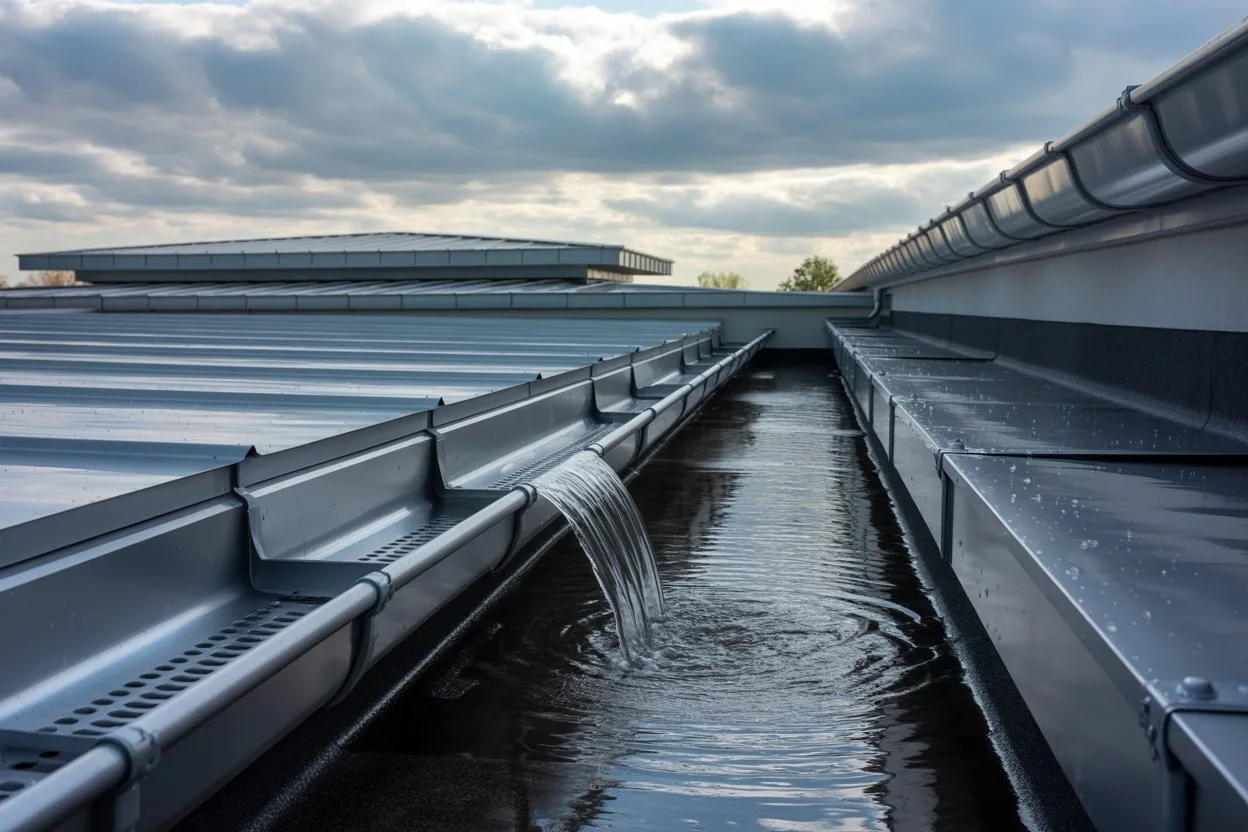
Debris beside an outlet can restrict the drain path. We examine inlets, scuppers and visible overflow routes, then note ponding evidence and the surrounding elevations. Clearing debris is different from correcting inadequate slope or a failed drain connection. The inspection should distinguish them. That distinction affects the repair material, the removal footprint and whether plumbing coordination is required.
Regional Kansas City July climatology includes substantial summer rainfall as well as heat. A hot season still needs functional drainage. In winter, cold and snowfall add different conditions at outlets and roof details. We assess the current roof and report the maintenance or detail work it requires. Weather history provides local context, not a substitute for observed damage. Drainage repairs should be tied to the specific obstruction, connection or elevation found.
At a retail property, water handling and work access can affect tenant operations. We note the roof access route and discuss practical restrictions with the manager. A report that recommends drain work should identify the outlet area and the conditions around it. It should also indicate whether the roof must be opened or equipment moved. Those details turn a general maintenance concern into work that can be planned.
Decide where testing adds value
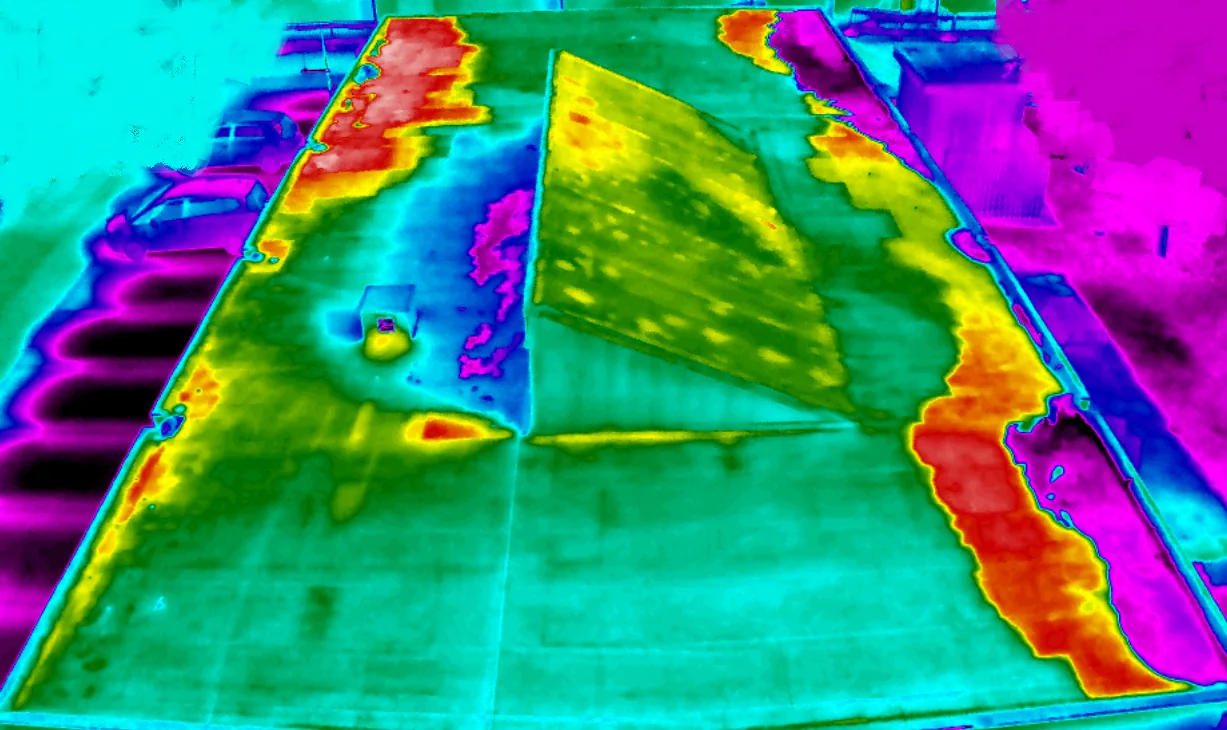
A soft area or unexplained leak may need information from beneath the surface. We discuss authorized test openings or moisture investigation where they would change the recommendation. The method must suit the assembly and conditions. A thermal moisture survey can identify patterns for verification, but the pattern alone does not establish every concealed layer. We explain how the suspected area will be checked.
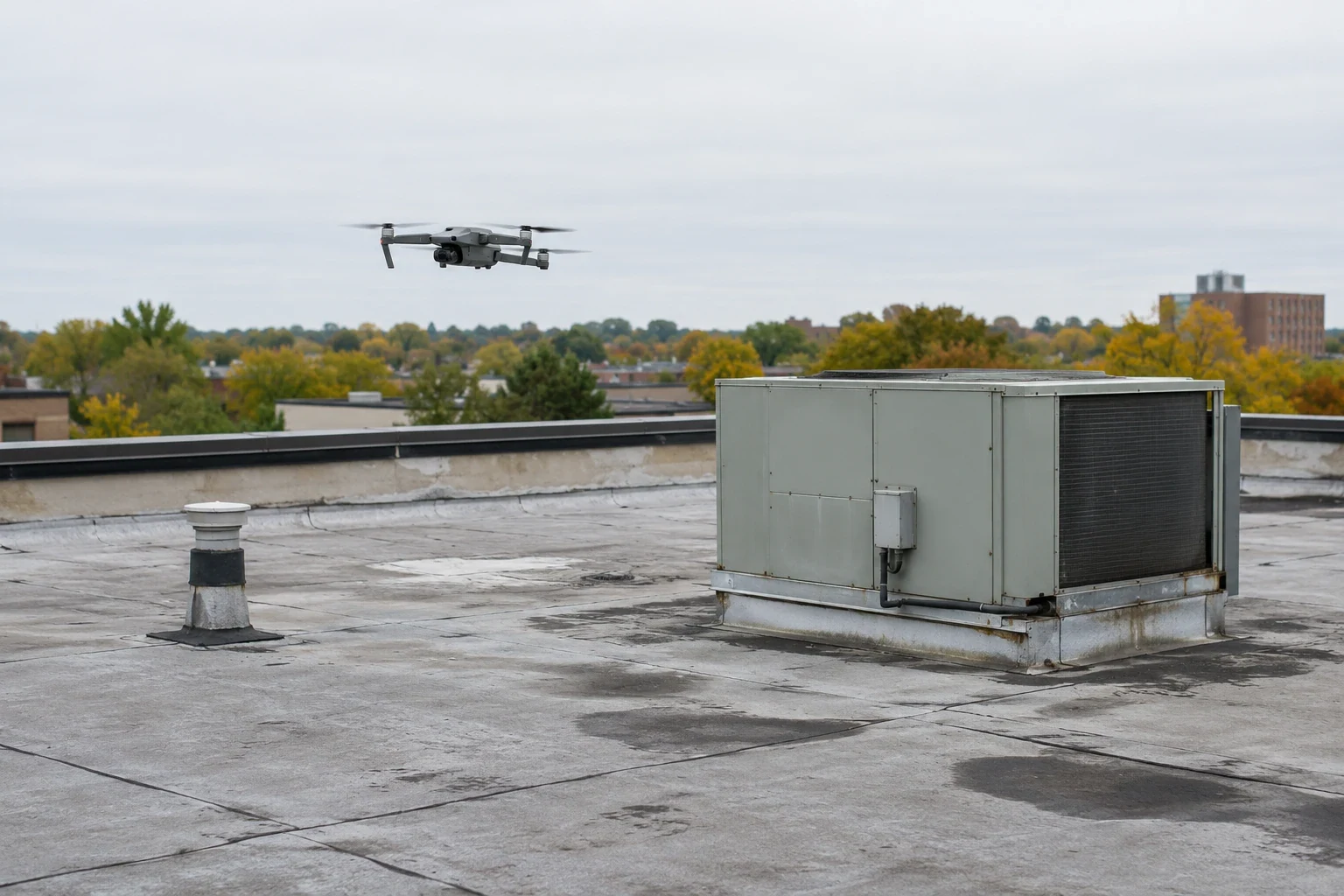
A drone survey can add a wider view of the roof layout and visible defects. It cannot replace a hands-on examination of a seam or a core sample where concealed conditions matter. We select the method against the question to be answered. Restricted access, unsafe surfaces and weather may change what can be inspected during the first visit. The report should identify those limits so the manager knows what remains unresolved.
Testing needs a defined closing procedure. A core opening must be repaired with suitable material, and any interior exposure needs protection. We agree the access and authorization before testing begins. The recommendation then separates observed condition from confirmed concealed findings. That is especially useful when deciding between a recover and removal. The manager can see what supports retaining an existing layer and what evidence still needs to be collected.
Rank work by consequence
A loose edge beside an occupied entrance has a different consequence from minor surface wear in a protected area. We consider active leakage, loose components, drainage restrictions and the spaces below. The report distinguishes urgent correction, planned repair and monitoring. Those priorities should come with reasons. A condition that threatens operations deserves a clear explanation of the next action, not merely a color-coded label.
For roof capital planning, we separate what is known now from budget decisions that require further investigation. A replacement forecast should reflect condition and repair options rather than an unsupported age-based schedule. Roof records can help, but the present assembly still needs inspection. Prior coatings, new equipment and repeated repairs may change what can be retained.
The College and Metcalf district includes a mixed-use planning focus. For an occupied property there, work priorities also need to account for access, noise and equipment operation. We identify those constraints with the manager rather than assuming the same construction hours fit every building. The findings can then be translated into a work sequence. Materials and weather limits may determine whether the urgent item can be permanently repaired immediately or needs temporary protection first.
Use the report to authorize work
A useful report connects each finding with its roof position, photograph and recommendation. We describe the repair footprint where it can be established and flag conditions that need more investigation. The manager should be able to distinguish a completed inspection from a proposed construction scope. Pricing and authorization for the actual repair remain a separate decision.
Keep the report with maintenance records and equipment changes. A later visit can compare the same details rather than begin without history. Share access restrictions, recent interior photos and previous roofing documents when arranging the inspection. We will check the assembly, establish practical priorities and explain the next work decision the findings support.
Commercial Roofing Questions
Can an inspection settle a recover decision in one visit?
Sometimes the visible condition and available records establish much of the answer. Concealed moisture, deck condition or unknown layers may still need testing. We identify that need before recommending retained layers.
What will photos show that a repair list does not?
Photos locate the defect and show the surrounding detail. They help the manager recognize the work area and compare later conditions. The written recommendation explains what the image alone cannot establish.
Should we provide an old roof specification?
Yes. Existing specifications, warranty documents and repair records can guide identification of the assembly. We still compare them with current conditions because later alterations may have changed the roof.
Can inaccessible areas be included in the report?
We identify them as inspection limits and explain the access needed. Accessible observations can still support specific actions, but uninspected areas should not be described as fully evaluated.
Related Roofing Work
Set the work limits
Schedule the inspection with access details and roof records. We will connect the condition findings to repair and budget decisions.