Commercial Roofing in Downtown Overland Park, KS
Home / Service Areas / Downtown Overland Park
Get a Free Roof Assessment - Call 555-555-5555
What Property Owners Should Know
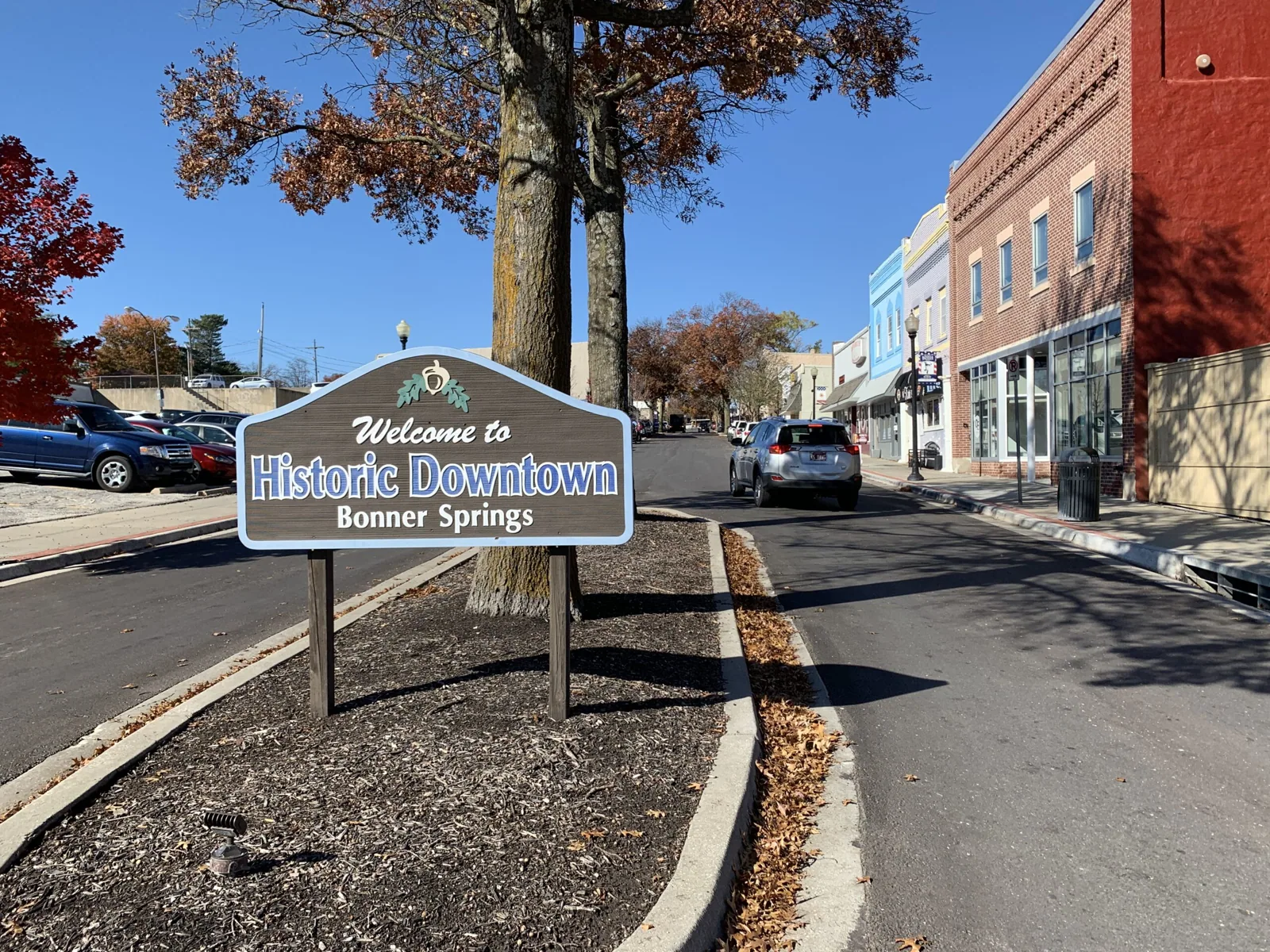
Occupied mixed-use buildings need roof access that leaves business doors, apartment entries and civic routines usable. Downtown Overland Park combines those uses, so we begin by mapping the roof work to the operating areas below. The first visit locates the reported leak, checks the nearest flashing and follows the drain path. A photo of the interior stain helps us choose where to look. It does not set the repair footprint by itself.
The 79th Street plan connects downtown infill with the Metcalf corridor, while the area also has bus stops tied to nearby arterials. That access pattern makes a clear loading and closure plan useful before material reaches the roof. We identify which entrance can receive equipment, where occupants need separation and when a roof opening must close. A manager can then compare a focused repair with a wider removal scope using the same access assumptions.
Set the daily boundary
Downtown work can sit above several uses that do not share one schedule. We ask which rooms, storefronts or shared paths must stay available, then translate those needs into a work window. The plan marks where materials can be staged and which roof section can be opened without leaving an unprotected edge at closing time. If a tenant needs a quiet period or a service entrance must remain clear, that limit belongs in the scope before the crew is assigned.
The Metcalf Avenue corridor and the nearby bus network are useful location context, not proof of the access at an individual property. We confirm the actual loading route and roof hatch with the manager. A narrow delivery route may call for smaller lifts or additional handling. A shared entrance may require a separate protection zone. We record those choices in the estimate so an apparent repair saving does not depend on access the building cannot provide.
Trace the water route
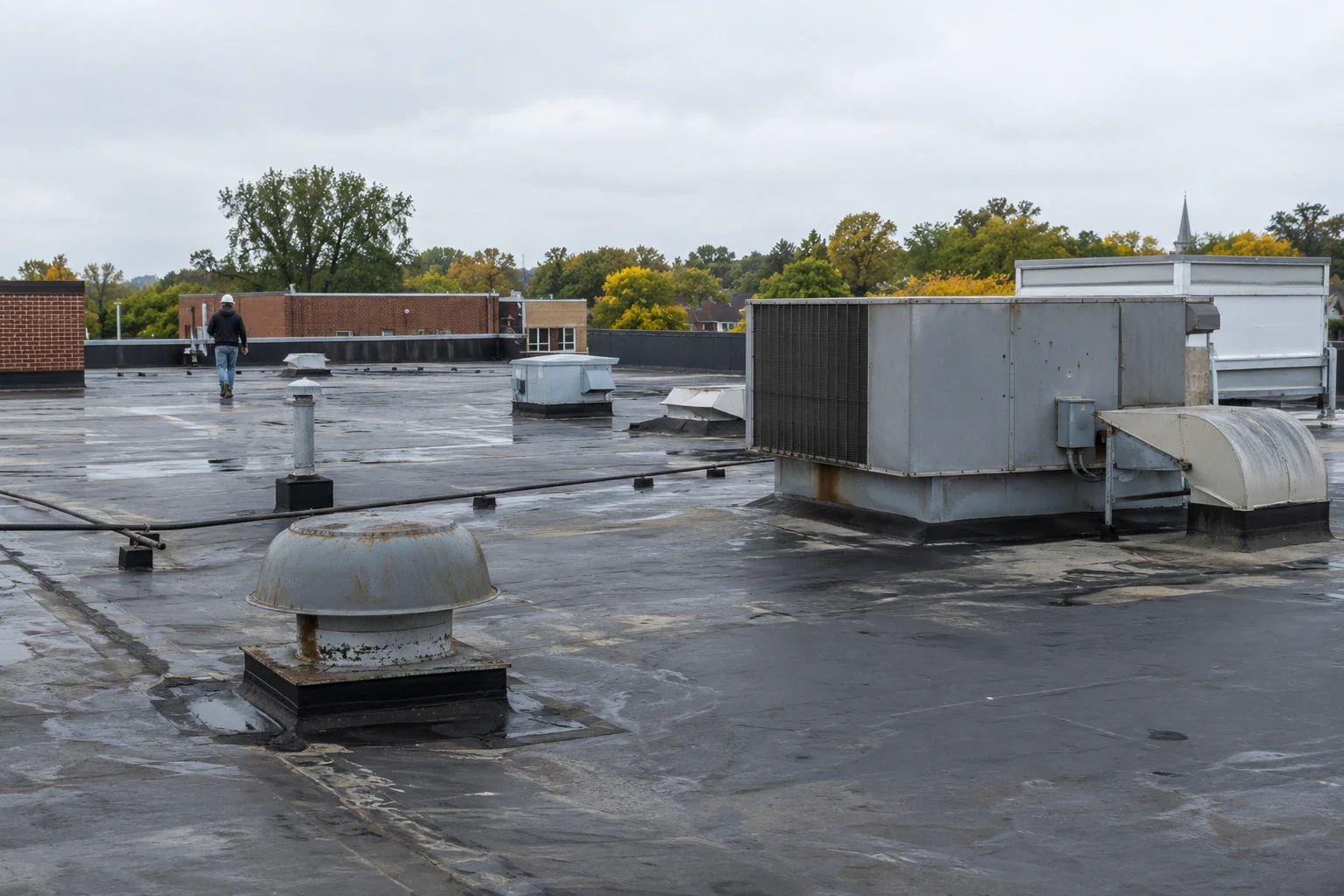
A leak report starts a roof examination, not a guess at the opening above the ceiling. We identify the interior location and timing, then inspect the membrane, wall transitions, equipment curbs and nearby penetrations that could carry water. We check how the roof drains and whether an upper surface discharges onto the area in question. Photographs show the detail and its position in the roof field. When an accessible observation cannot settle a concealed layer, we name the next examination needed.
Downtown infill can put older and newer construction close together. The city plan documents redevelopment, but it does not establish any building’s assembly. We verify membrane type, repair history and edge conditions on the property itself. A roof inspection records what was visible and where access stopped. That distinction matters when a coating, recover or replacement is considered, because the existing insulation and attachment must be evaluated before a new layer is selected.
Plan for the regional season
Overland Park has recorded hail and tornado activity. A May 2000 hailstorm crossed Merriam, Overland Park and Leawood, and a June 2022 EF-1 tornado traveled from Lenexa through Overland Park. Those records do not establish damage to a particular downtown roof. After a reported event, we compare the actual surface and edge details with prior photographs when available, then separate temporary protection from permanent repairs.
Regional Kansas City winter normals include cold January conditions, while July brings normal precipitation as well as heat. We check the selected material's application requirements against the planned work window. Cold can affect adhesive and temporary protection; a summer shower can interrupt an open removal area. Each phase needs a defined dry-in and daily closure. If the forecast changes, the manager receives a clear point at which the sequence pauses and the roof is left protected.
Keep water moving to the outlet
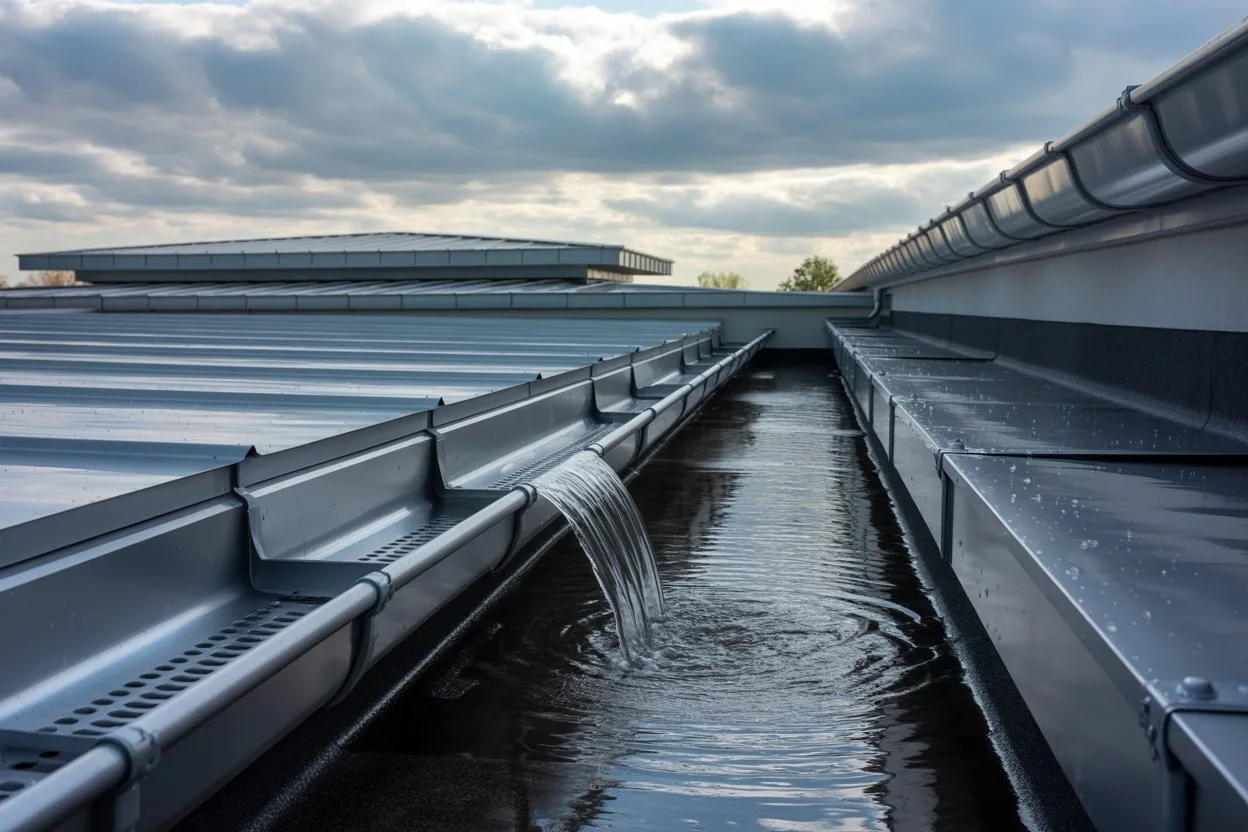
Downtown roofs often collect discharge from equipment, parapets and adjoining roof levels. Our inspection traces the visible path from the high point toward the inlet and outlet. We note debris, settled areas, open seams and flashing that sits in a recurring wet area. A blocked drain can be a maintenance item. A low spot or failed connection may require a construction correction. We distinguish those findings so the manager does not authorize membrane replacement to solve a drain obstruction.
Where a repair changes the finished roof height, we recheck the drain approach and curb clearances. A cover board or recover layer can alter the transition into an existing outlet. Drain and scupper work should include the connection as well as the visible opening. We record whether concealed piping remains outside the examination. Downtown's connected streets and arterial network do not say how water leaves an individual building; the roof and discharge details decide that scope.
Compare repair and replacement
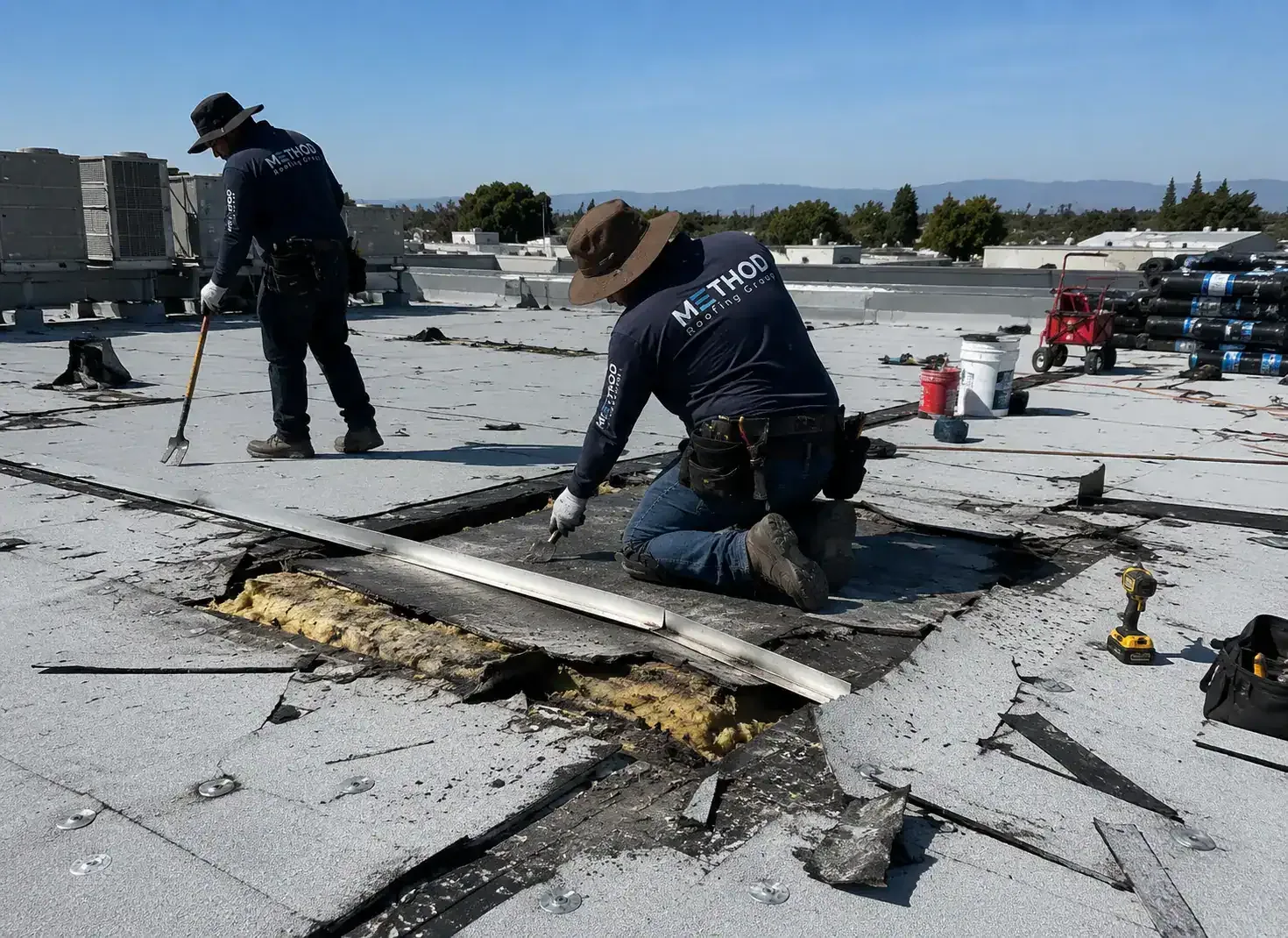
A repair is suitable when the surrounding assembly can accept a local correction. We identify the failed detail, confirm that adjoining membrane can be prepared and define the repair footprint. If wet insulation, failed attachment or repeated movement extends beyond that boundary, the scope changes. A selective opening can answer a concealed question before a larger commitment. We show what that investigation will establish and what finding would expand the work instead of treating an allowance as a measured condition.
A recover may retain a sound existing layer, but added weight, trapped moisture, drain height and flashing clearance need review. Replacement gives access to the substrate and allows reconstruction of the full assembly, with more removal and operational disruption. The recover assessment and replacement scope should use the same roof area and access plan. That lets a property manager compare preparation, temporary closure and future maintenance instead of comparing unlike estimates.
Leave a usable work record
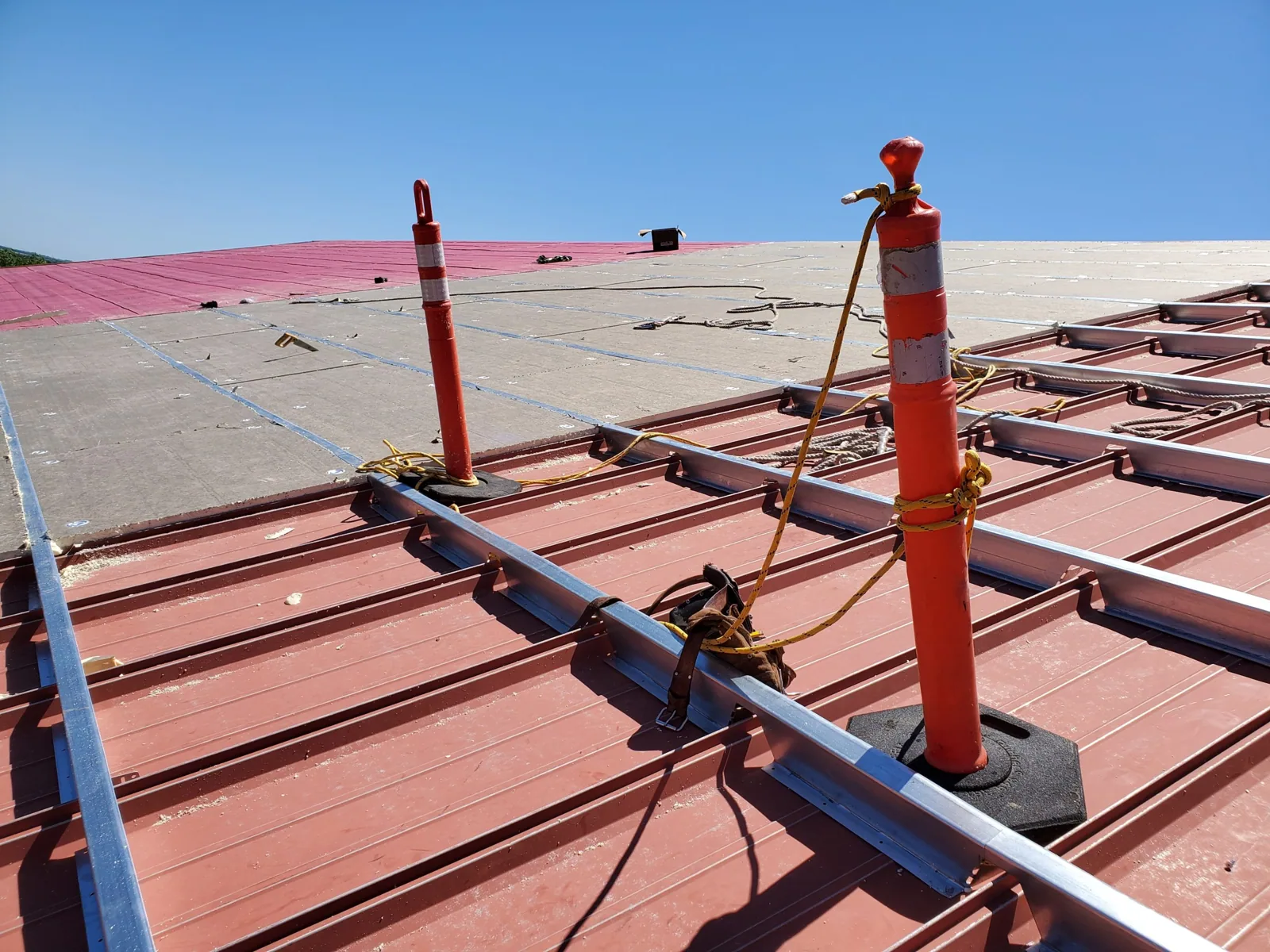
Before the crew opens the roof, we confirm the approved boundary, material, staging area and daily closeout. Occupied rooms below need protection matched to the location and duration of the work. We keep removed material and temporary cover inside the planned work zone. If the opening uncovers a broader wet area or a different layer, work stops at a safe closure while the manager reviews the changed limit. The approval path should be clear before that decision arrives.
At closeout, photographs show preparation, the completed connection and any retained roof outside the repair. A condition report can preserve the finding for the next budget review. For another nearby work area, the College and Metcalf District has its own access and building constraints; one downtown sequence should not be copied across properties. Schedule an examination that settles the opening limit and work window before approving the repair.
Shared parapets and adjoining roof elevations deserve special attention where a building has been extended or changed. We photograph each transition and establish whether the new work connects to the original assembly or only meets its surface. The 79th Street plan's redevelopment context makes that a sensible question, but we confirm it on the roof rather than infer it from the neighborhood. The 79th Street corridor has its own district-level planning facts. The repair estimate names the interface, preparation and tie-in, then notes any neighboring section left untouched. That distinction helps a manager understand what the price resolves and what still needs examination.
Commercial Roofing Questions
Will a stain identify the repair location?
It narrows the investigation. We trace the roof route and test the accessible details before setting a repair boundary.
Can tenants remain in the building?
Often, with a defined work window and protection plan. We confirm the actual room, entrance and operating limits before scheduling.
When does a recover make sense?
Only after the existing assembly, moisture, added weight and drain transitions have been checked against the proposed layer.
What will the manager receive at closeout?
A located photo record, work completed, retained conditions and any follow-up examination that remains open.
Related Roofing Work

Set the roof work window
Ask Commercial Roofing Overland Park to inspect the roof, confirm the repair limit and schedule a work window that fits the property.