Commercial Roofing Services in Overland Park, KS
Home / Commercial Roofing Services
Get a Free Roof Assessment - Call 555-555-5555
An active leak, a worn roof and a planned replacement need different decisions. Commercial Roofing Overland Park starts with the building use and roof condition, then defines the work area, material and daily closure. We inspect low-slope and metal assemblies, trace water entry and document repair limits before pricing a project. The service plan should tell the manager what can proceed, what needs testing and how the building stays protected between shifts.
Downtown Overland Park combines businesses, civic spaces, entertainment and multifamily housing. Corporate offices, healthcare companies and retail uses also shape the city’s commercial mix. Each setting can carry different access and operating limits. Use the service that matches the decision at hand, then bring the roof record and access rules to the inspection.
Start with the roof condition
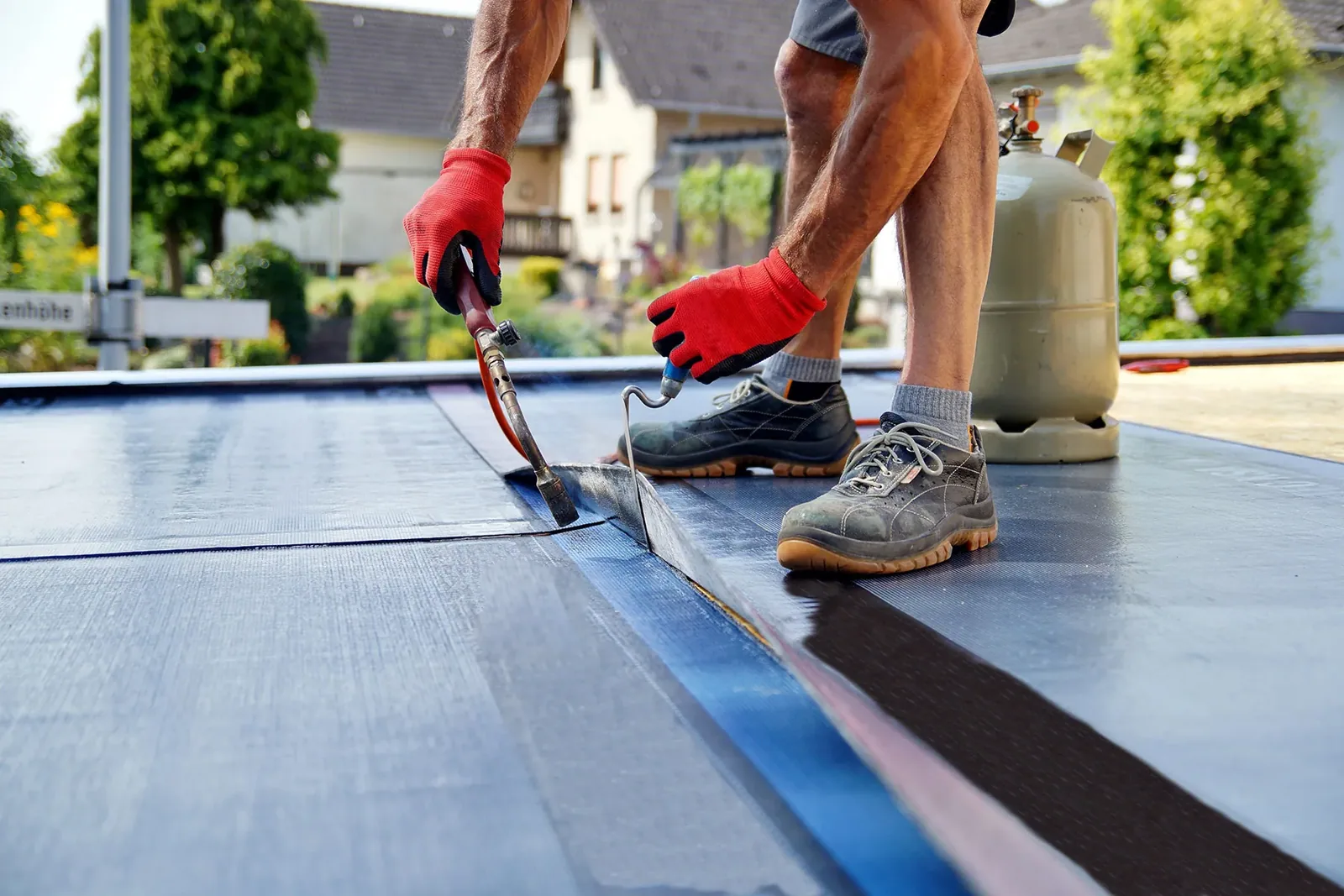
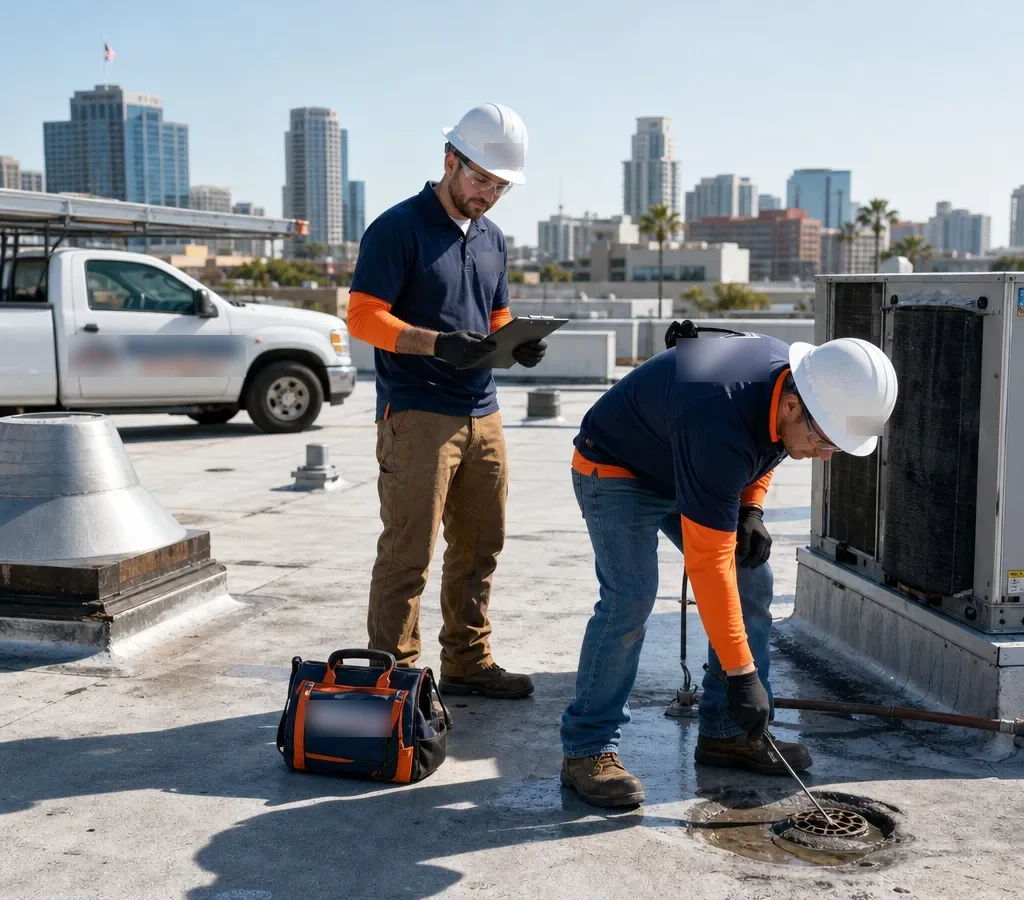
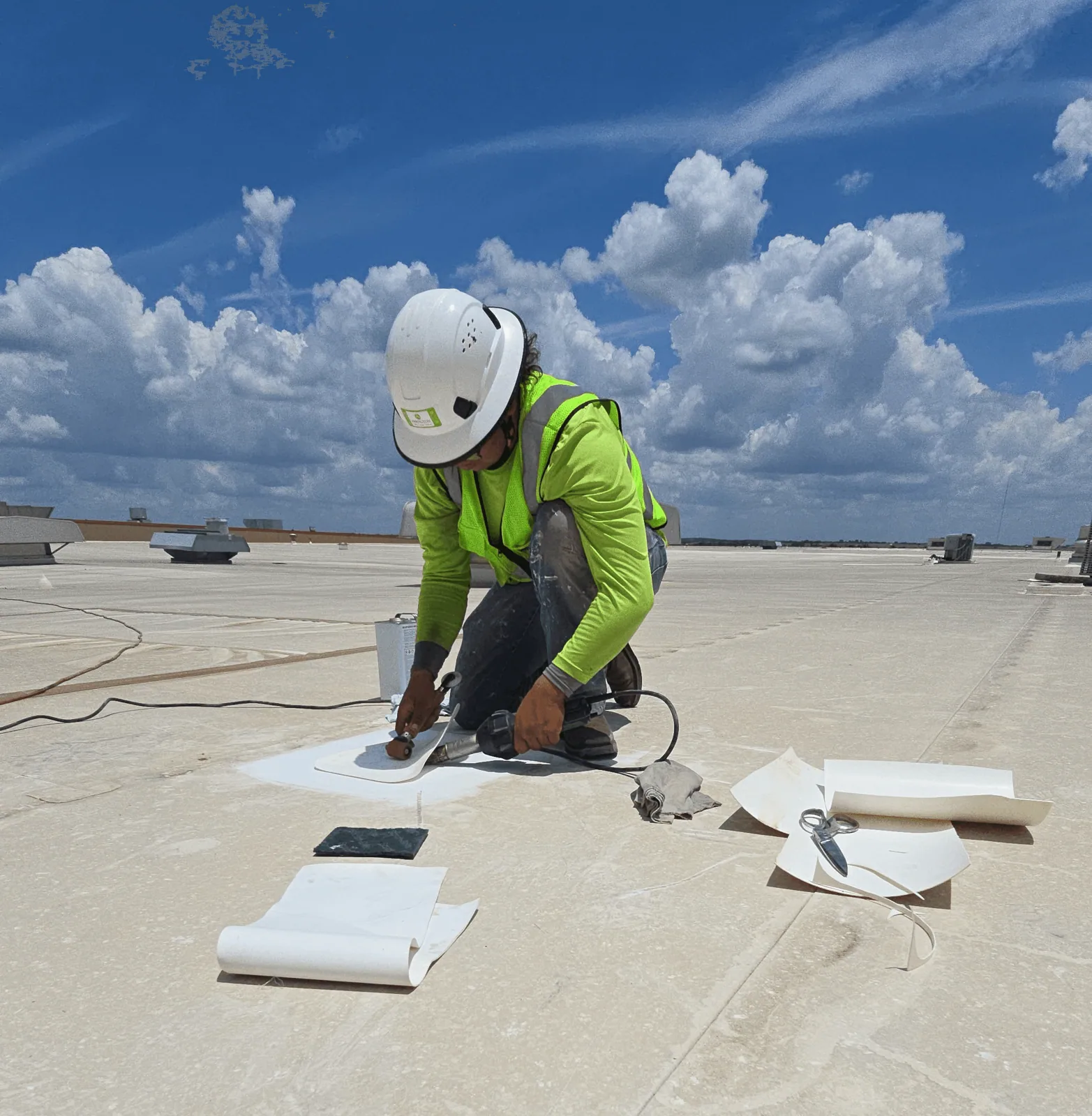
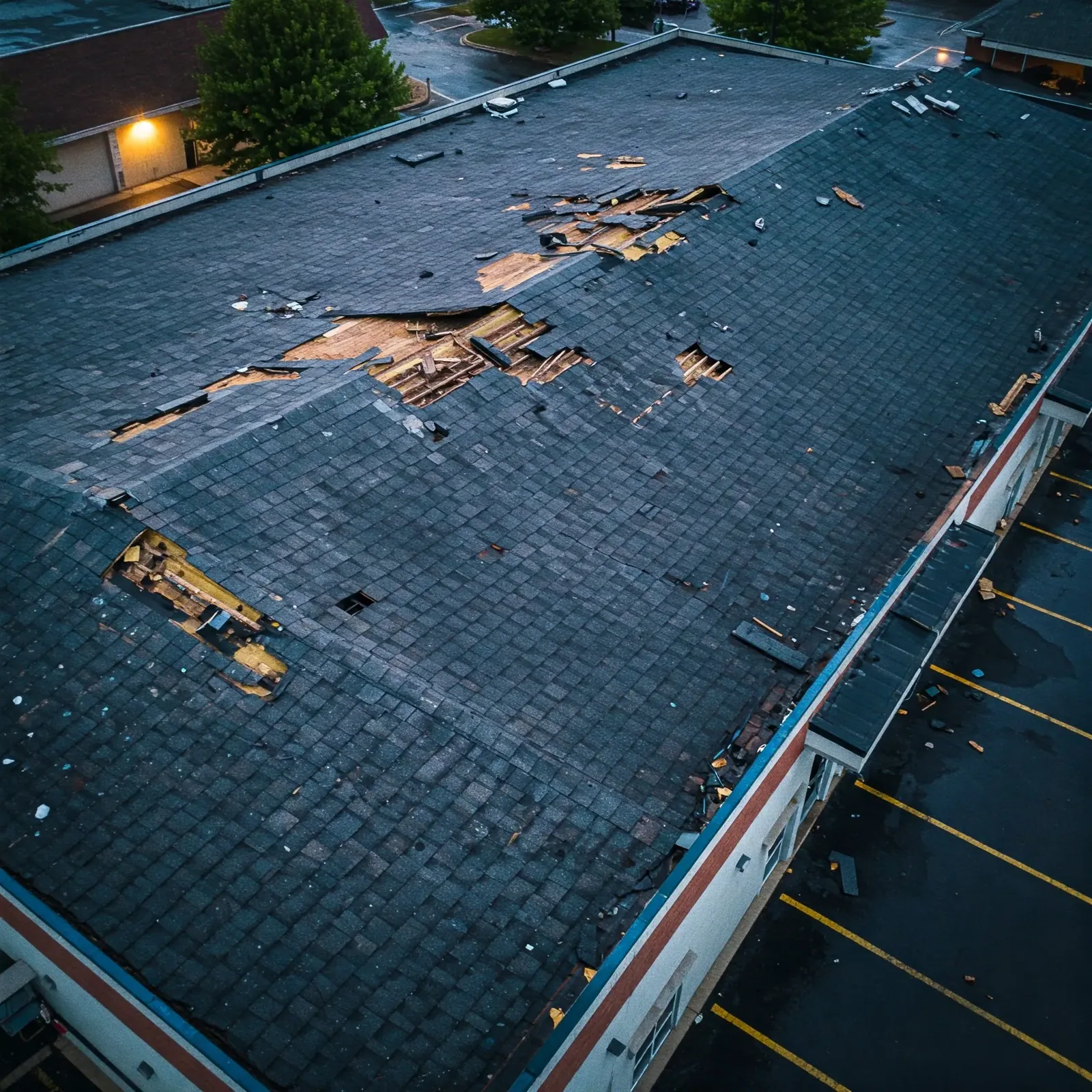
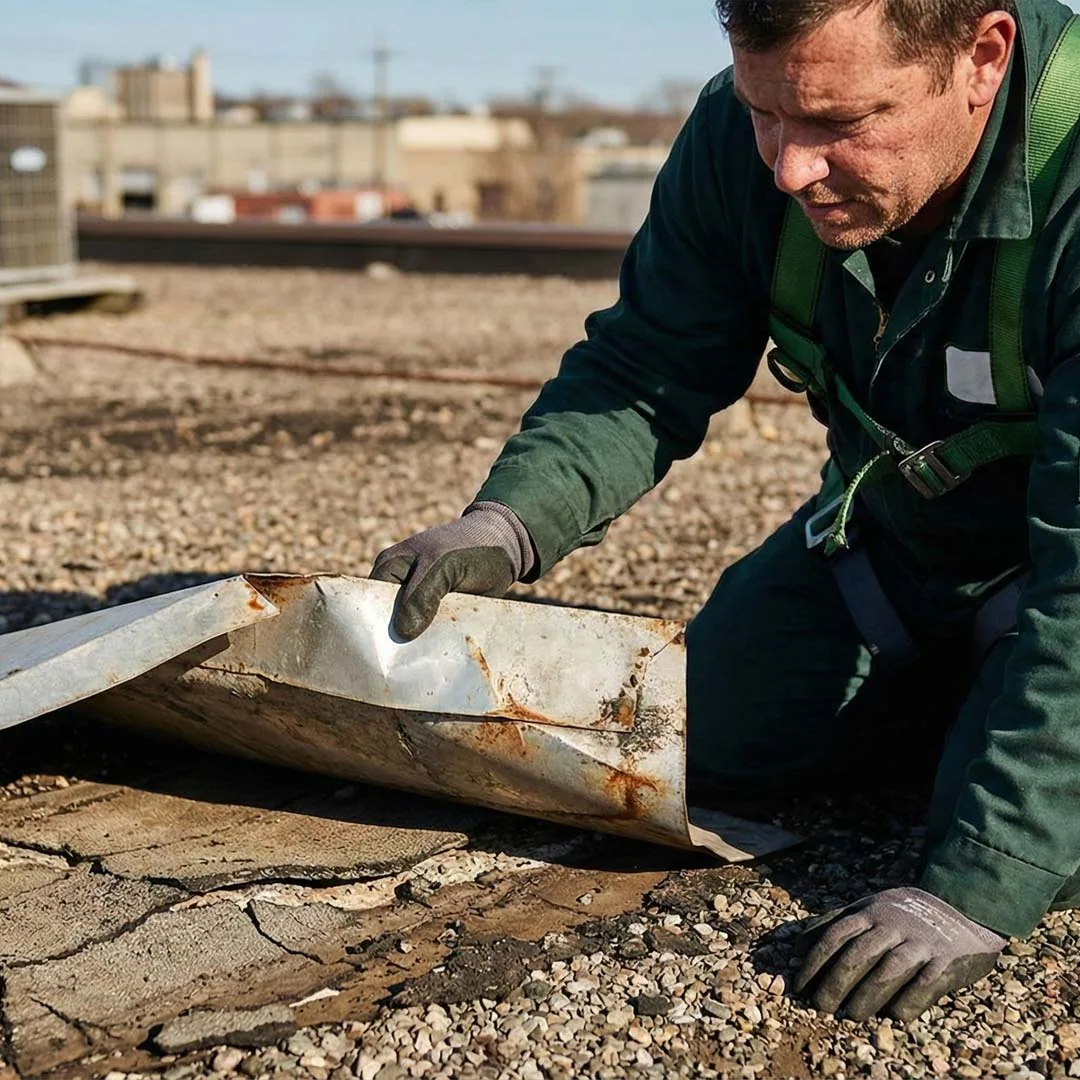
A ceiling stain is a reason to inspect, not a repair specification. Our commercial roof inspection checks seams, flashings, curbs, drains and visible supporting layers. For active water entry, leak repair traces the likely path and sets a controlled opening. If water enters during a storm or after hours, emergency response is available at any hour, including holidays. We stabilize the exposure, then scope permanent work after inspecting the roof.
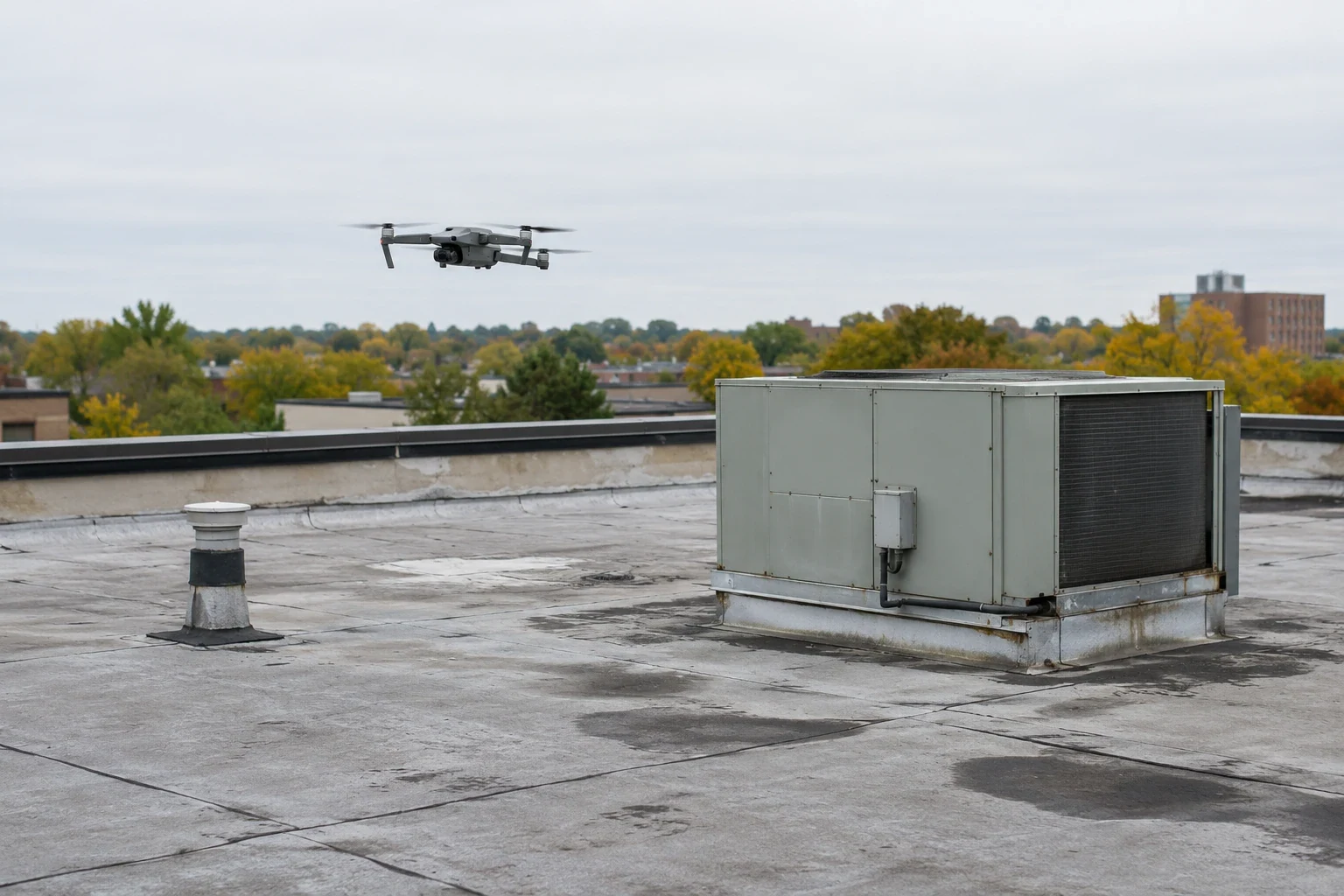
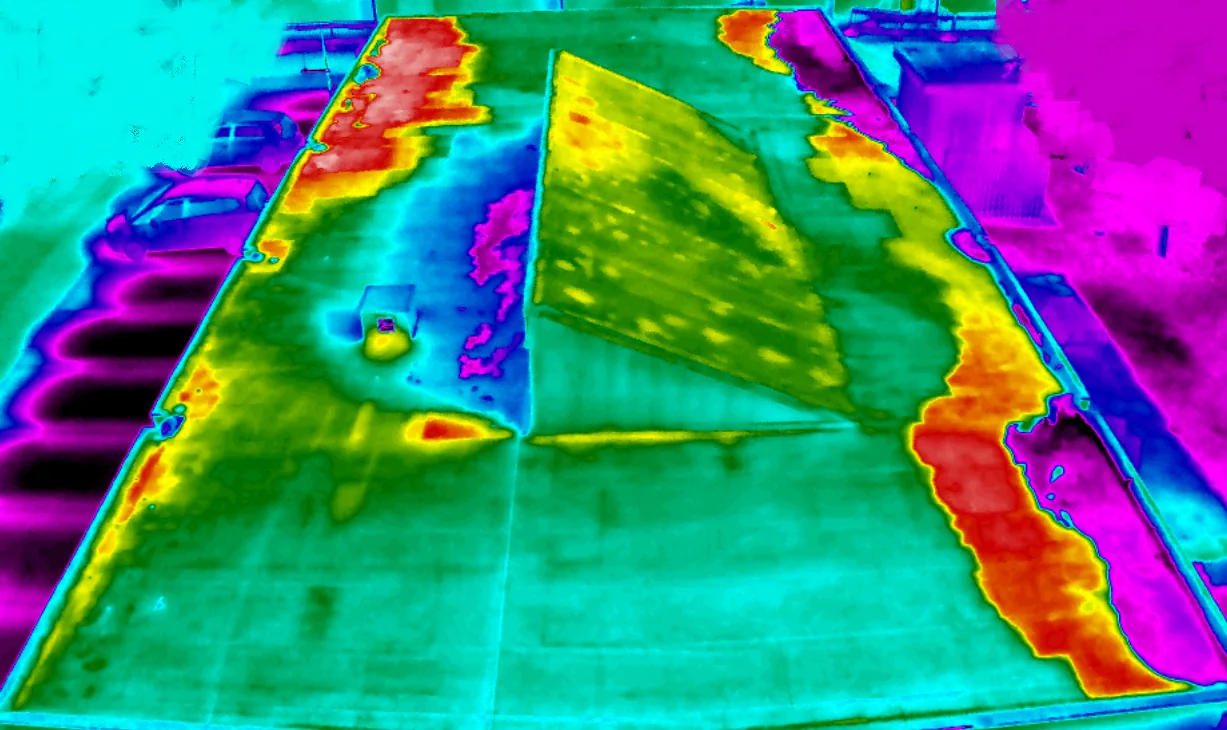
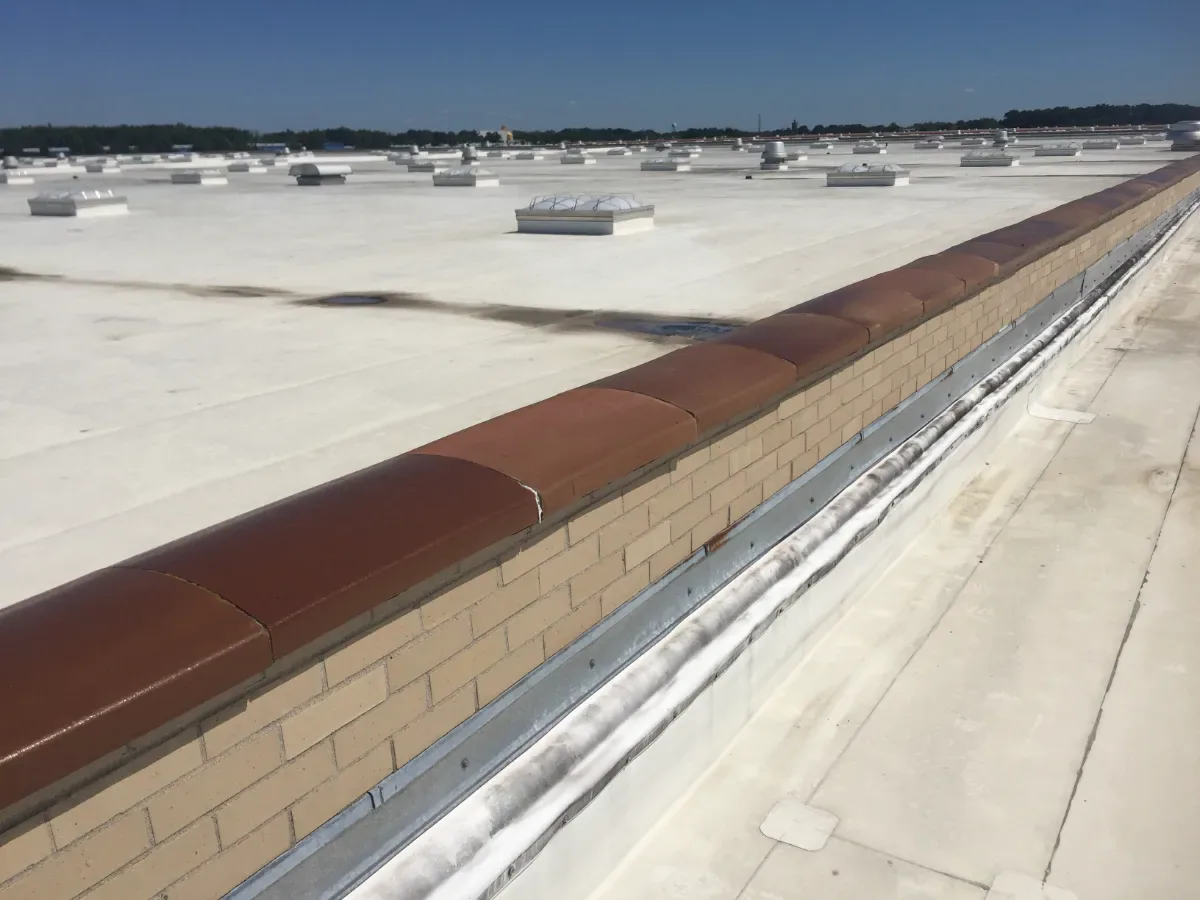
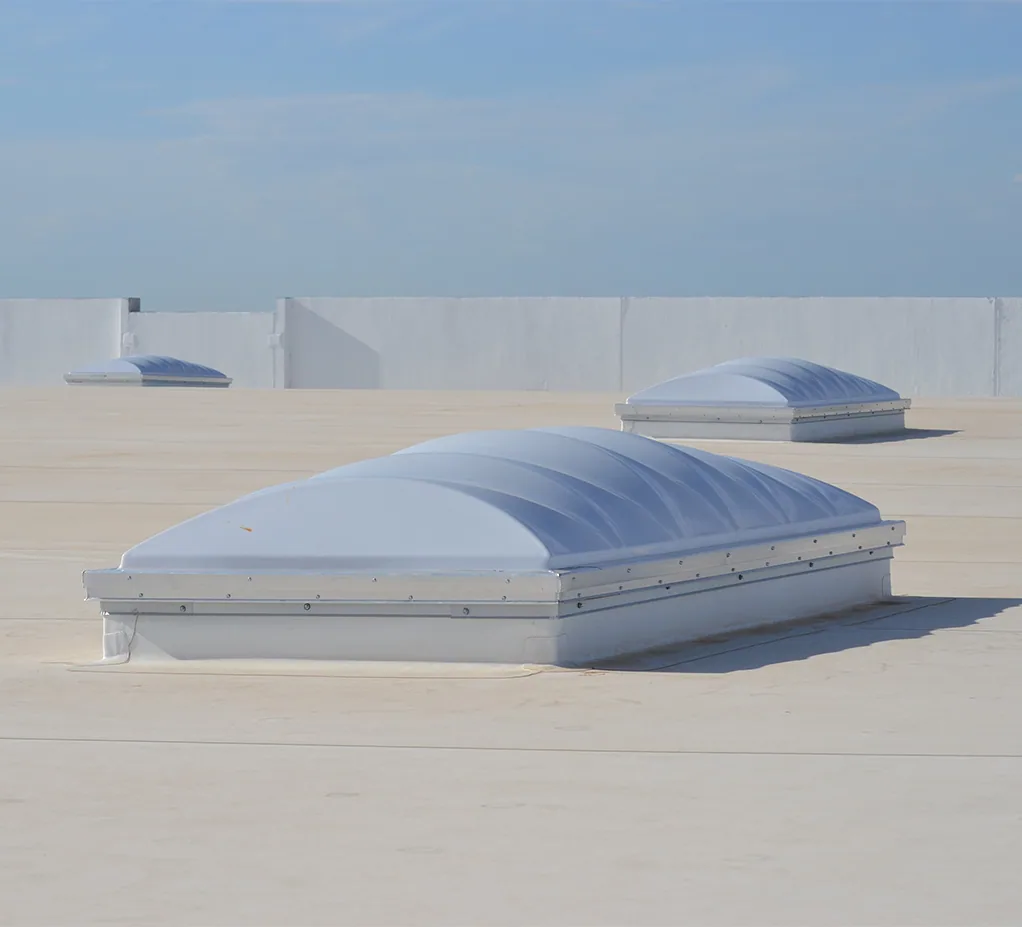
Testing has a defined role. A drone inspection can document broad roof areas where access or visibility makes that useful. An infrared moisture survey may help locate suspect insulation. Each method answers a different question; neither replaces checking the roof assembly and confirming the repair boundary.
Choose a repair or renewal path
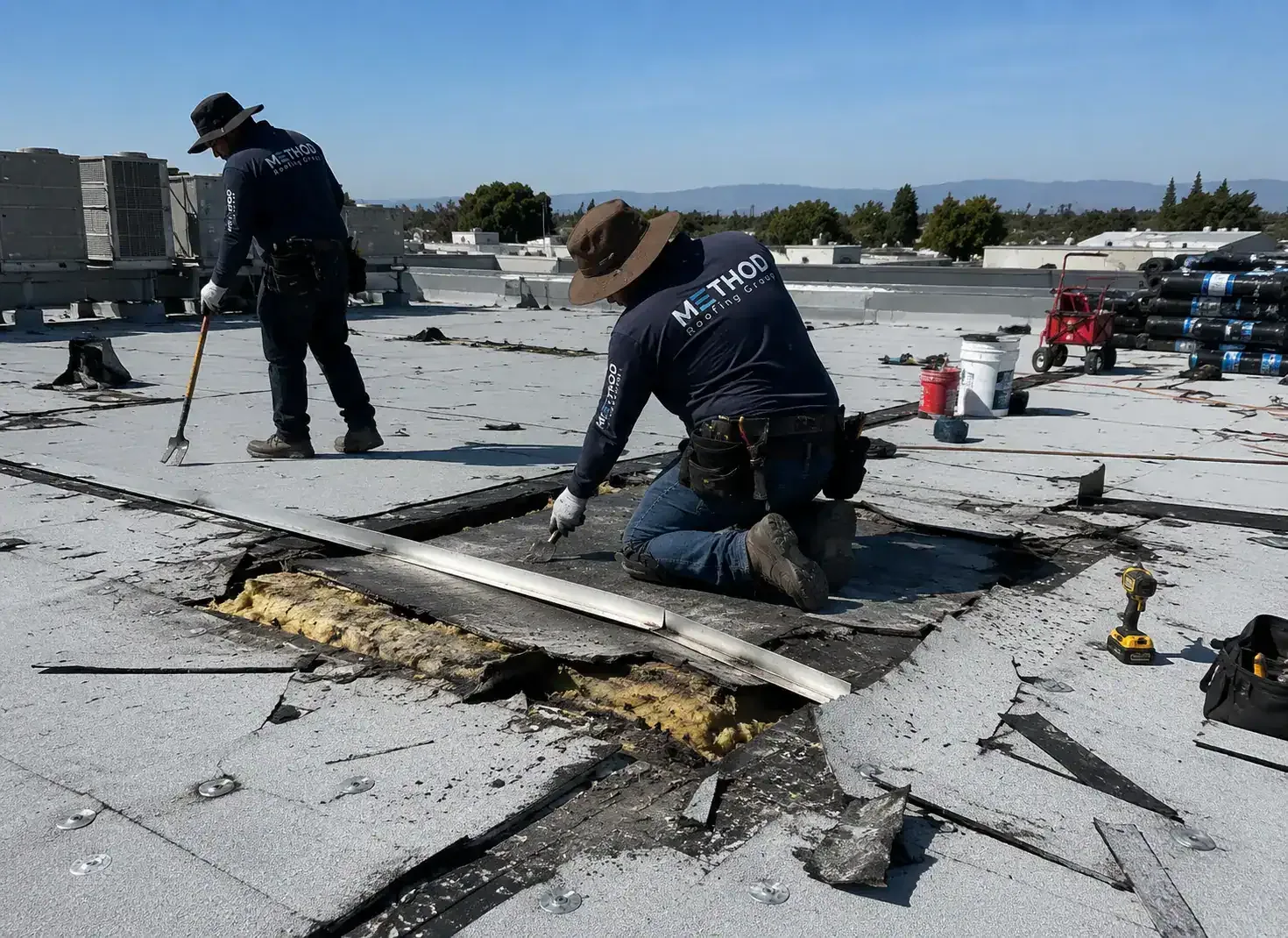
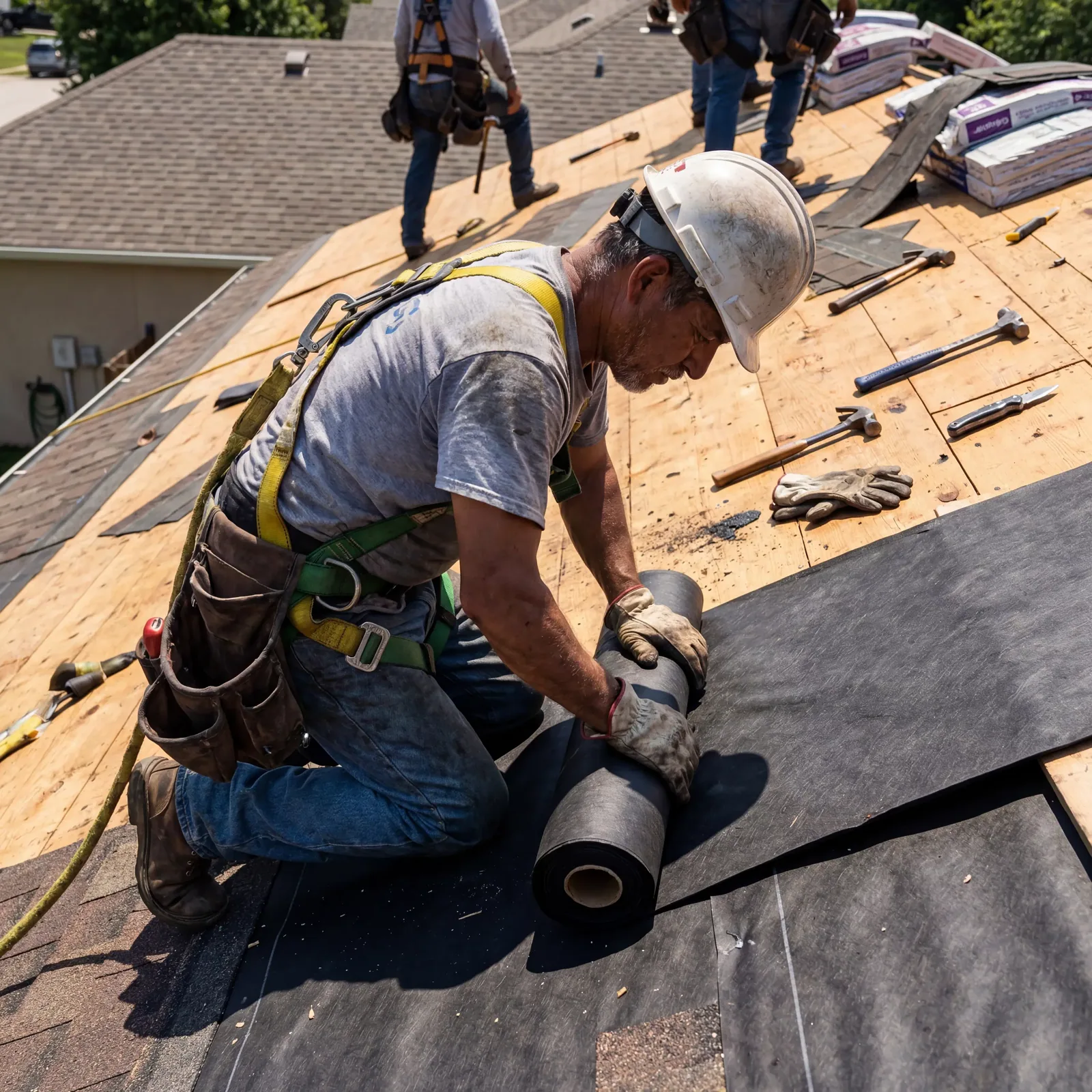
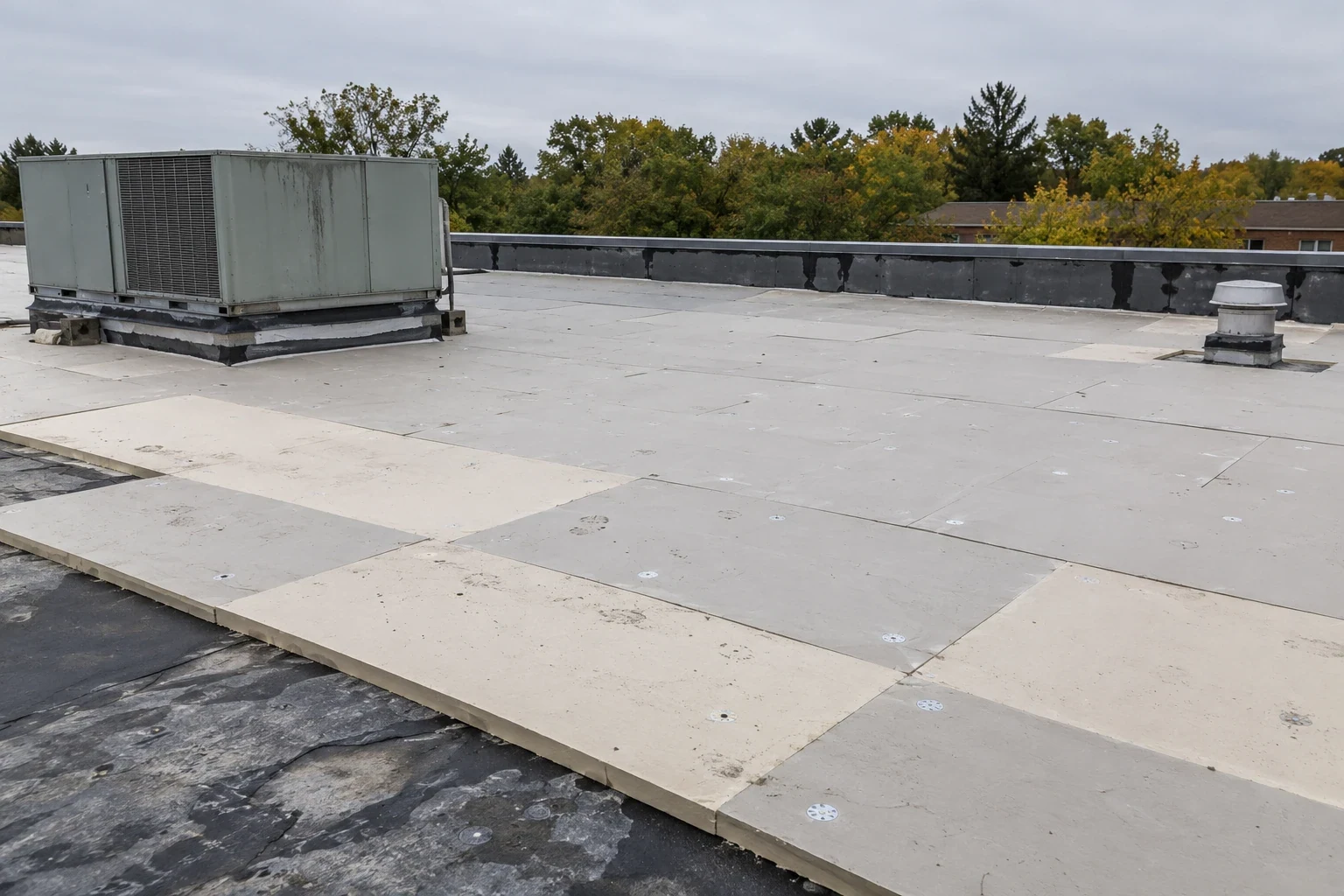
Localized damage can support a repair when the surrounding material is dry and stable. Widespread wet insulation, repeated seam failure or deteriorated attachment may call for a larger scope. We compare commercial roof repair, roof recovery and full replacement against the actual assembly, removal limits, drainage and building schedule. The estimate should state which layers remain, which areas open and how concealed findings will be handled.
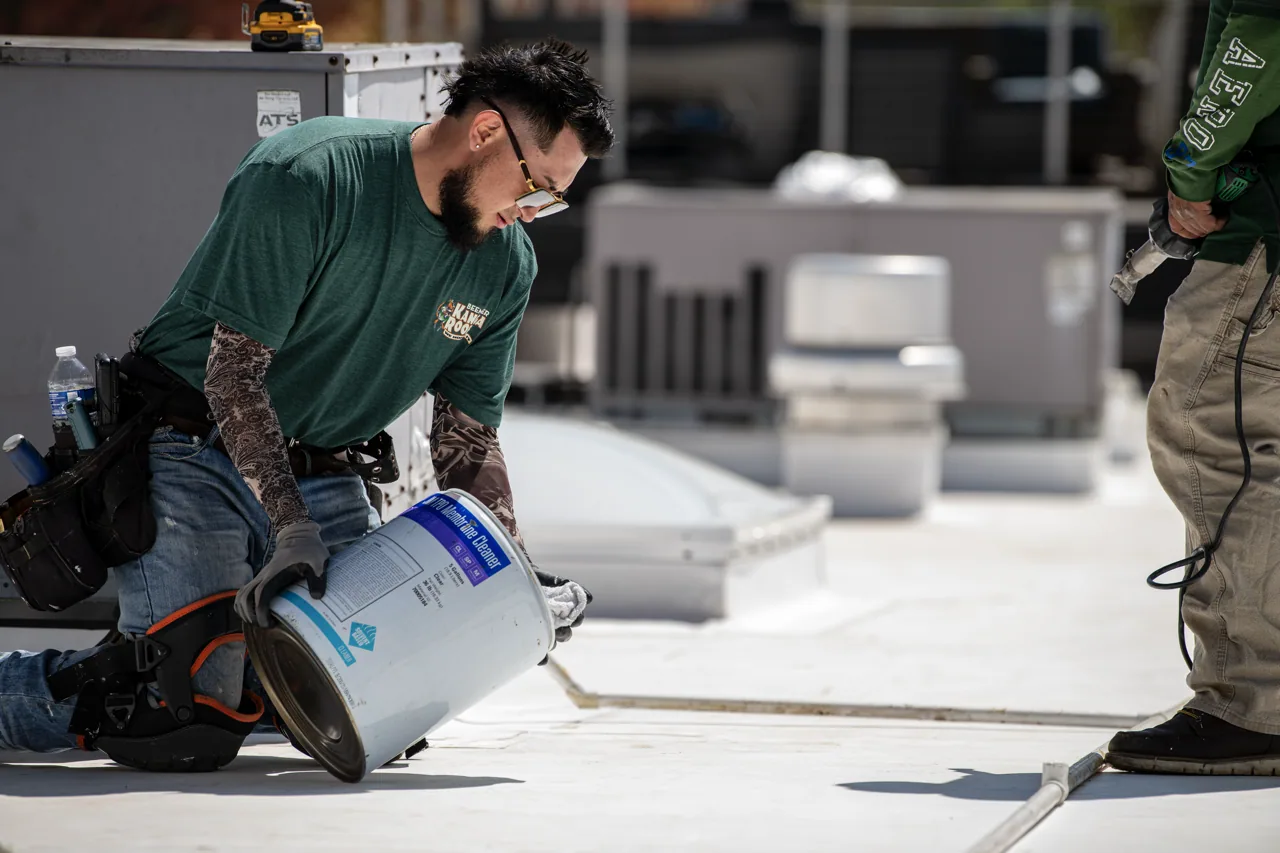
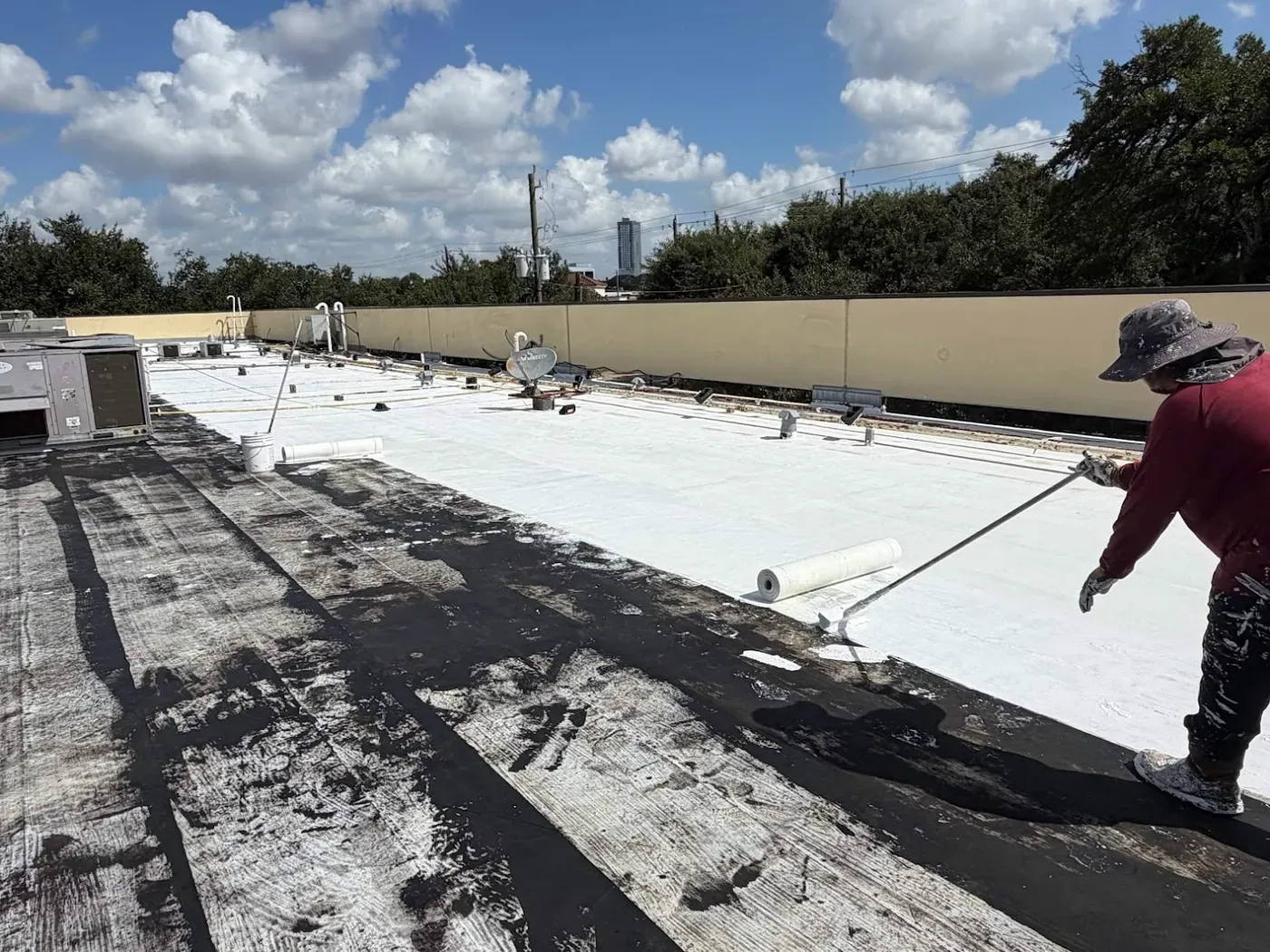
A coating can extend a suitable roof surface only after preparation and details are addressed. Roof coating restoration requires a compatible, sound substrate and controlled application conditions. We will not treat a finish as a substitute for repairing a failed curb, open seam or wet assembly.
Coordinate access and closeout
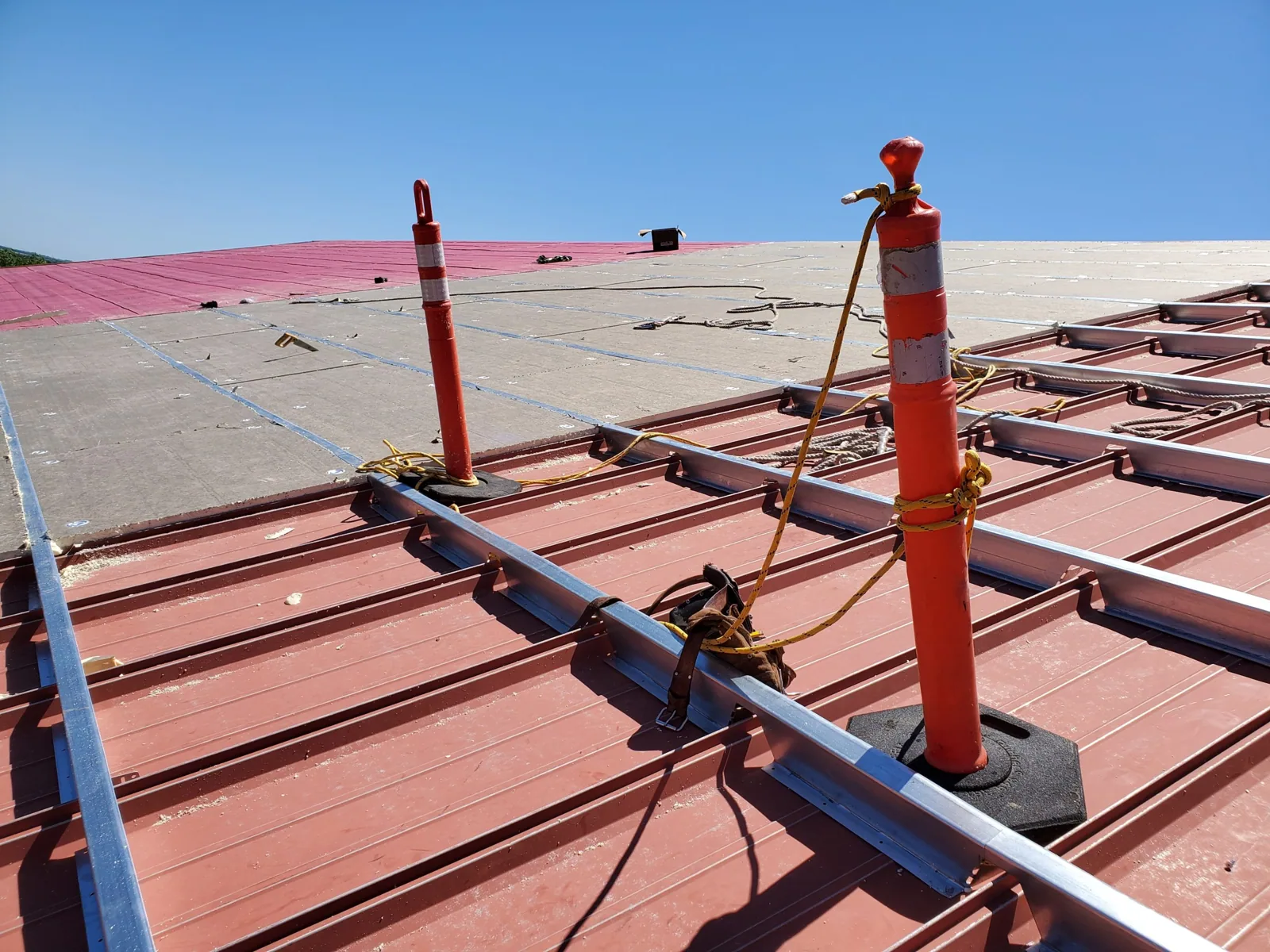
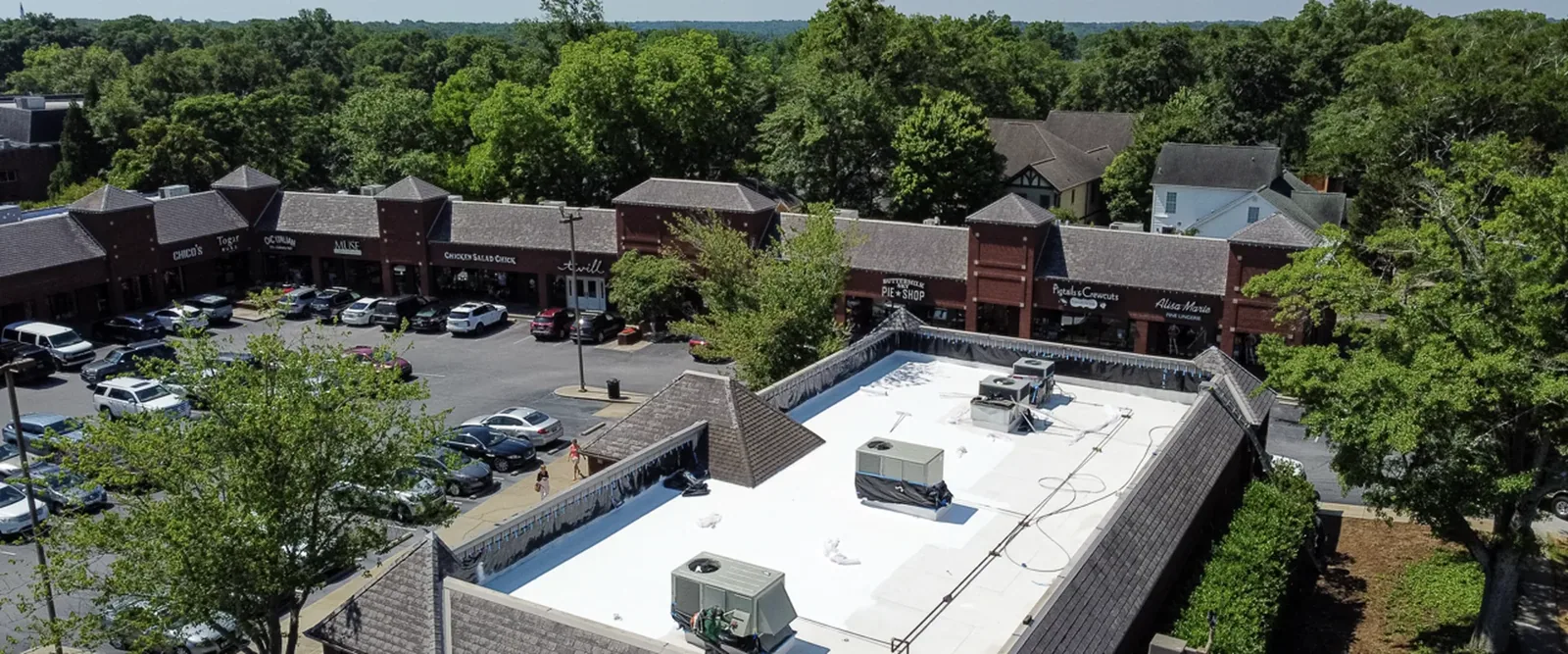
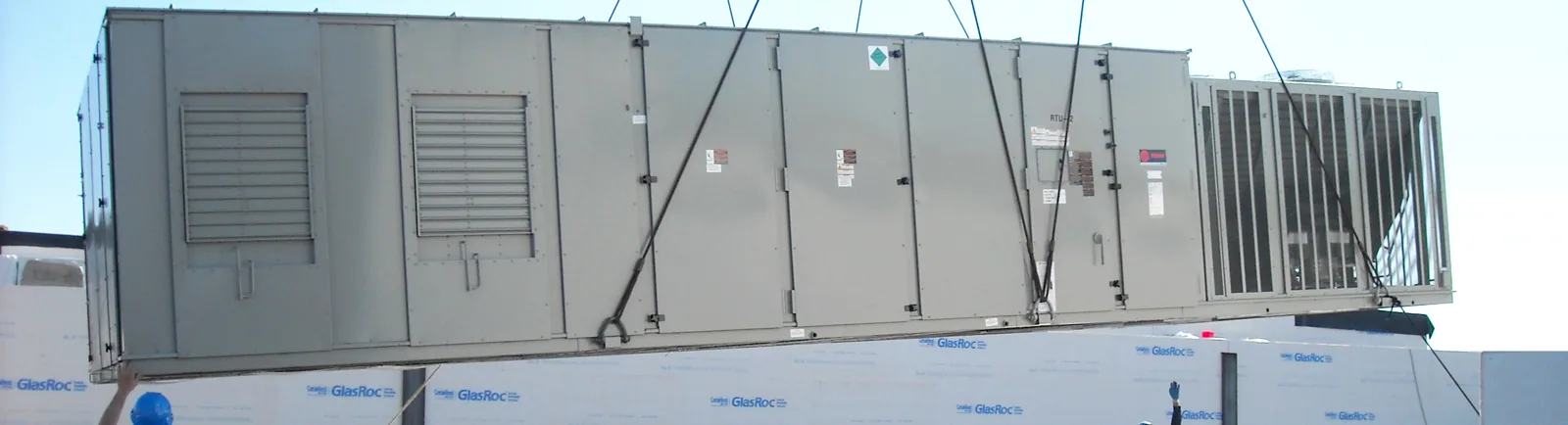
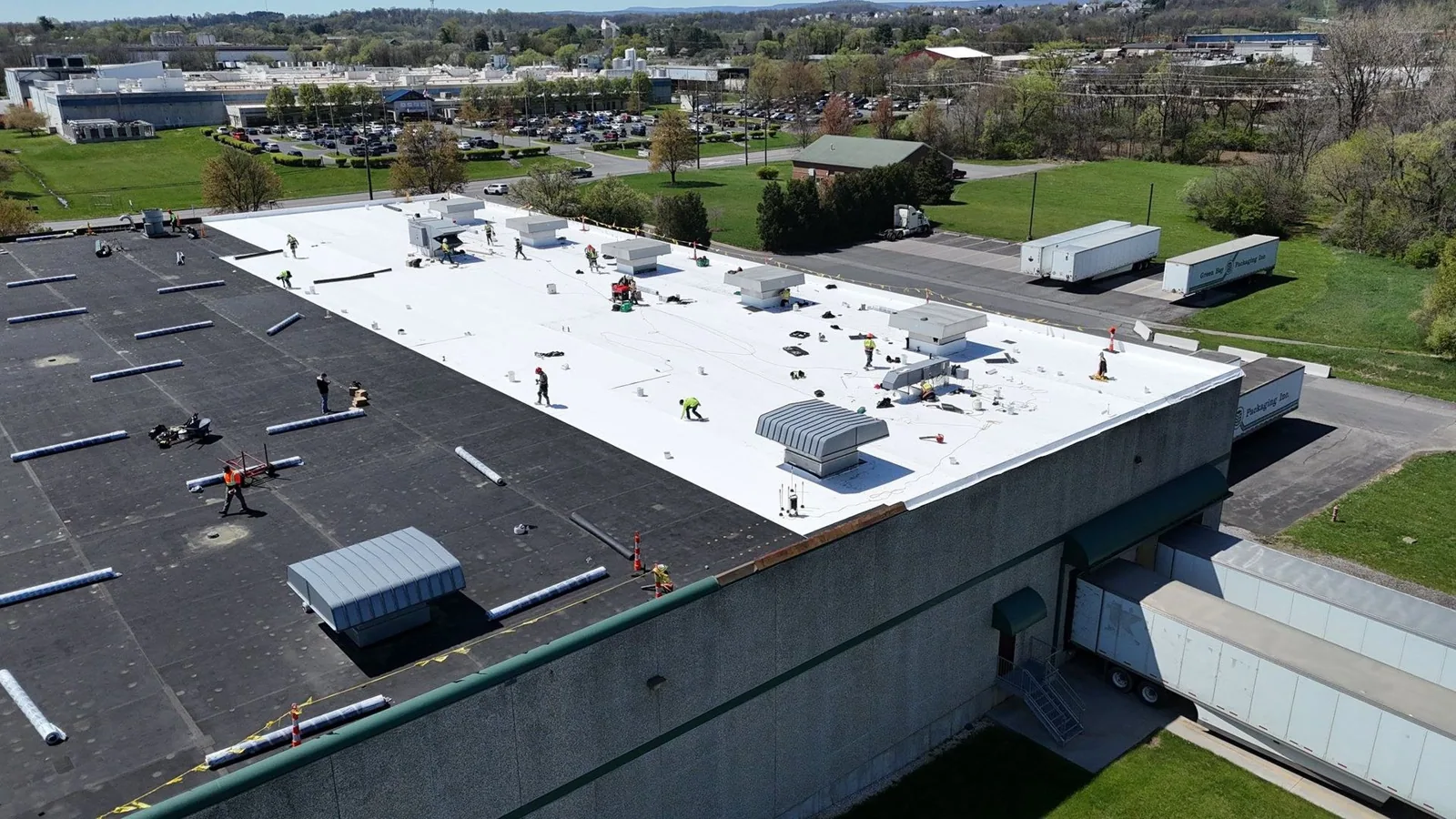
Overland Park includes occupied offices and retail space, as well as mixed-use areas in downtown. That makes roof access, equipment service and work below the opening part of the scope. Occupied-building reroofing is sequenced in manageable sections when the roof and project allow it. We identify an opening limit, temporary protection, daily closure and contact for scope changes before removal begins.
After the work, the manager should have photographs, a description of the repair area and any follow-up condition. Scheduled preventive maintenance can keep drains and details visible between larger projects. Regional January snowfall and summer heat and rainfall also make a documented seasonal work window useful for adhesive, coating and temporary-cover decisions.
Keep water moving
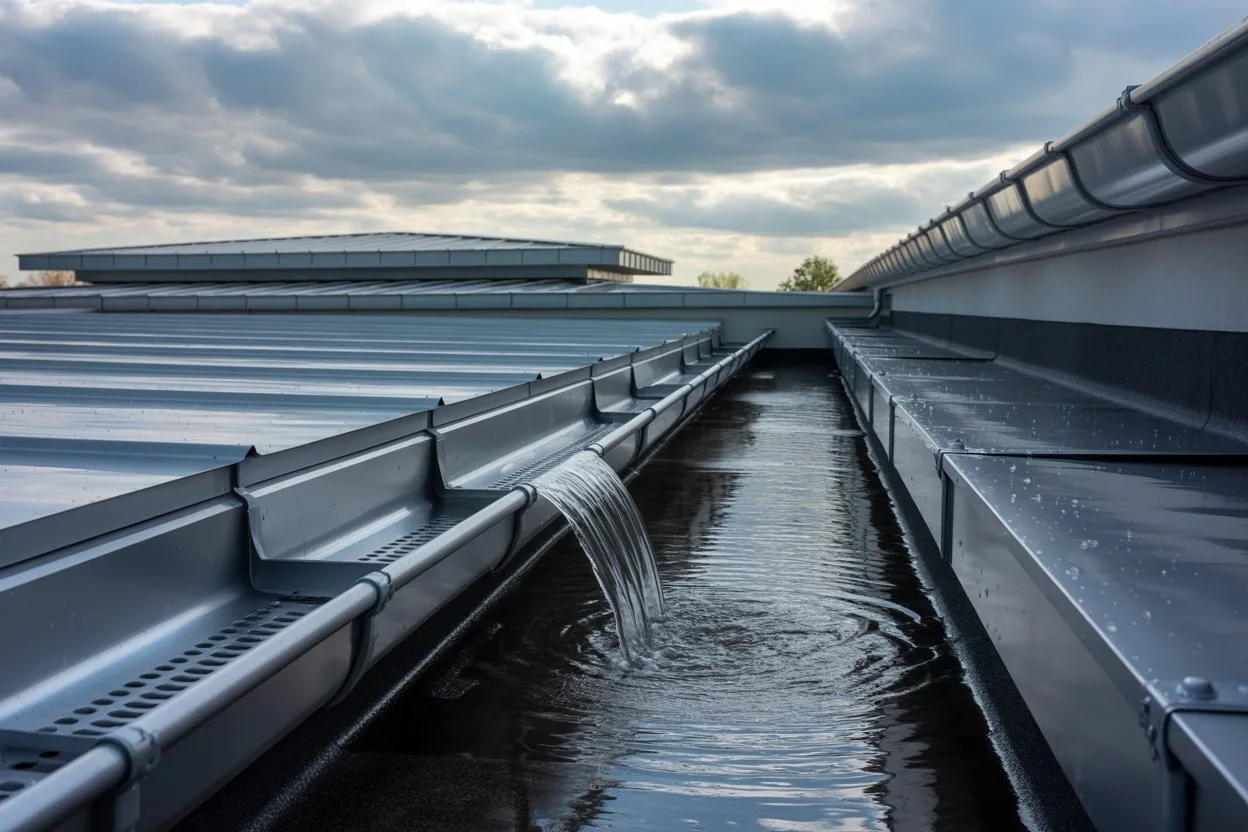
A sound membrane still needs working outlets and reliable overflow paths. We inspect drains, scuppers and nearby details before a repair closes. Scheduled maintenance can catch debris or a shifted connection while the repair footprint remains small. The manager receives a note when drainage needs a separate scope.
Commercial Roofing Questions
What belongs in a first roof inspection?
Start with the leak location, roof access rules, prior repair notes and any operating area that must remain available. We inspect the related roof details, photograph conditions and state whether testing or opening is needed to establish a reliable repair boundary.
When does a repair become a replacement project?
Widespread deterioration, repeated failures or wet material across several areas can change the project scope. We compare the removal boundary, roof layers, drainage and operating schedule before recommending sectional or full replacement.
Can a leak be stabilized before permanent work?
Emergency work can protect an exposed area and reduce water entry when conditions permit. We document the temporary measure and inspect the assembly before setting permanent repairs.
How do you plan work above an occupied space?
We confirm access, sensitive operations, work hours and areas below the opening. The work sequence sets daily limits and a closure check, then records any concealed condition that changes the next step.
Schedule the roof check
Tell us where water appears, what must keep operating and what roof records are available. We will inspect the affected assembly and define the next work limit.