
Commercial Roofing for Property Management Companies in Overland Park, KS
Home / Industries We Serve / Commercial Roofing for Property Management Companies
Get a Free Roof Assessment - Call 555-555-5555
What Property Owners Should Know
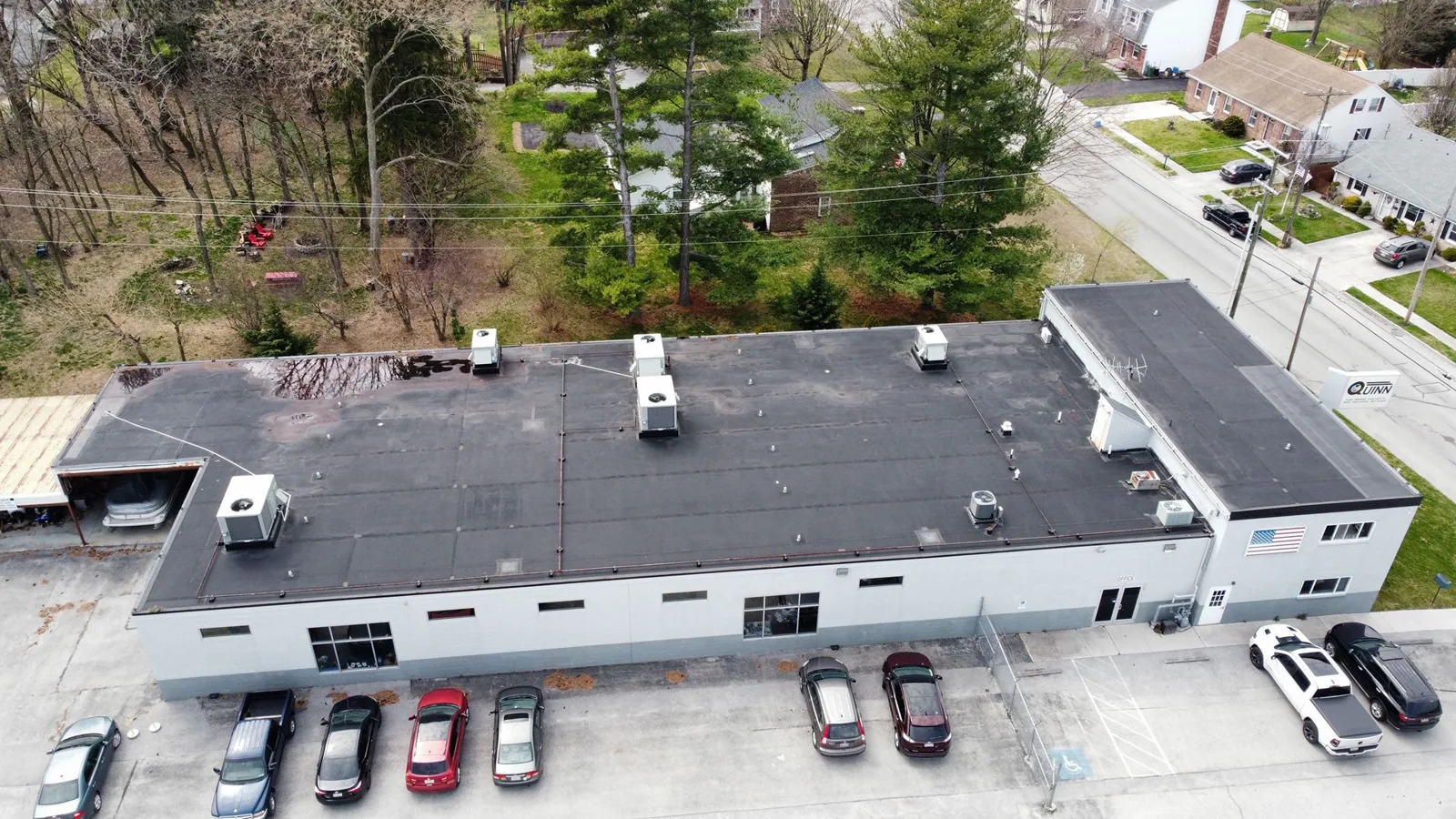
A portfolio roof call usually arrives with two limits: the source is not yet clear, and the building cannot stop operating while we look. For property managers in Overland Park, KS, we begin with the affected room, roof access and the next decision date. We photograph the reported area, inspect nearby seams, curbs and drains, and mark what is visible. The manager receives a repair footprint that can be compared with the work order, not a broad replacement recommendation based on a ceiling stain alone.
That record matters across several addresses. Downtown Overland Park combines apartments, businesses, entertainment and civic uses, while the city chamber reports a large retail stock across the market. Those buildings do not share one roof condition or one tenant schedule. We keep each property record separate, then use the same field names for condition, urgency, access and next action. A roof asset record gives the manager a practical way to carry findings into a capital review without treating a neighborhood fact as a building diagnosis.
Set each property’s work window
Before pricing, we confirm who can open the roof hatch, where materials may be staged and which hours create the least disruption. A retail entrance, an apartment courtyard and a medical office waiting area call for different protection. The scope names the access route, the opening limit and the daily closure point. If a tenant needs a delivery lane or a unit cannot shut down, that limit changes the sequence and belongs in the estimate.
The 79th Street study connects Downtown Overland Park, Metcalf Avenue and Antioch Road across a defined corridor. It does not tell us how a particular property receives a lift. We verify the actual route with the manager and building contact. A phased occupied-building reroof can protect use while work moves section by section, but the phase plan must match the roof geometry and operating schedule. We record which trade restores equipment and who approves a weather pause.
Separate a leak report from its cause
A portfolio review starts with one roof at a time. We trace the water route from the reported interior area toward the roof, inspect membrane laps and penetrations, and check whether a drain or wall transition sits in a recurring wet area. A stain can point us toward a room; it does not set the repair boundary. When concealed insulation or attachment may change the scope, we identify the selective opening that would answer that question before asking for wider authorization.
For each address, our report separates observed conditions from follow-up. Photographs show the location and surrounding detail. We note the membrane type when it can be identified, prior repairs that affect preparation and areas we could not access. Property managers can compare a condition inspection with a focused repair scope using the same roof section. That keeps a maintenance item from becoming a capital project merely because it appeared on a tenant ticket.
Triage after a local storm
After a storm report, the first task is to identify which properties have active water entry or exposed details. We inspect each roof directly and record the location of punctures, loose edge metal, opened seams or damaged flashing. Prior photographs help separate a new observation from an older repair. A tenant report can prioritize a visit, but the event itself does not set the repair scope.
Cold and summer rain can change the size of a safe work phase. We check material limits and the forecast, set the opening boundary and identify the daily closure method. If an asset needs immediate protection, we record it separately from permanent correction and name who checks the temporary cover. The manager can compare the response across properties without treating an inspection result at one address as evidence about another.
Compare repairs across the portfolio
Managers need to know which roofs can remain in service and which need a capital decision. We mark a local repair when adjoining membrane is sound and the defect can be prepared and closed within a defined footprint. Wider wet insulation, failed attachment, repeated seam movement or a deteriorated edge may require a larger scope. We explain the finding that moves the work from patch to selective removal, recover or replacement so the approval request has a visible basis.
Options should use the same area and access assumptions. A portfolio owner may compare timing across assets, while an individual property manager needs a tenant-ready schedule. Recover is considered only after reviewing the existing assembly, added load, drain height and flashing clearance. Replacement includes removal and a new assembly, which can create a longer disruption window. We identify cost drivers qualitatively, such as staging, substrate repair, edge details and protection below, then preserve them with the approval record.
Where a record comes from a storm review, we preserve both the event date supplied by the property and the roof condition seen at inspection. That keeps a portfolio list useful for later review. We can group active leaks for immediate response, set another visit for an inaccessible roof area and keep a capital scope on a separate track. Each building keeps its own evidence, tenant notes and approval path.
Keep approvals attached to evidence
A clean handoff names the approved repair, the limit of work and the person who can authorize a change. We photograph preparation, concealed conditions that were opened, completed flashing and the retained roof outside the footprint. If the assembly differs from the accessible view, the crew closes the opening safely and calls the manager before proceeding beyond the approved boundary. The closeout then records the added finding and the decision it supports.
For a portfolio, consistent records make repeat inspections useful. We can sort by asset, roof section, urgency and next review date without implying that neighboring buildings share an assembly. The College and Metcalf district has its own mixed-use planning context, and each roof there still needs direct examination. A manager can align photo-backed condition reports with the next budget cycle and retain separate repair history for each property. That record helps a new manager understand what was corrected and what remains open.
Choose the next property to inspect
When several work orders arrive together, we help sequence them by active water entry, exposed openings, tenant impact and the evidence needed for a capital decision. The sequence is a working list, not a claim that an uninspected roof is sound. We identify which property needs a visit first, what access is required and what temporary protection can be handled while a permanent repair is planned. The manager can then give each building a clear owner and next action.
Use one visit to settle the question at hand: a leak source, a storm review or an end-of-life scope. Our healthcare roof planning accounts for clinical access, while a retail portfolio review can focus on deliveries and public entrances. For a property near the Downtown Overland Park area, we verify the actual roof and operating constraints on site. Schedule an inspection with the building contact and the manager who can approve the repair limit.
Commercial Roofing Questions
Can one inspection cover several addresses?
We can schedule a portfolio visit, but each roof receives its own findings, photographs, condition rating and next action.
How do you handle a tenant leak ticket?
We use the affected room as a starting point, trace the roof details and document the evidence before setting a repair footprint.
When should a repair become a capital request?
Wet insulation, failed attachment or repeated detail movement can change the scope. We record the finding that supports that change.
What should a manager receive after work?
The closeout includes the approved boundary, photographs of preparation and completion, any added finding and the remaining follow-up.
Related Roofing Work
Set the next roof review
Schedule a property visit with Commercial Roofing Overland Park. We will confirm access, inspect the reported condition and document the repair limit.