Infrared Roof Moisture Survey in Overland Park, KS
Home / Commercial Roofing Services / Infrared Roof Moisture Survey
Get a Free Roof Assessment - Call 555-555-5555
What Property Owners Should Know
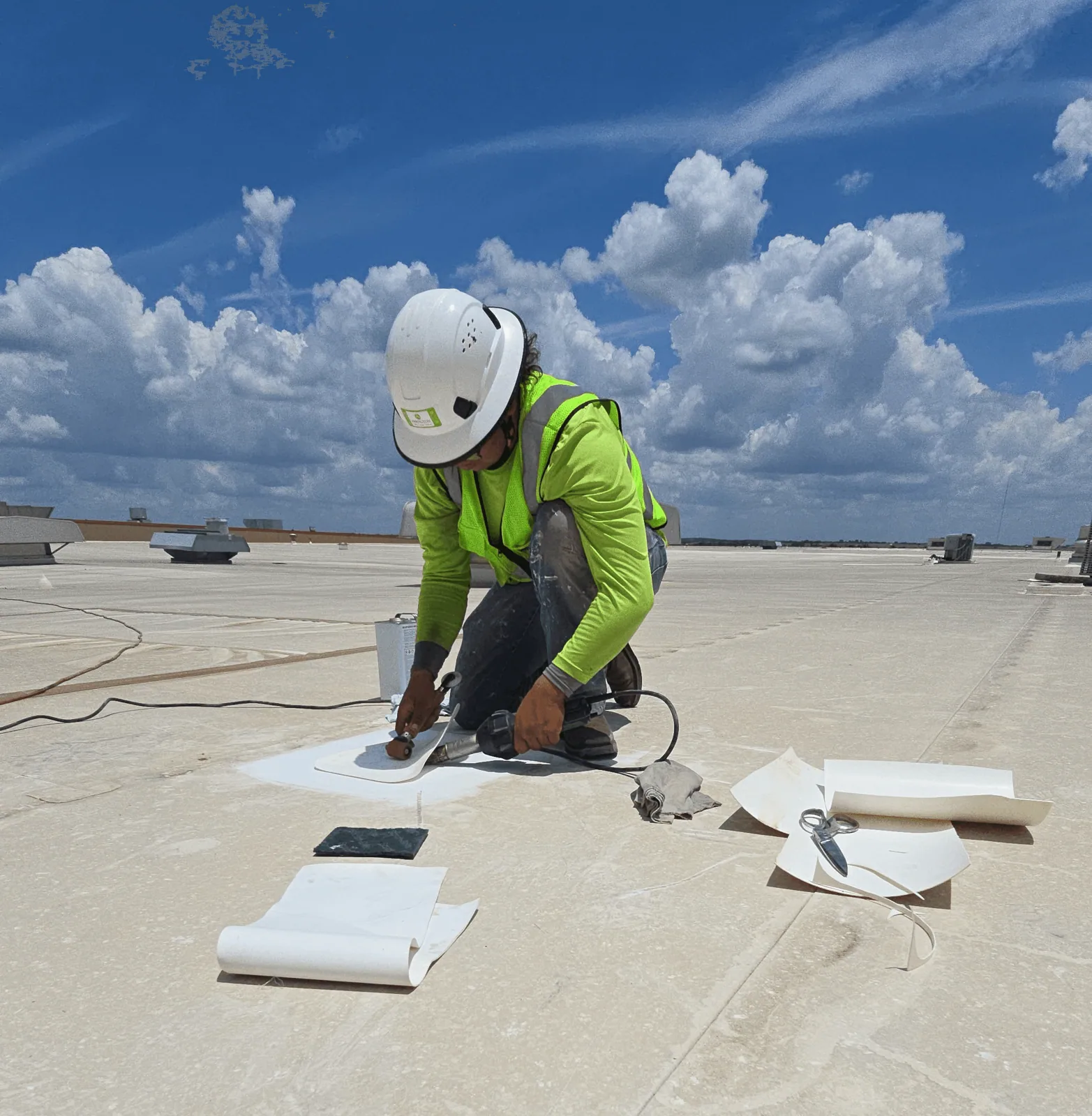
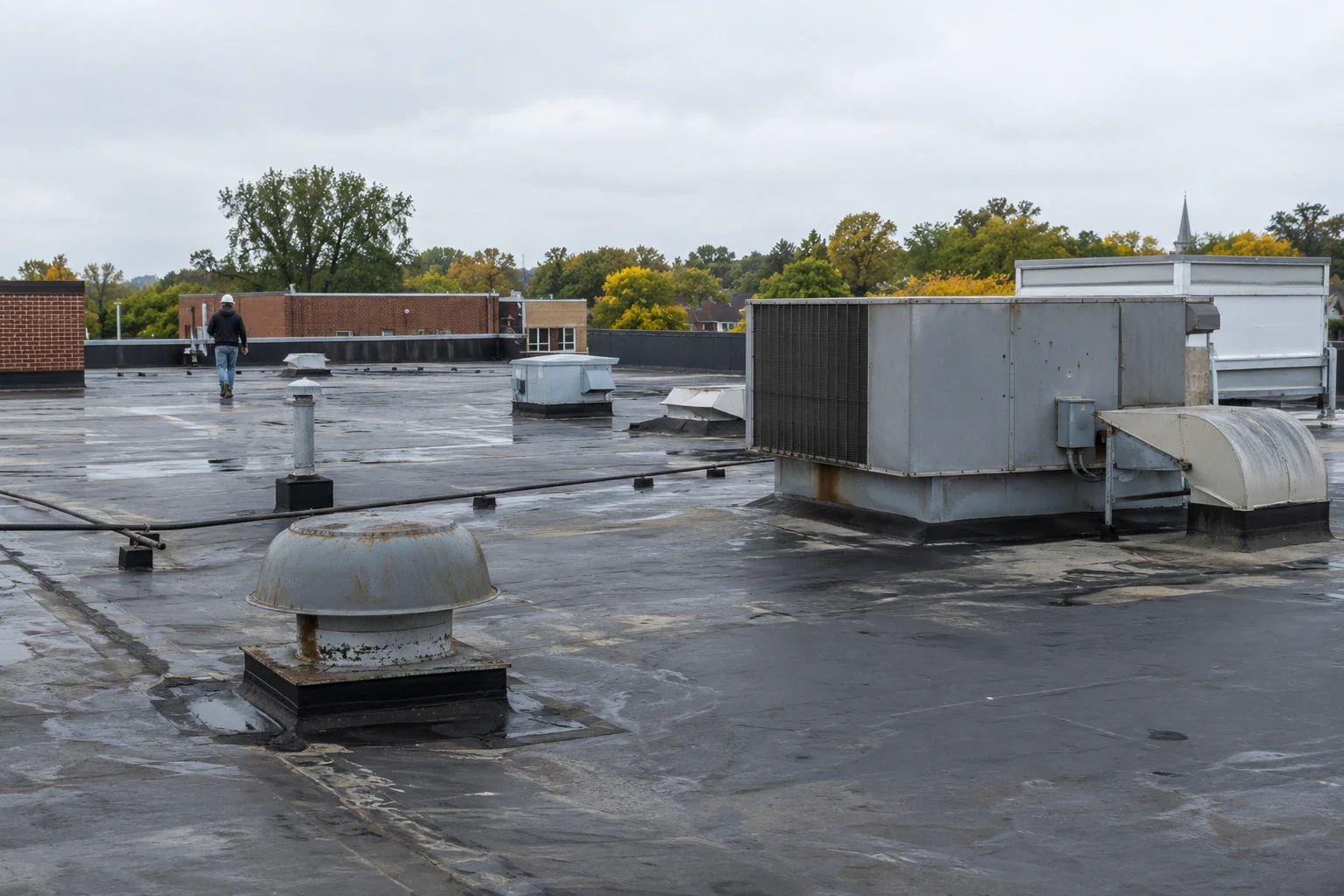
A removal estimate needs a defensible wet-area boundary. Check the concealed condition before deciding how much insulation will leave the building. An infrared roof moisture survey in Overland Park, KS, can help identify suspect areas for closer investigation. The survey reads surface temperature patterns under suitable conditions. It does not see water directly through every assembly. We select the method against the existing roof, the question being answered and the available weather window.
Corporate offices near 95th Street and Metcalf Avenue need roofing work planned against occupied rooms and equipment. Downtown Overland Park adds mixed business, residential and civic uses. Those settings make unnecessary openings disruptive, but retaining wet material creates its own problem. We investigate where testing can change the decision. A condition inspection establishes the assembly and visible defects first. The thermal survey can then help direct confirmation rather than stand alone as a removal instruction.
Check whether the assembly suits testing
An unknown roof layer makes thermal interpretation harder. We review available roofing documents and examine accessible components before arranging the survey. Insulation type, surfacing, coatings and roof construction can affect the pattern. Some assemblies do not provide a useful distinction between wet and dry areas under the available conditions. We explain that limit before the manager authorizes a method that may not answer the question.
Thermal testing depends on differences in how roof areas gain and release heat. Recent rainfall, cloud cover, wind and surface moisture can affect the result. The inspection window is chosen against those conditions and the testing method. A date that suits the building schedule may still be unsuitable for reliable interpretation. We coordinate both needs rather than allowing access availability alone to decide the survey time.
Regional July normal highs reach the upper eighties, while January brings much colder conditions and snowfall. Those regional facts explain why the testing window varies through the year. They do not establish that a particular roof is wet. The survey needs its own suitable conditions. Where the assembly or weather limits interpretation, another method or a different work window may be needed. We identify that choice before relying on the result for a repair or replacement decision.
Separate a thermal pattern from a wet finding
A warm-looking area in a thermal image can have several explanations. Different materials, equipment heat, shadows and previous repairs may affect the surface response. We compare the pattern with the roof layout and construction. The purpose is to identify areas that warrant confirmation, not to label every temperature difference as saturated insulation. The report should make that distinction clear.
Suitable verification may include authorized roof cores or other appropriate moisture testing. We compare suspect and comparison areas where the method calls for it. An opening helps identify the layers and their condition at that point. It does not automatically establish every area between openings. We interpret the combined evidence and explain how it supports the proposed wet-area limits.
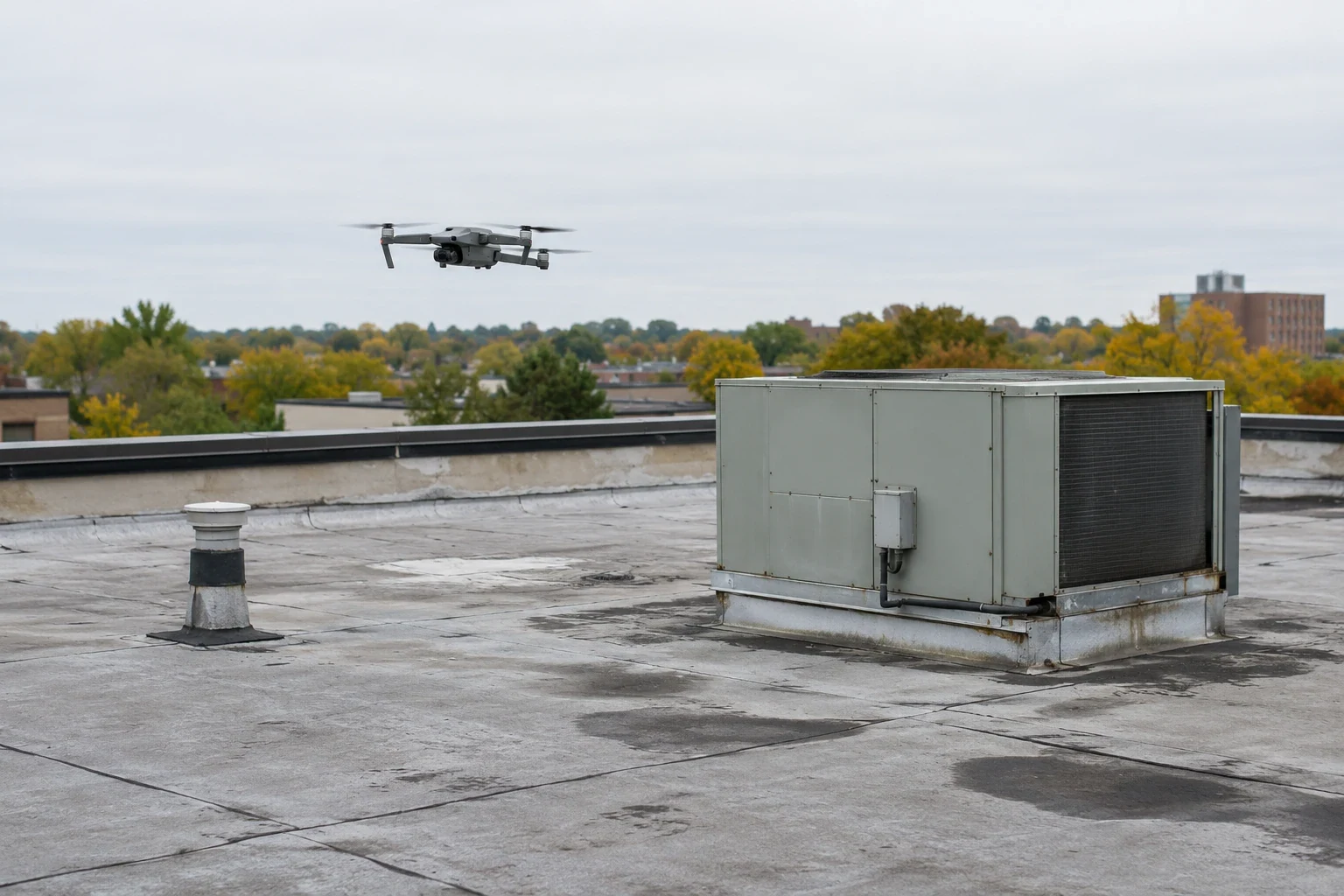
A visual aerial survey can document the layout and visible defects, but it answers a different question. Thermal equipment and analysis need their own conditions and confirmation. For written roof condition findings, we distinguish observed surface defects, suspect thermal patterns and confirmed concealed moisture. The manager can then see which findings support immediate work and which need additional investigation. That separation keeps an image from becoming an unsupported instruction to remove a whole roof section.
Define the removal footprint
Confirmed wet insulation changes the substrate preparation. We identify the material that needs removal and consider how the surrounding assembly can accept the new work. A replacement patch must connect to suitable retained material. The actual boundary may require adjustment as the roof is opened and concealed conditions become accessible. We describe that decision process before construction begins.
For a proposed roof recover, moisture findings help determine whether the existing assembly can remain. Local wet areas may need removal even when another section is suitable for retention. Extensive moisture can change the comparison with full replacement. The survey result should be used with deck, attachment and layer information. Moisture alone does not settle every qualification requirement.
A repair estimate needs to show which removal limits are confirmed and where an allowance or further check remains necessary. We explain how new findings will be documented and authorized. The manager should also understand the closing requirement for test openings and construction openings. Keeping those limits clear helps avoid a large exposed area while a decision is still pending. It connects investigation to a work sequence that the occupied building can support.
Fit the investigation to occupied rooms
A core location above a sensitive room needs access coordination before the roof is cut. We agree the authorization, interior restrictions and closing method with the manager. Testing should protect the building and leave the roof weatherproof at the completion of the visit. A small opening still needs compatible repair material and a sound connection to the existing assembly.
For medical office roof investigations, the rooms below may have limits on interruption, noise or exposure. We discuss those constraints with the property contact and coordinate any necessary equipment access. An office property may have different restrictions near computer rooms or meeting spaces. The testing plan follows the actual occupied use rather than assuming that a rooftop visit cannot affect activity inside.
Local corporate offices near 95th Street and Metcalf provide a setting where investigation and subsequent removal need a usable work window. We place the survey findings into that next decision. The manager should know which roof areas need confirmation, when access is required and what the permanent repair may involve. The scope should also identify whether another specialist must assess the deck or equipment support before roofing can proceed.
Turn the findings into work limits
The finished report should locate suspect patterns, confirmation points and the resulting recommendations. We record the conditions affecting the survey and describe its useful limits. Photos, roof orientation and testing findings should agree with the removal proposal. Keep the investigation date and test locations with the roof record. Later repairs or equipment changes can then be compared with the conditions examined during this visit. A marked image without explanation can leave the manager unsure which areas are confirmed and which remain an investigation target.
Where roof replacement is being considered, we use the findings to help define insulation removal and retained material decisions. Other assembly checks still apply. Arrange the survey with available roof records, leak history and occupied-space restrictions. We will establish the testing method, confirm the useful findings and explain how they change the work footprint.
Commercial Roofing Questions
Does a thermal scan confirm wet insulation by itself?
A temperature pattern identifies a suspect area. Appropriate confirmation is needed to establish the concealed condition. We compare the pattern with the assembly and report what the combined evidence supports.
Can the survey go ahead after any rainfall?
Recent rain can affect interpretation and surface conditions. We select the work window against the roof assembly, weather and method. A different date may be needed for a useful result.
Will testing holes remain open overnight?
Test openings need suitable closure at completion of the work. We agree the method and material before opening the assembly. The investigation must leave the roof protected.
How does the survey change a recover proposal?
Confirmed wet areas require a removal decision. Their extent may affect whether retaining the surrounding assembly is practical. We combine moisture findings with attachment, deck and existing-layer checks before recommending the recover.
Related Roofing Work
Set the work limits
Schedule a moisture investigation with roof records and occupancy restrictions. We will settle the testing approach and the removal decision it can support.