Ponding Water Roof Repair in Overland Park, KS
Home / Roof Damage Repair / Ponding Water Roof Repair
Get a Free Roof Assessment - Call 555-555-5555
What Property Owners Should Know
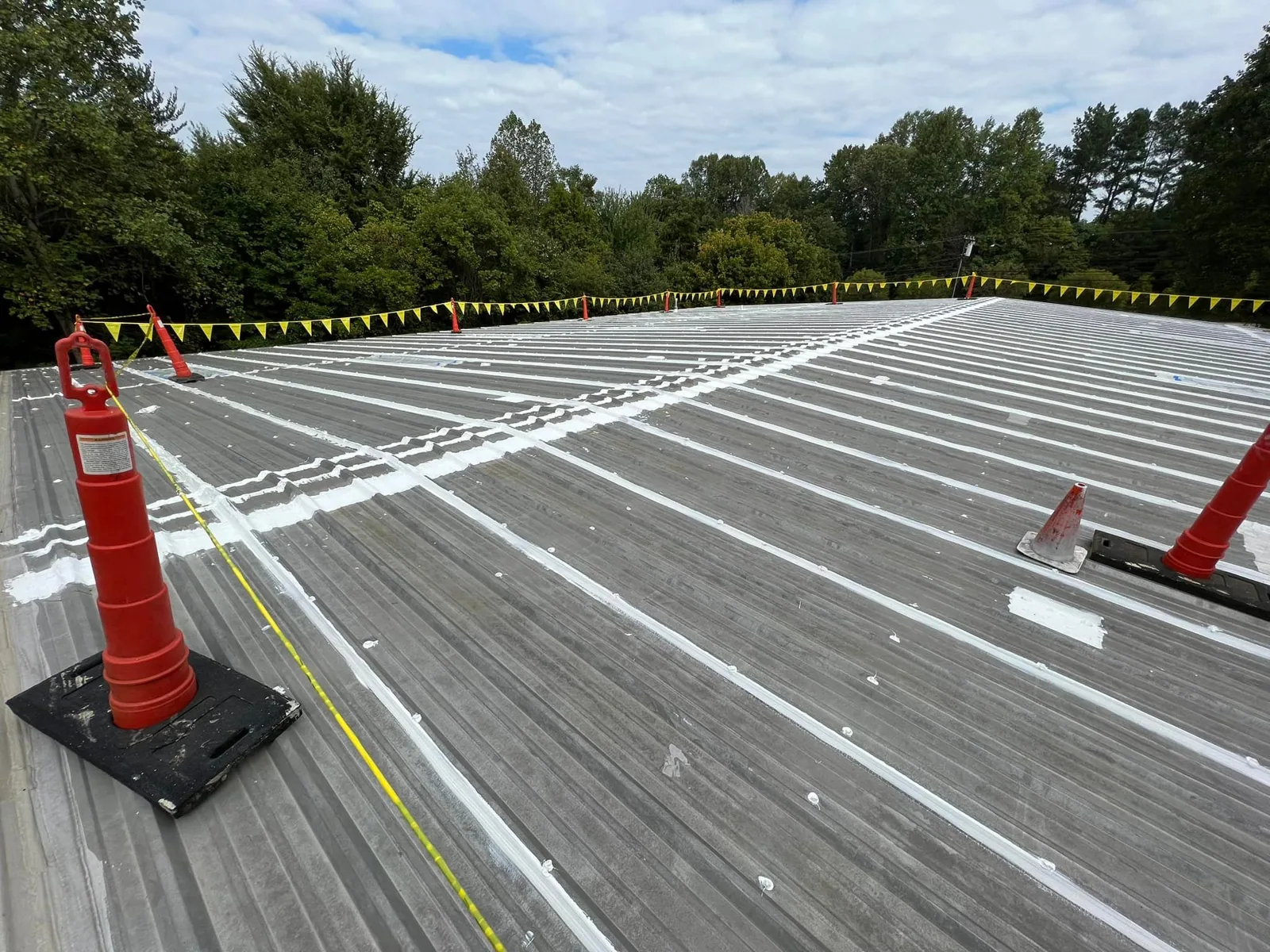
A low spot that remains wet after the rest of the roof dries needs a drainage check. We mark the water boundary, locate the nearest outlet and inspect what is holding water in place. Ponding water roof repair in Overland Park, KS, depends on the surface shape, drain condition and layers beneath the wet area. The first scope should separate a blocked drain from a persistent depression. Each condition calls for a different correction and a different work limit.
Summer in the Kansas City region brings both heat and rain. July normals list about 4.58 inches of precipitation, while daily high temperatures typically run from the upper eighties. That combination makes a standing-water area relevant to membrane condition, but the regional number does not predict water at a particular property. Around the College and Metcalf district, mixed-use activity adds access and staging needs. We inspect the roof and set a defined opening limit before proposing a drainage or membrane repair.
Trace the water route
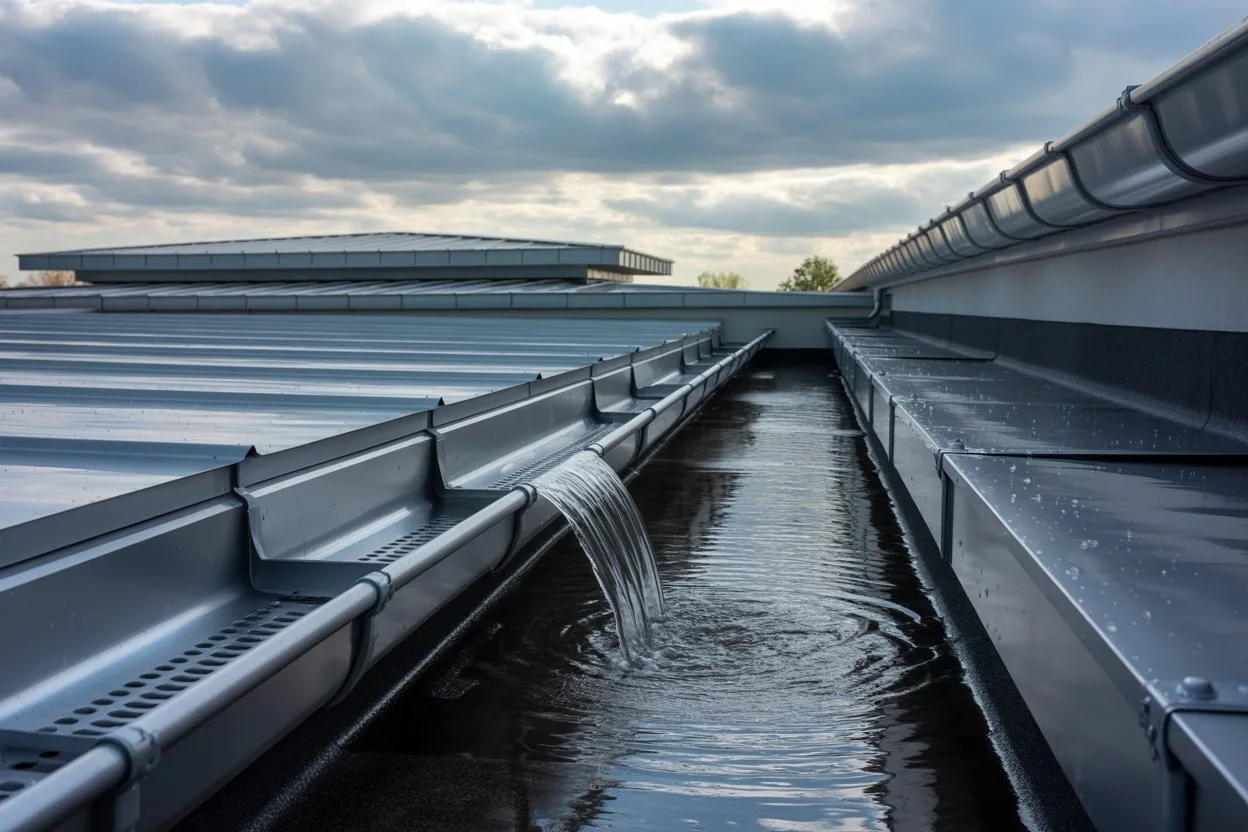
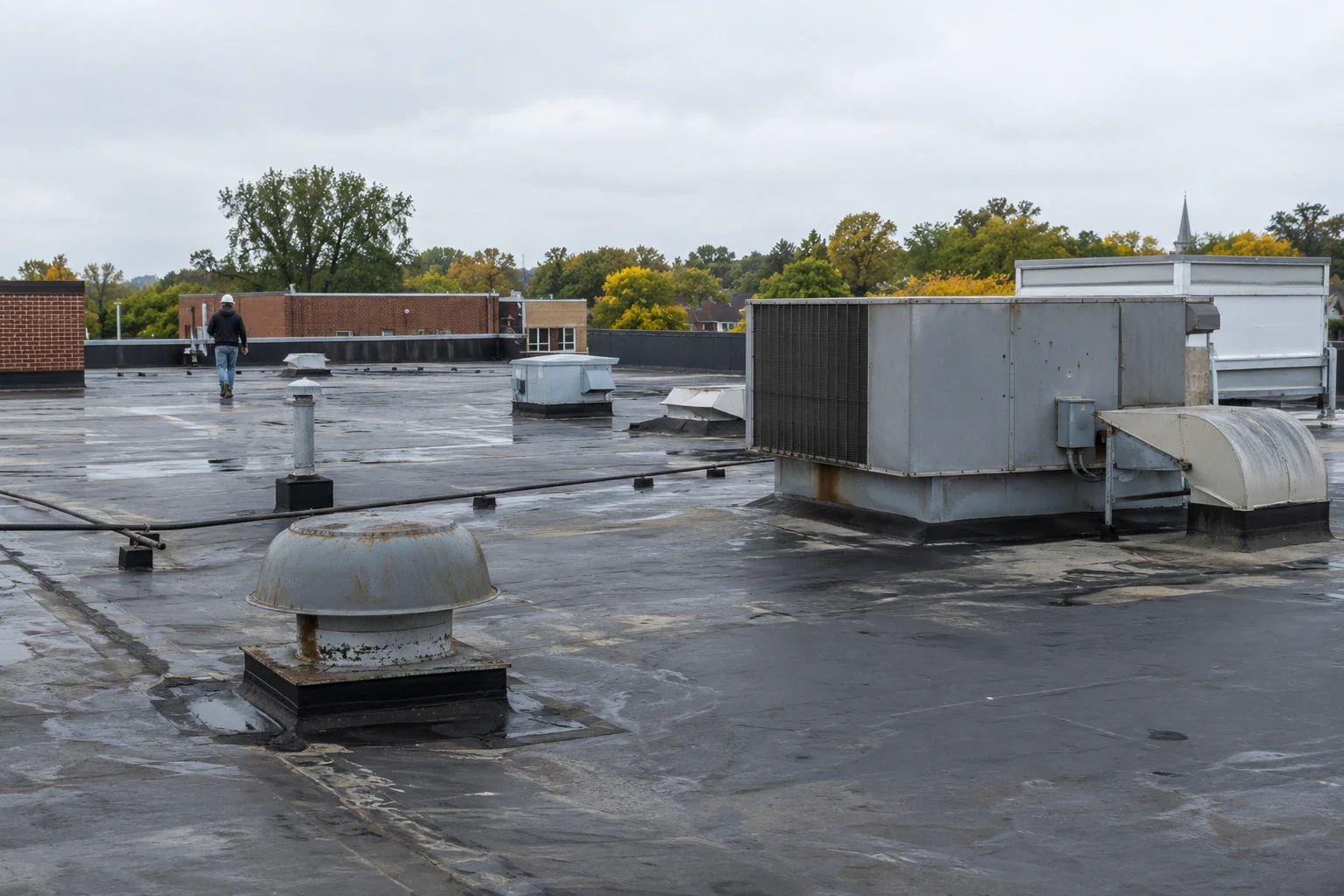
A drain basket full of debris can slow runoff without explaining a roof depression. We check the drain, scupper, leader connection and the roof surface approaching the outlet. We note whether water is trapped behind an obstruction or spread across a low area after the outlet is clear. The manager can see which observation supports the proposed work. Clearing the path may restore flow in one case. A shallow area that repeatedly holds water needs a separate evaluation of the underlying slope and assembly.
Overland Park's downtown combines businesses, civic uses, entertainment and multifamily housing. Work above those uses requires control of roof access and any opening that could affect occupied space. We also look for water collecting at curbs, penetrations and transitions that interrupt the path to the drain. A drain and scupper inspection can identify a damaged bowl or connection. The recommended scope should say whether we are clearing, repairing, replacing or changing the water route, and what remains outside that work.
Check the wet area
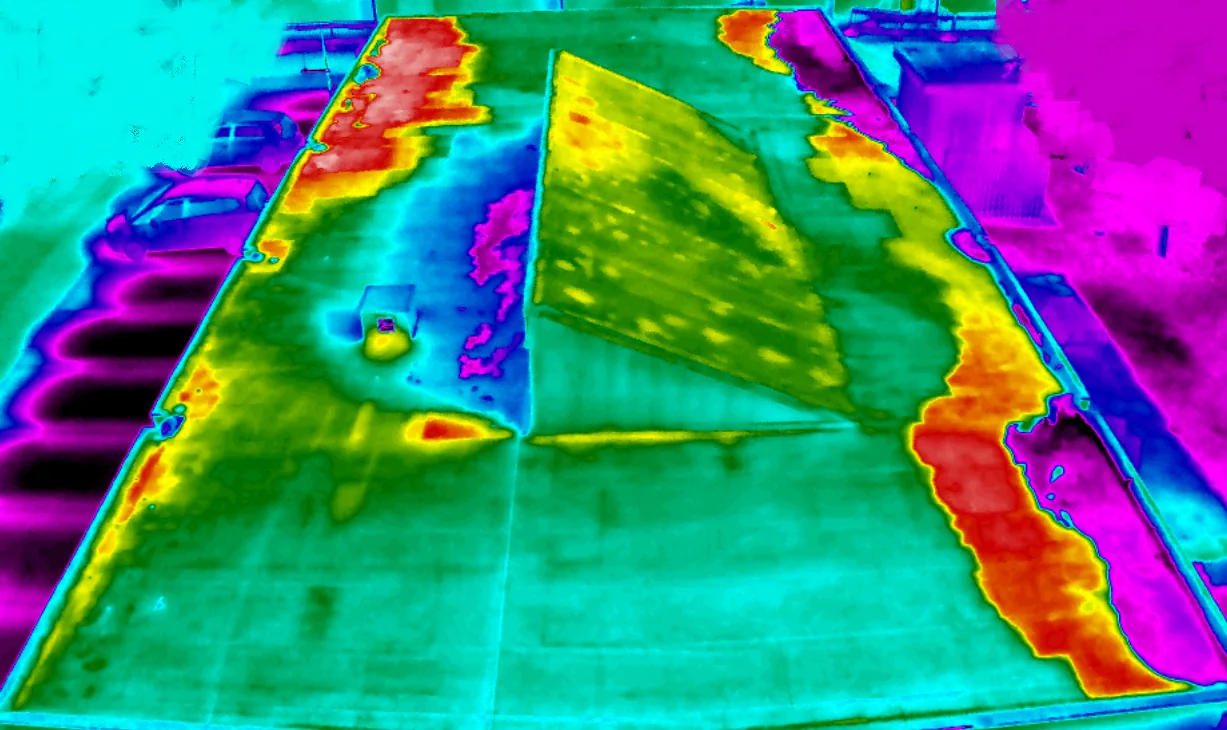
A soft surface or a change in the membrane near standing water can point to a concealed condition. We inspect the roof field and use suitable testing or an authorized opening when insulation condition would change the repair. Infrared patterns can guide where to confirm moisture; they do not replace confirmation. We mark the location, method and limits of each finding. If the insulation is dry and stable, a drainage correction may be enough. Wet or compressed layers can require removal before a new surface is installed.
Nearby office and healthcare buildings have equipment, entries and interior spaces that remain in use during roof work. We set the work window with the property manager and define how the area will be closed at the end of each day. A moisture survey can help map an area for follow-up investigation. Its results should connect to a decision, such as where to make a test opening or how far removal should extend. The report and estimate should distinguish suspected areas from material that has been confirmed wet.
Choose a correction that lasts
Changing the water route can involve more than adding a tapered piece above the membrane. We check the surrounding slope, outlet elevation, roof transitions and available drainage path. A raised patch can create another dam if its edge crosses the flow. The proposed correction needs a transition that the roof system can accept and that does not obstruct equipment access. We identify whether the scope is limited to clearing, a local repair, tapered insulation, or work that reaches a larger roof area.
The roof surface can carry water toward an outlet from several directions. A nearby curb, expansion joint or parapet can interrupt that route and make the deepest point look like the whole problem. We mark the boundary at more than one distance from the outlet and compare it after the drain is cleared. If the low area spans several roof sections, the correction may need a broader design review. The estimate should identify the area and transitions affected, the materials that will be removed, and how the finished surface reconnects to the surrounding roof.
When water has weakened a seam or flashing, those details need attention with the drainage condition. We inspect for open laps and separations, then define the related seam repair or flashing correction as a separate line of work where appropriate. A roof may need more than one repair type, but each should trace back to a finding. For a broader building review, a written roof condition record can track the water area and the decisions made.
Schedule around rain and access
Water must be removed or controlled before many repair materials can be applied. We check forecast conditions, surface moisture and the product requirements before selecting a work window. Summer heat does not remove the need to prepare for rain. A roof opened too broadly can be difficult to protect if a shower arrives during the shift. We set daily closure limits and identify temporary protection if the permanent correction cannot be completed in one visit.
The 79th Street corridor runs between Lamar Avenue and Frontage Road and connects Downtown Overland Park with Metcalf Avenue and Antioch Road. That commercial and residential mix makes delivery timing and safe staging part of the plan. We coordinate access with the manager and keep drain routes clear while materials are moved. An office roof repair may also require notice to building operations if a drain or rooftop unit will be temporarily inaccessible. The estimate should name those restrictions before the crew arrives.
Confirm drainage after the work
At closeout, we check that the repaired surface connects cleanly and that the planned route to the outlet remains open. A water test may be appropriate when conditions allow and when the scope calls for it. We record the repaired area, drainage components and any remaining low spots. The closing record should not promise that every roof area will be dry after every rainfall. It should show what was corrected and what needs separate attention.
Overland Park building managers can use dated photographs and repair notes to compare the same low area after future storms. If water returns, that history helps determine whether debris, slope, outlet capacity or another detail changed. We can set a targeted maintenance check instead of repeating a general inspection. Send prior service records and current photos when arranging the visit. We will locate the standing-water area, verify what is beneath it and explain the correction before material is removed.
Commercial Roofing Questions
How long must water remain before it becomes a repair concern?
The inspection should focus on repeated standing water and the roof layers beneath it. We check the drain path, surface shape and membrane condition before deciding whether the cause is blockage or a persistent low area.
Can a clogged outlet explain all of the ponding?
A blocked drain can slow runoff, but the surface may still hold water after the path is clear. We inspect both conditions and separate drain work from a correction to the roof slope.
Will you remove insulation wherever water is visible?
Removal follows confirmed wet or damaged material. We use testing or an authorized opening where the concealed condition changes the scope, then mark the limit that reaches stable support.
Can the building stay open during a drain repair?
Often, when the work area, interior protection and access route can be controlled. We agree on the work window and daily closure with the manager before opening the roof.
Related Roofing Work
Trace the standing water
Schedule an inspection with photos after rain, drain locations and access restrictions. We will identify the cause, confirm wet-area limits and define the repair scope.