
Commercial Roof Puncture Repair in Overland Park, KS
Home / Roof Damage Repair / Commercial Roof Puncture Repair
Get a Free Roof Assessment - Call 555-555-5555
What Property Owners Should Know
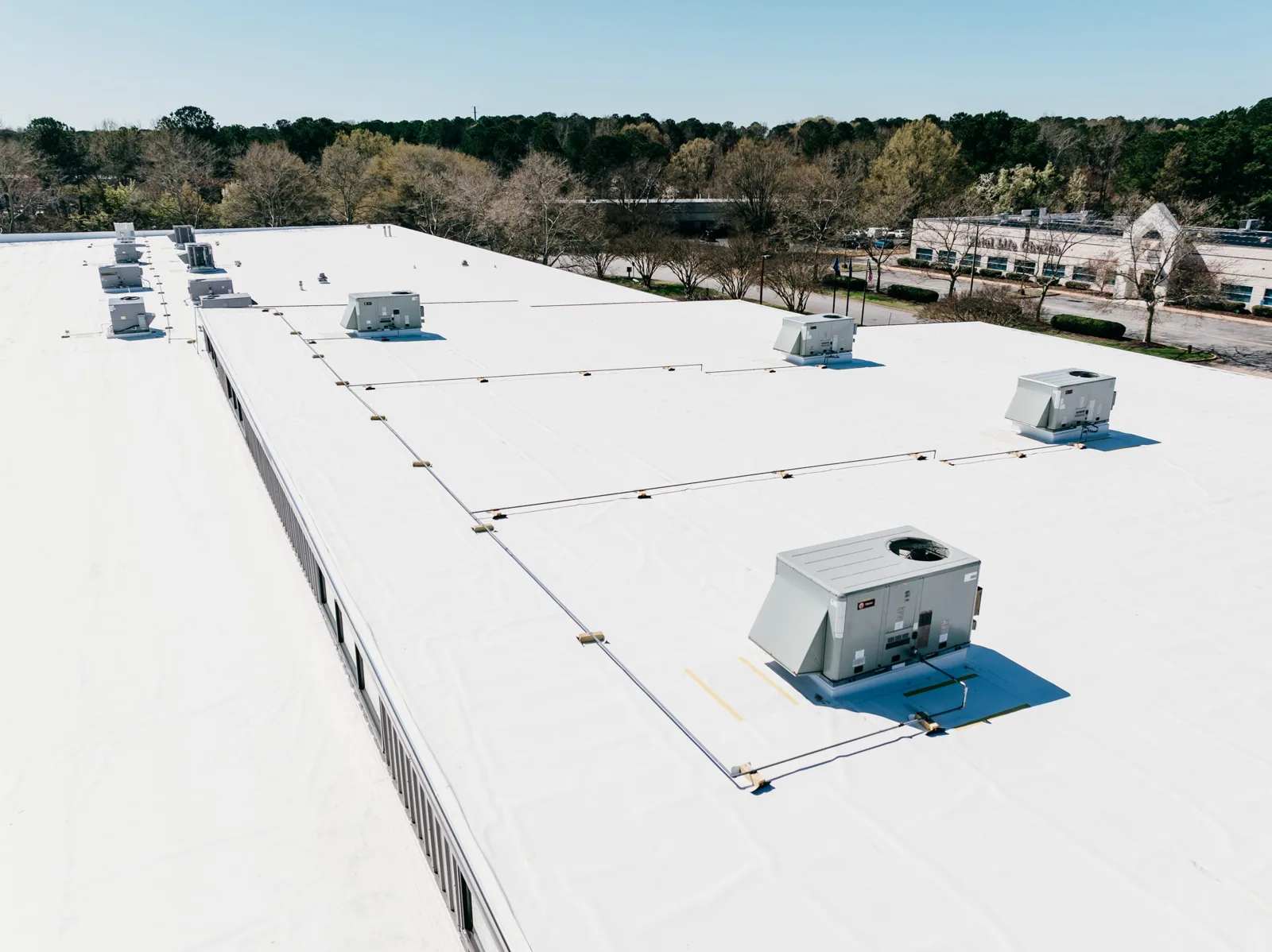
A dropped screw beside an HVAC service path can leave a small hole and a larger question. We locate the puncture, check the surrounding membrane and find out whether traffic has damaged the insulation below. Commercial roof puncture repair in Overland Park, KS, starts with the cause and the roof system. The repair must reach a clean, stable connection. A patch sized only to the visible hole can fail if the nearby surface is worn, wet or unsupported.
Regional July temperatures in the Kansas City area reach normal highs near the upper eighties. Roof surfaces can be hotter, so foot traffic and tools need a planned path. The 135th Street corridor is a retail area, and U.S. 69 access points extend between 103rd and 151st Streets. Those local routes can influence material staging and service access. We set a clear work zone with the manager and protect the roof around the repair. A maintenance inspection can also identify recurring traffic routes that need walk pads or access changes.
Find the source of the puncture
A hole near an air handler may come from a tool, fastener, sharp edge or repeated service traffic. We inspect the roof around the mark and identify the likely source only when the condition supports it. We check whether the membrane is cut, compressed or abraded and look for water tracking beneath the surface. If the source remains above the roof, the manager may need a trade to remove or protect the item before repair.
We also inspect the path used to reach rooftop equipment. Loose screws, cut wire and discarded packaging can create more punctures after a repair. Walk pads may have moved or stopped short of the work area. We identify a safe route, clear access and the need for temporary protection while the roof is open. In office and retail buildings, equipment service may need to continue during the repair. The work sequence should keep that route usable when the condition permits, and close the affected section at day's end.
Check beneath the hole
A puncture can admit water into insulation even when the surface opening is narrow. We inspect for softness, discoloration, loss of support or a wet area extending beyond the cut. Suitable testing or an authorized opening can confirm whether concealed layers need removal. If insulation remains dry and stable, a local patch may be sufficient. When wet material is confirmed, we mark its boundary and include the removal needed to reach a solid base.
The mark on top may not show the full path below. We compare interior staining, roof slope and any seams or penetrations nearby. If water has migrated, the repair may require a longer opening to connect the patch to sound membrane. We record the confirmed limit and explain any area that remains concealed. This lets the manager review a defined scope before the roof is cut, while leaving room for a documented change if the opening reveals more damage.
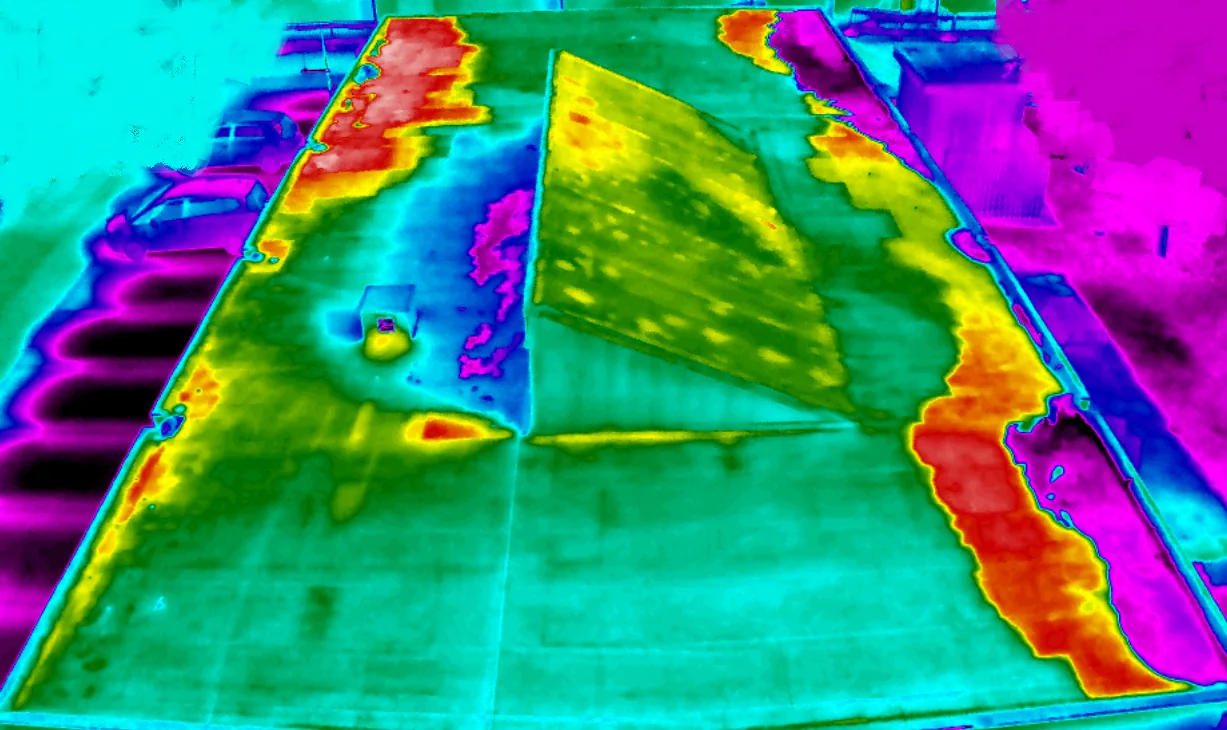
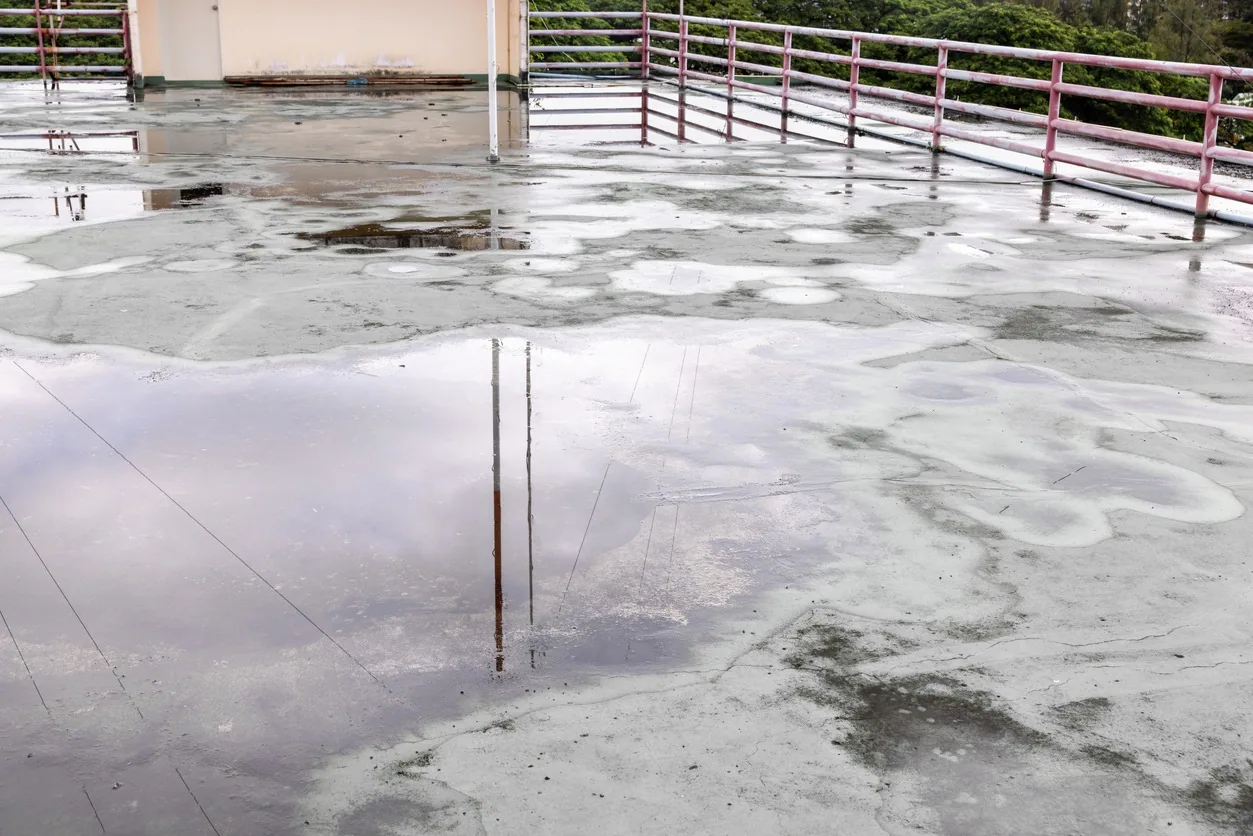
Some membrane damage is visible as a split or worn-through coating instead of a clean hole. That distinction changes preparation and patch shape. A thermal survey can point to locations for follow-up, but the roofing scope should state how the condition was confirmed. A moisture survey can guide that investigation when the assembly and access support it. If water has spread to a low area, we also check the drainage path before closing the surface. An adjacent ponding water assessment may be needed when standing water has weakened the repair area.
Prepare a compatible patch
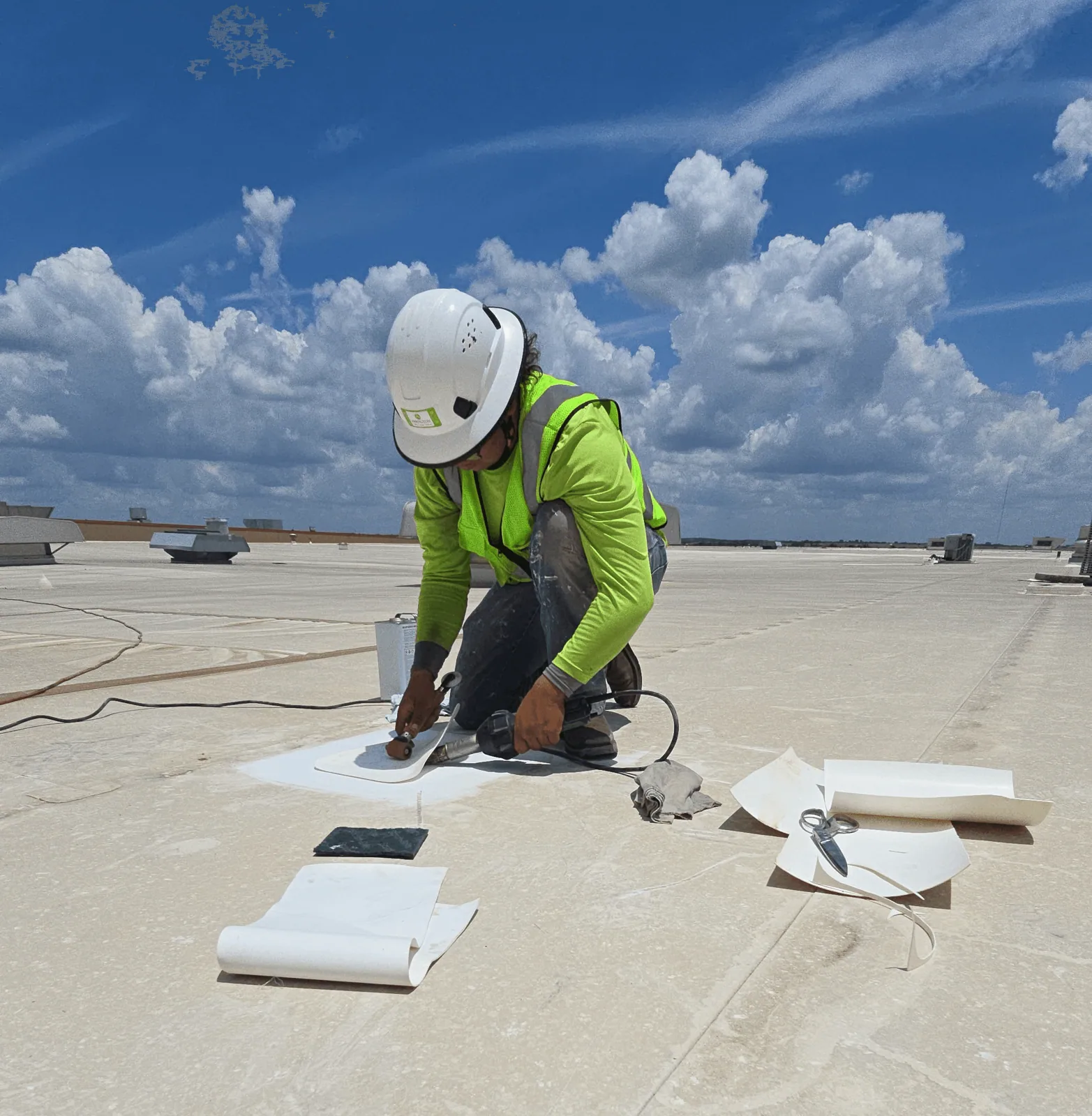
We identify the existing membrane before choosing a repair piece. TPO and PVC details use heat-welded connections; EPDM requires its compatible cleaning, primer and seam accessories. Bituminous systems have different layers and surfacing. Contamination from oil, grease, adhesive or an old coating can interfere with the bond. We remove loose material and prepare the surface according to the system requirements. The patch needs sound material around the opening and enough overlap for its connection.
Where wet insulation or damaged cover board is removed, we rebuild the substrate to support the membrane. A patch over a soft spot can flex under foot traffic and reopen. We state the removal depth that is known and how concealed conditions will be handled if the opening shows more damage. The TPO repair detail or another system-specific method should be selected only after identification. We document the material and preparation in the estimate so the manager can see how the connection will close.
Protect the service route
A repair can be damaged again if workers step on it before the connection is ready. We establish a work zone and tell the manager when the surface can be accessed. If equipment technicians need the route during the same window, the trades need an agreed sequence. We can install or replace walk protection where the roof system and layout call for it. That protection reduces wear, but it does not excuse dropped fasteners or unplanned traffic. We also identify who will remove discarded fasteners and packaging before the work area is released.
The U.S. 69 express lanes now run between 103rd and 151st Streets, with access points that affect movement across southern Overland Park. Local road access can help with staging, but the building entrance and loading area still determine where materials can be carried. We confirm those details before scheduling. In the 151st Street corridor, business hours and deliveries may affect roof access. A distribution building work plan may need to preserve dock activity and keep materials clear of vehicle routes.
Close out and prevent repeat damage
We check the patch perimeter, the repaired layer and nearby transitions before removing the work-zone controls. Photos show the hole, any confirmed wet area and the finished repair. The record should distinguish a completed patch from walk-pad installation or other work that was not part of the approved scope. If multiple punctures appear along one route, we inspect the broader path and note where the roof has been repeatedly exposed to traffic.
Overland Park has documented hail and tornado events, yet neither event should be used to explain a puncture without a roof finding. We consider the observed mark, its location and the building's recent maintenance activity. A related seam inspection may be appropriate if traffic has opened nearby joints. Send service dates, interior leak locations and photos when arranging a follow-up. We will confirm the repair and identify practical protection for the next equipment visit.
Commercial Roofing Questions
Can you patch around a screw without removing insulation?
When the layers are dry and stable, a surface repair may be enough. We check the support and water path first, then remove material only where the inspection confirms damage.
Should walk pads be installed over every roof route?
We place protection where traffic and the roof system call for it. The inspection should identify the routes used for equipment service and where a pad can be installed without affecting drainage.
Can another trade use the roof during the repair?
The access route and repair cure or weld requirements set the timing. We coordinate a sequence with the manager and service trade, then mark when the repaired area can be crossed.
What if we find more punctures after the first repair?
We document each location and inspect the shared traffic path. Several marks may point to a route or work practice that needs protection along with individual repairs.
Related Roofing Work
Locate the puncture and its cause
Schedule a roof check with the equipment service path, recent work dates and leak locations. We will inspect the membrane, confirm the support and set the patch limits.