
Commercial Roofing for Manufacturers in Overland Park, KS
Home / Industries We Serve / Commercial Roofing for Manufacturers
Get a Free Roof Assessment - Call 555-555-5555
What Property Owners Should Know
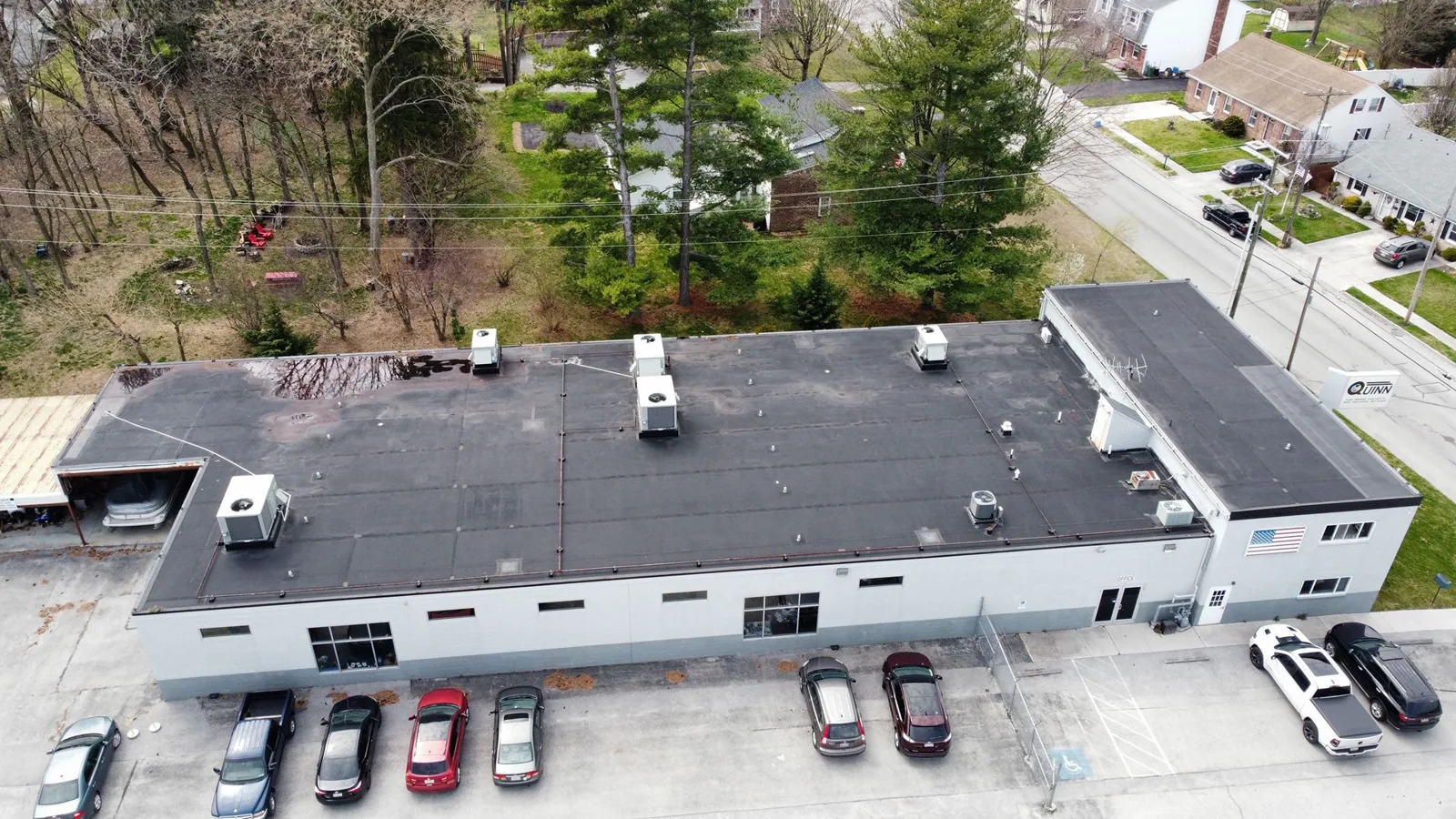
A production line cannot absorb an open roof without a defined stop point. For manufacturers in Overland Park, KS, we start with the area below the reported condition, the equipment that must stay active and the time available for a safe closure. We inspect membrane seams, penetrations, drains and curbs, then document the observed defect and its boundary. If the first view suggests wet insulation or a deck concern, we describe the test opening needed before expanding removal.
The Overland Park Chamber identifies technology firms and corporate headquarters among the city's business base, and its 2025 awards report documents engineering office activity along College Boulevard. The 79th Street corridor also connects Downtown Overland Park with Metcalf and Antioch. These facts locate the market; they do not establish the roof system at a plant. We verify the actual assembly, production access and loading route. A logistics building assessment addresses freight movements, while manufacturing work must also preserve the operating process below.
Map the production constraint
Before we schedule, the facility lead identifies sensitive rooms, material handling paths, exhaust equipment and any shift change that limits noise or access. The work plan names the roof area that can open, how far removal can proceed and how the assembly closes before the crew leaves. A production interruption must be agreed with the people who control equipment. We do not infer a shutdown window from a building type or from a route on a city map.
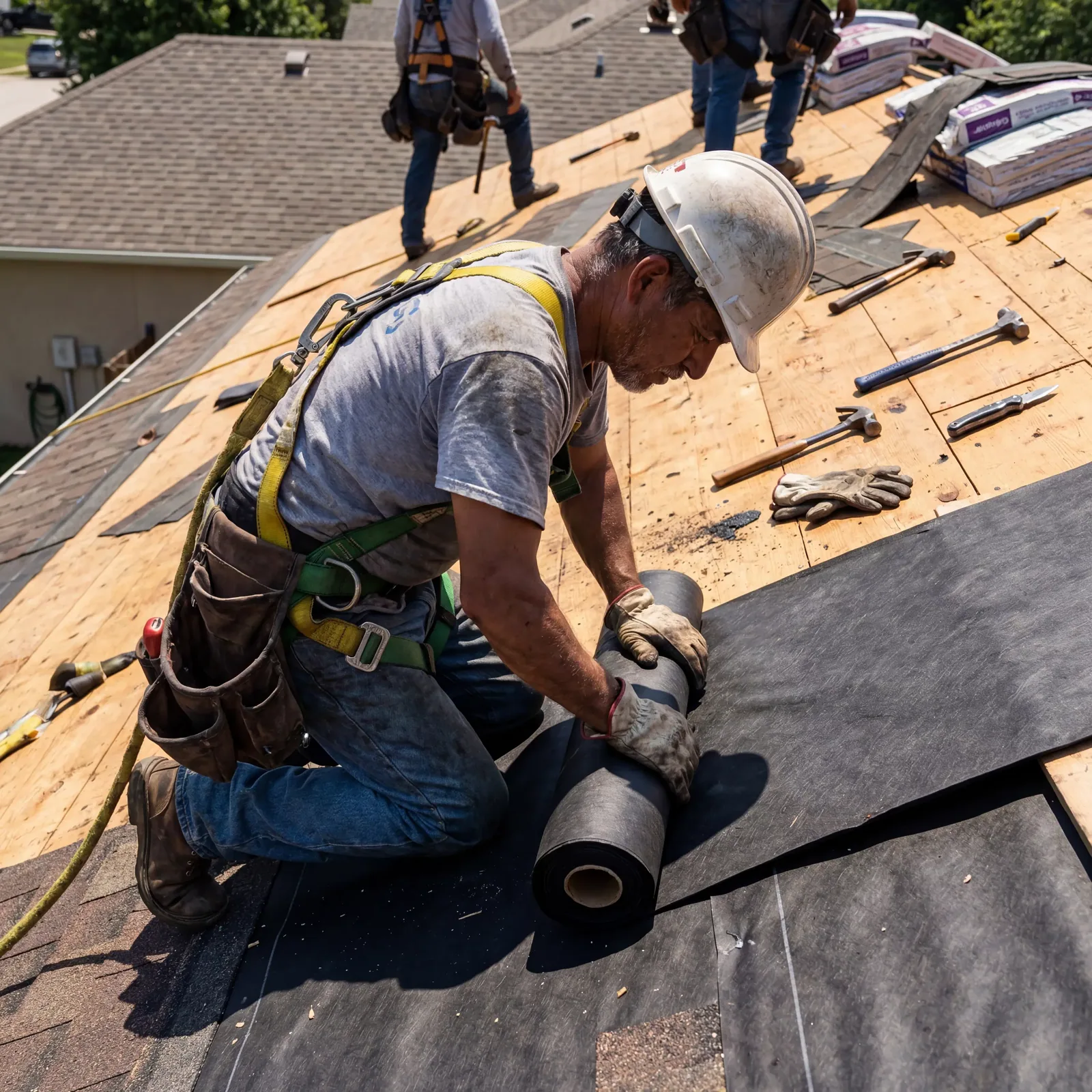
Loading and staging also affect the sequence. The manager shows where a lift can set up, whether a delivery lane must remain clear and how removed material leaves the property. A roof above a production floor may need protection matched to the process beneath it. We write those limits into the estimate. For a larger project, phased reroofing can keep sections closed and protected in sequence, provided each tie-in can remain watertight between work days.
Check the assembly at equipment details
Equipment curbs, pipes and exhaust penetrations interrupt the roof membrane. We examine the flashing perimeter, seam terminations, pitch pockets and areas where maintenance crews have crossed the field. A unit scheduled for service may need to move before a permanent repair. We coordinate that step first, then assign responsibility for restoring the curb detail and checking it after startup. A patch under equipment that is about to move can create a second opening without solving the first one.
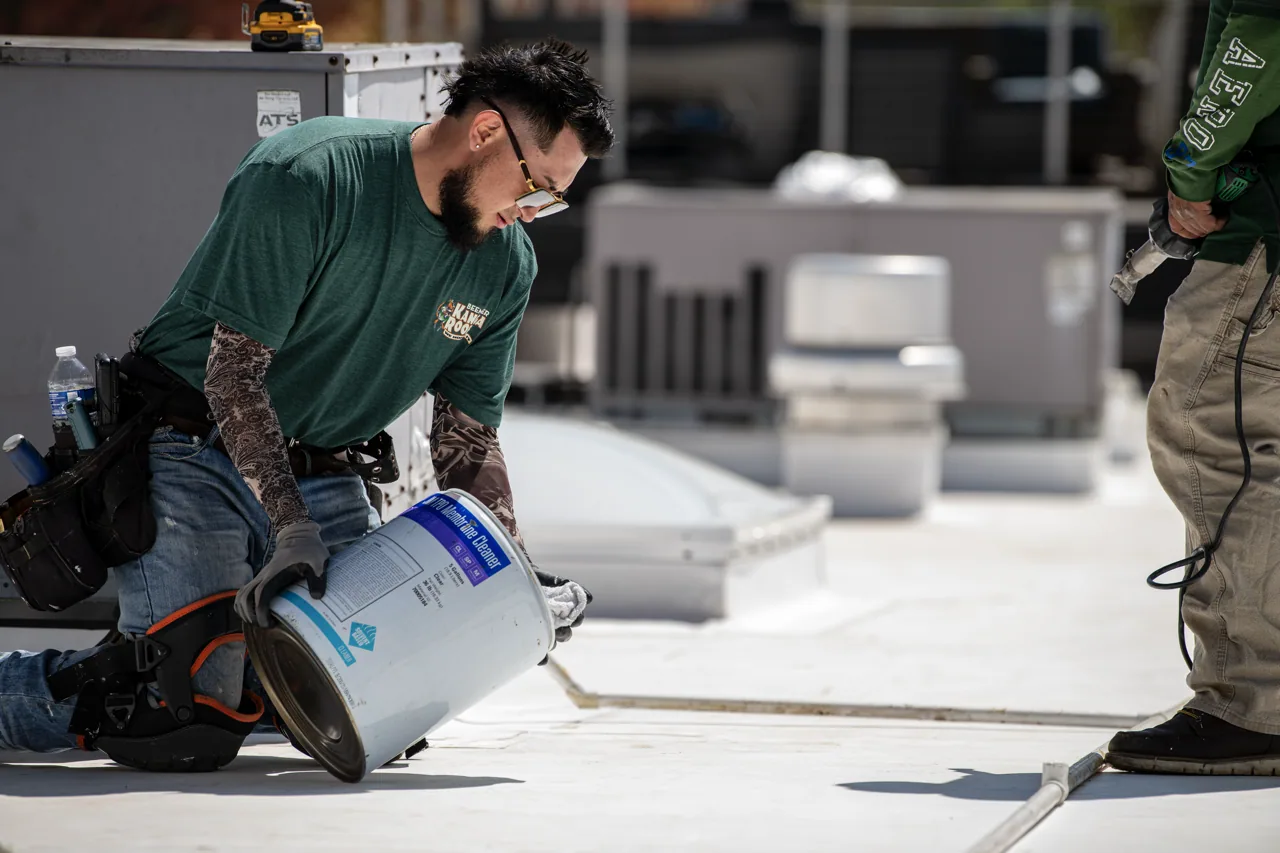
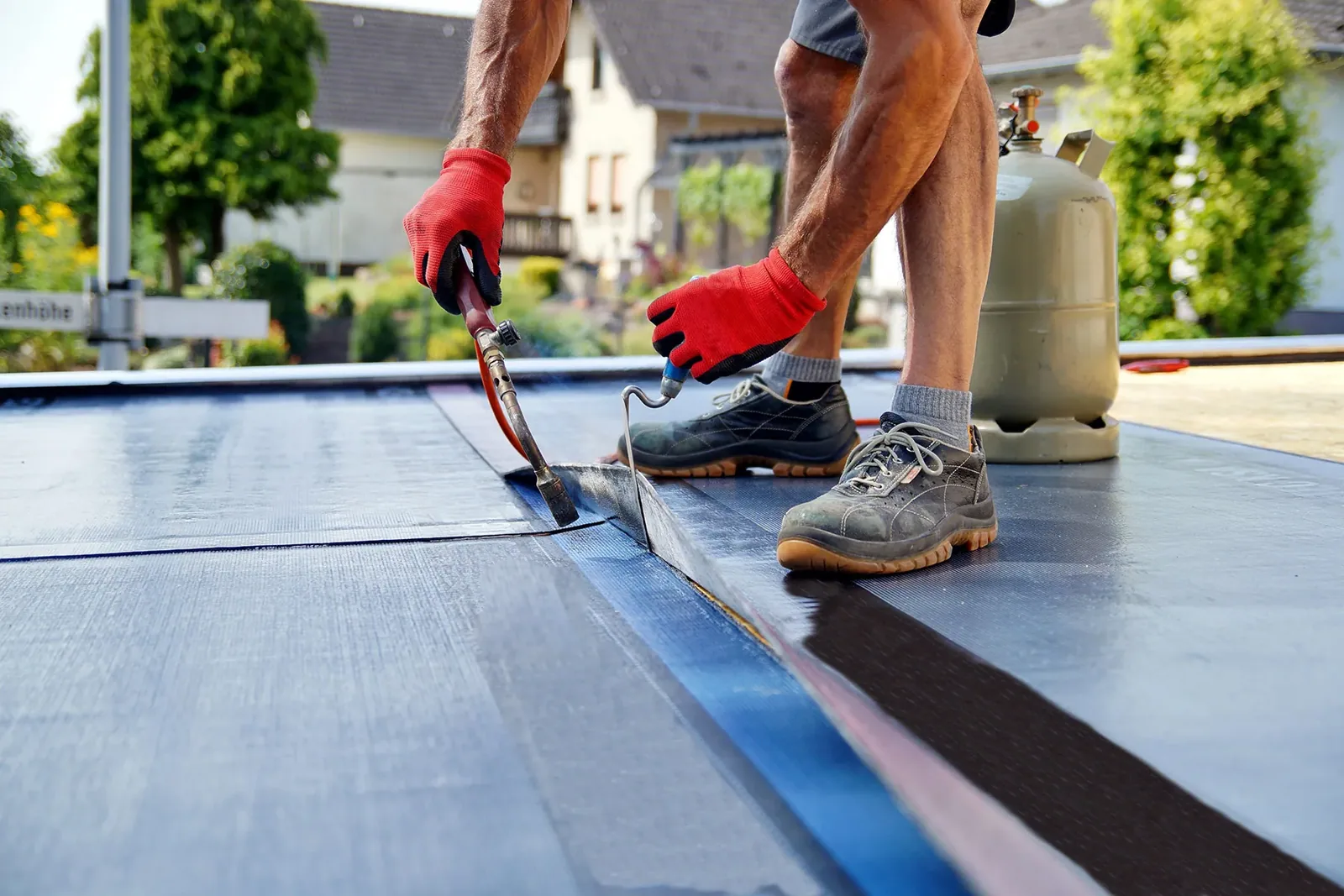
We confirm the existing membrane before choosing repair materials. TPO, PVC, EPDM, modified bitumen and metal each call for preparation suited to that system. If the roof has older coatings or unknown patches, a small compatibility test can be safer than assuming the surface will bond. A curb and support repair should address the connection, not just cover the visible gap. Photographs identify the condition and the part of the roof left untouched.
Set limits for heat and storm work
Surface temperature, moisture and the forecast can change the application window at a production site. We check the selected product requirements before opening the assembly and set a daily closure limit around the work area. Heat affects handling; an unexpected shower can expose material before the tie-in is ready. The schedule names the temporary protection and the person who checks it if the crew stops before permanent closure.
The Chamber's 2026 transportation update confirms the U.S. 69 express lanes opened between 103rd and 151st Streets. That improves a regional route, not access at a specific manufacturing property. We verify the plant's own gate, staging area and delivery schedule. A report of wind or hail still prompts a direct inspection of the roof, but we tie any repair to what the surface and details show. Storm response begins with that site review and the production area's immediate protection need.
Choose a repair boundary
A local repair is appropriate when the surrounding membrane is sound, the substrate is dry enough for the selected method and the defect can be closed at its perimeter. We mark that footprint and explain what remains outside it. A wider wet area, movement at an edge or repeated failure at a seam may need a selective opening. The finding that changes the scope is documented before the crew continues beyond the approved limit.
Recover and replacement are separate decisions. A recover depends on existing moisture, attachment, load and finished heights at drains and equipment. Replacement exposes more of the assembly and creates a larger removal sequence. We show which production areas are affected and how the daily closure works for each option. A focused repair and a replacement estimate use the same area and access assumptions, so managers can compare the actual work rather than two different scopes.
Record the roof work for operations
The facilities team needs to know what was opened, what was repaired and what was left in place. Our closeout photos show preparation, membrane tie-ins, flashing and the completed boundary. We list any concealed finding that changed the approved work, the person who accepted it and any further inspection due. If a process requires a clean or controlled environment below, the manager confirms its release after protection is removed.
Ordinance BC-3499, adopted in 2026, revised how Overland Park applies the 2024 building and energy codes locally. We review applicable requirements and confirm the project's permit path before design or construction. A roof condition report can preserve material and repair history for production and capital teams. It does not turn one observation into a warranty or a remaining-life claim. The record supports the next maintenance decision by showing the roof evidence and its limits.
Coordinate the next work window
Before mobilization, we confirm the roof contact, shutdown authority, access route, protection requirements and the point where work must stop for the day. If a hidden condition appears after opening, the crew secures the area and reports it before expanding the footprint. The production lead receives the changed scope and its operational effect. That gives the facility a chance to approve the repair or hold at a safe closure.
A manufacturer may also manage retail or office property, but each roof gets its own inspection and work sequence. The property manager record can keep site histories consistent, while asset review may require a capital summary. For a property near College Boulevard and Metcalf, we verify today's staging conditions with the facility contact. Book the roof review with the person who can approve the production limit and daily closure.
For a roof over active production, the closeout should show not only the completed surface but the equipment and protection handoff. We note whether a curb was rebuilt, whether a mechanical trade returned and which roof areas were not disturbed. If a schedule change shortened the original work window, we identify the temporary measure and a follow-up date. The operations team can then match the roofing record to its maintenance log and avoid treating a protected opening as a permanent repair.
Commercial Roofing Questions
Can production continue under a roof repair?
Often, if the process, protection, noise and work limits are reviewed with the facility lead before the roof is opened.
What happens if the crew finds wet insulation?
We stop at a safe closure, document the opening and ask for approval before expanding removal beyond the agreed footprint.
Does a hail report establish damage at our plant?
No. We inspect the actual surface and details, then separate observed damage from the event record.
How do you plan around equipment service?
We identify units scheduled to move, coordinate the trade sequence and verify who restores the curb flashing after startup.
Related Roofing Work
Set the production work limit
Schedule an inspection with Commercial Roofing Overland Park. We will confirm access, equipment coordination and the daily roof closure point.