
Commercial Roof Leak Repair in Overland Park, KS
Home / Commercial Roofing Services / Commercial Roof Leak Repair
Get a Free Roof Assessment - Call 555-555-5555
What Property Owners Should Know
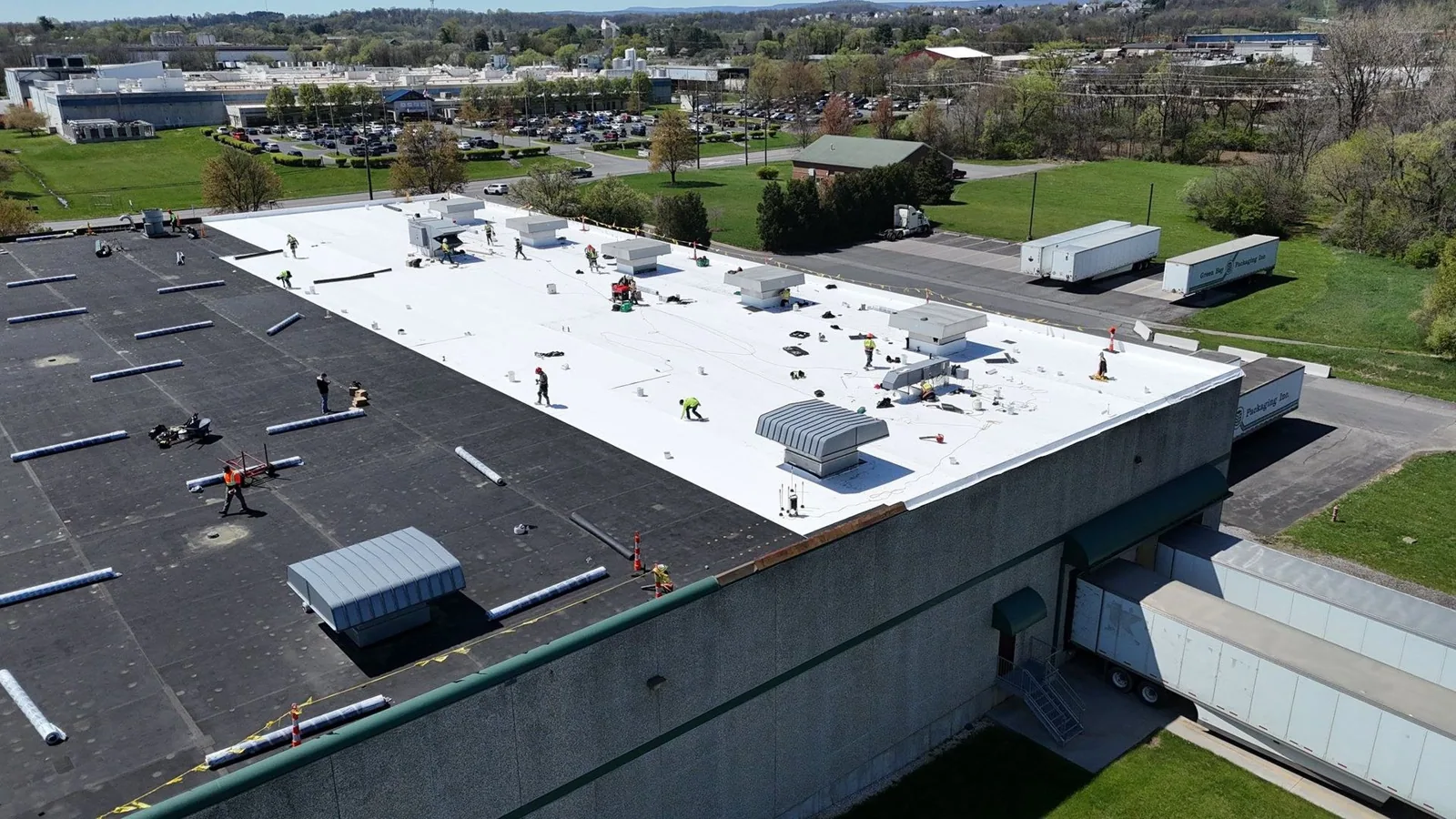
Water above a treatment room changes the order of work. Protect the occupied space, then investigate the roof without adding another uncontrolled opening. Commercial roof leak repair in Overland Park, KS, starts with the use beneath the leak. We ask which rooms are affected, whether equipment is exposed and how the leak changes during rainfall. Those details help us set the urgency and the access requirement. They also help distinguish an active entry point from water already stored in the assembly.
Overland Park includes healthcare, office and retail businesses. A roof problem can interfere with patient appointments, computer equipment or merchandise. We identify the operating limit before testing a detail. The goal is a defined repair, supported by the roof findings. For an active leak that needs immediate protection, emergency roof response addresses the immediate exposure while the permanent scope is established. We keep those two scopes clear so the manager knows what has been stabilized and what still needs correction.
Map the leak through the building
A ceiling stain gives us a place to begin, not a complete repair footprint. We record its position relative to walls, equipment and roof features. The timing matters. A leak that appears with wind-driven rain may involve a different detail from one that continues after the storm has passed. Condensation or plumbing can also produce interior water. We compare the interior evidence with the roof condition before choosing where to intervene.
We examine likely entry paths at drains, seams, curbs and wall connections. Water can move within insulation or follow a deck fluting direction. Previous repair records can show whether the current problem is recurring at the same connection. The investigation should identify which observations support the diagnosis and which areas need more access. A complete roof inspection may be appropriate when the leak is part of a broader deterioration pattern.
Controlled testing is selected carefully. Adding water without considering the building use can enlarge interior damage. We discuss the testing method and protection first. Where water entry is active, an initial weatherproofing measure may be needed before detailed investigation. Once the immediate exposure is managed, we can examine the assembly without letting the building condition dictate a rushed permanent repair.
Inspect the detail that failed
A pipe boot with a split needs a material and movement check. We inspect its connection to the roof, the condition of the pipe and the surrounding surface. An equipment curb may have loose terminations, low flashing or a corner stressed by movement. A seam may be open because the sheet is dirty, damaged or inadequately supported. The visible defect and its cause both affect the repair.
Roof drains need inspection at the inlet, clamping components and adjoining membrane. Water sitting near an outlet can reveal a drainage problem that a patch will not correct. The drain and scupper repair scope should explain whether blockage, a failed connection or roof elevations are involved. We inspect overflow paths as well. A working primary drain does not remove the need for the secondary drainage intended for the building.
The 79th Street corridor connects Downtown Overland Park with Metcalf Avenue and surrounding arterial roads. Commercial properties there can have access constrained by adjacent occupied uses. We inspect the actual roof arrangement before setting a work window. Where equipment or a wall transition is the problem, the repair may need another trade to move a component or restore a damaged support. That coordination belongs in the scope before the detail is opened.
Remove the wet material
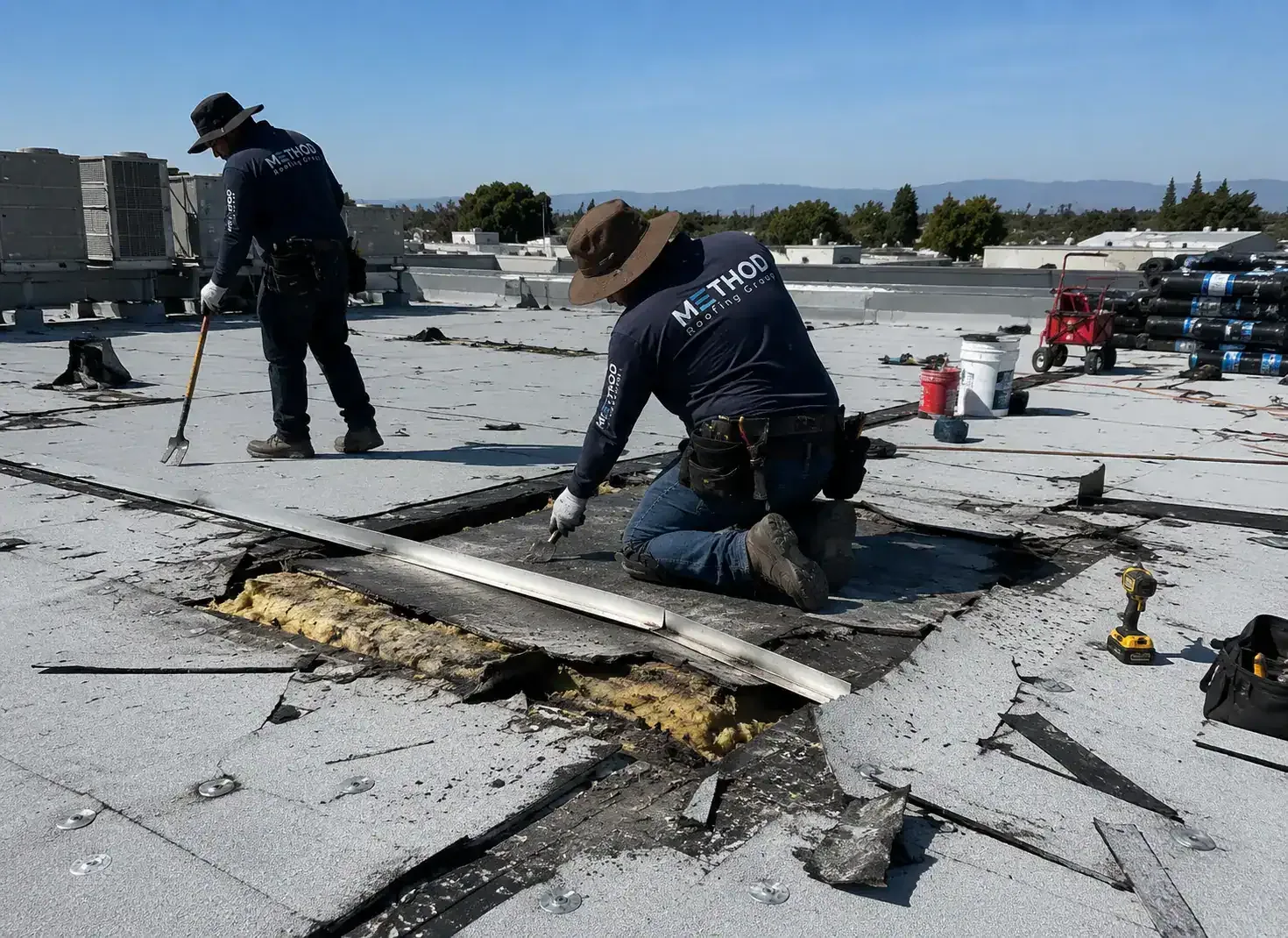
Wet insulation beneath a membrane can extend beyond the visible leak. We assess its likely extent and use appropriate testing or openings to confirm the condition. The removal footprint needs to reach sound material that can support a reliable connection. Sealing one opening does not dry the concealed assembly. Retaining wet material can leave the roof vulnerable to loss of insulation performance, deterioration and later failures.
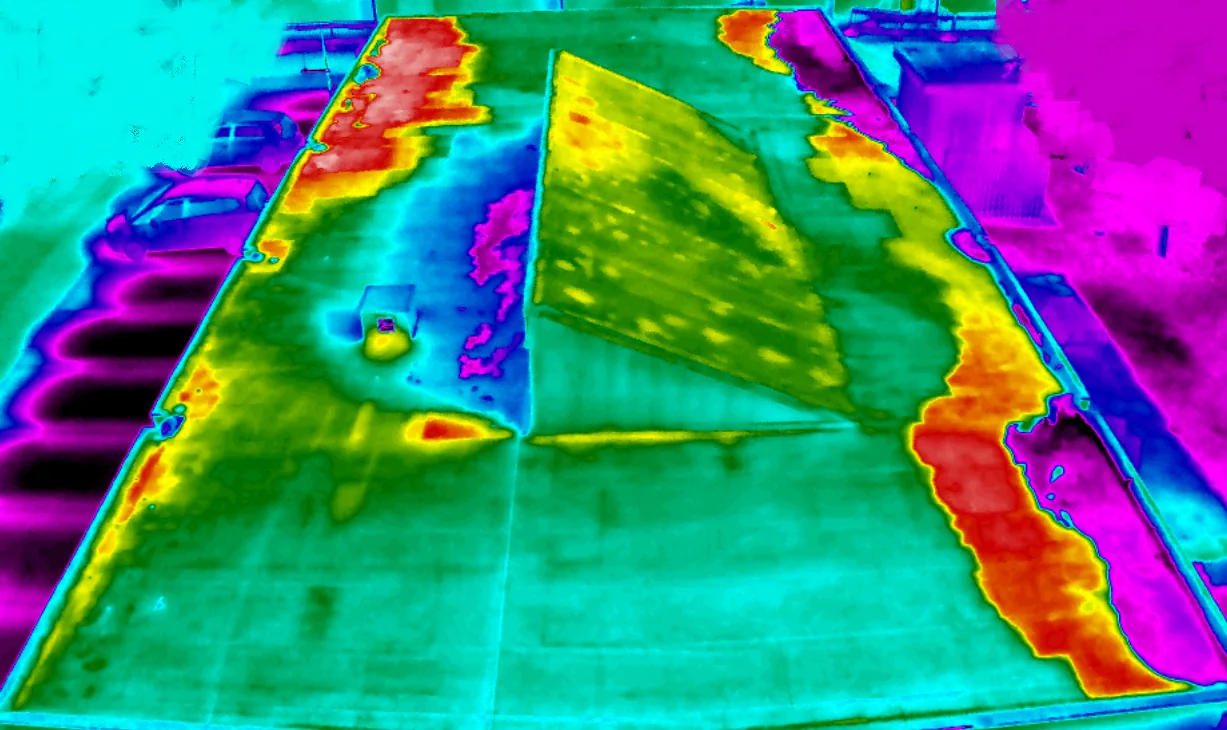
An infrared moisture investigation can help identify areas for confirmation when conditions and the assembly suit thermal testing. We explain the survey limits and how suspect patterns will be checked. The finding may support a local removal area. It may also show that the roof needs a wider decision. The estimate should distinguish confirmed removal from an area still being investigated.
Regional January snowfall and cold affect leak work. Ice can conceal details or restrict safe access. Material application temperatures can limit the permanent repair even after an entry point is located. We plan the opening limit against the weather and the occupied building below. Temporary protection should remain compatible with the later repair. The manager receives the proposed sequence and the conditions that could require a change, rather than an unexplained promise to finish regardless of the forecast.
Choose a durable connection
The existing membrane decides which patch materials and joining methods are suitable. A thermoplastic sheet, rubber membrane and asphalt roof require different preparation. We identify the assembly and check whether earlier coatings or repairs have altered the intended bond area. A flashing correction may need new material extending to a sound termination instead of another bead of sealant over a failed edge.
A medical office creates specific limits on disruption. For roof work over medical rooms, we coordinate openings with the spaces in use and the equipment that must remain protected. Noise, debris routes and access to rooftop mechanical units need separate consideration. We discuss those restrictions with the property manager before arranging the crew. A narrow roof repair can still require careful timing over a sensitive occupied room.
Cost is driven by investigation, access, removal and the detail being rebuilt. A small puncture on an accessible sound roof differs from a leaking drain surrounded by wet insulation. Repeated emergency patches can complicate preparation. We describe the material requirement and the repair footprint so those differences are visible. Where localized work is appropriate, the proposal should explain why the surrounding assembly is being retained and what monitoring remains useful after the connection is restored.
Confirm the next check
The finished repair needs inspection at its edges and connections. We photograph the work and record any additional defects discovered outside the approved scope. Follow-up after suitable rainfall can help evaluate the original leak condition. Interior materials may need separate drying or restoration even after the roof entry has been corrected.
At occupied properties in Downtown Overland Park, the check should fit tenant access and the actual room affected. Give us the leak timing, interior photos and available roof records when scheduling the visit. We will investigate the entry path, identify wet material and define the repair that the building can support.
Commercial Roofing Questions
Why does the ceiling still drip after rain stops?
Stored water can continue moving through a wet assembly. We inspect for an active entry point and retained moisture. Interior drying and roof removal needs must be evaluated separately.
Can we approve a patch before the leak is located?
A temporary measure may protect a likely opening, but a permanent scope needs a supported diagnosis. We identify what the first visit establishes and where further testing is needed.
Will sealant correct a leaking equipment curb?
Sealant may be one component of a detail, but loose terminations, damaged flashing or inadequate clearance can require rebuilding. We check the curb connection and specify the actual correction.
How should we record an intermittent leak?
Note rainfall timing, wind conditions, affected rooms and whether dripping continues afterward. Photos taken before ceiling materials are removed can help connect the interior evidence to the roof inspection.
Related Roofing Work
Set the work limits
Schedule the leak investigation with the affected room, timing and access restrictions. We will establish the entry path and removal footprint.