
EPDM Commercial Roofing in Overland Park, KS
Home / Roof Systems / EPDM Commercial Roofing
Get a Free Roof Assessment - Call 555-555-5555
What Property Owners Should Know
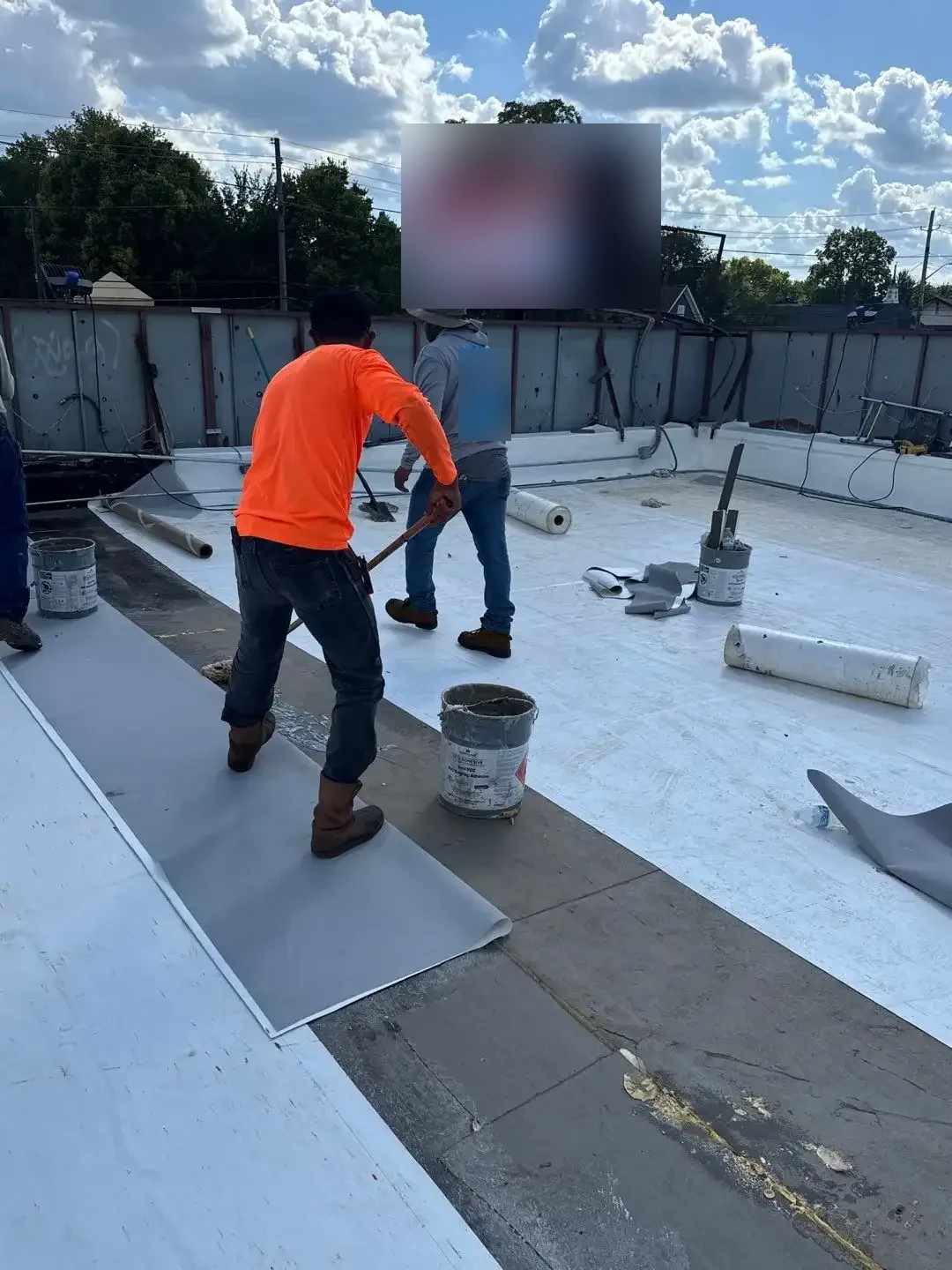
An old rubber patch needs its material and bond area checked before another repair is placed over it. Start with that connection, then inspect the assembly supporting it. EPDM commercial roofing in Overland Park, KS, requires appropriate surface preparation and compatible accessories at seams, curbs and penetrations. We assess weathering, contamination and previous repairs. The scope should reach usable material rather than assume a larger patch will correct an unsuitable surface beneath it.
Downtown Overland Park has business, residential and civic uses, while 135th Street carries retail activity. Those building settings can place different restrictions on roofing access and the rooms below work. We review the actual property and inspect the existing assembly before recommending repair or replacement. A rubber membrane repair should describe preparation and supporting-layer needs as well as the visible defect. That gives the manager a defined roofing decision instead of a patch size detached from the condition.
Prepare the seam connection
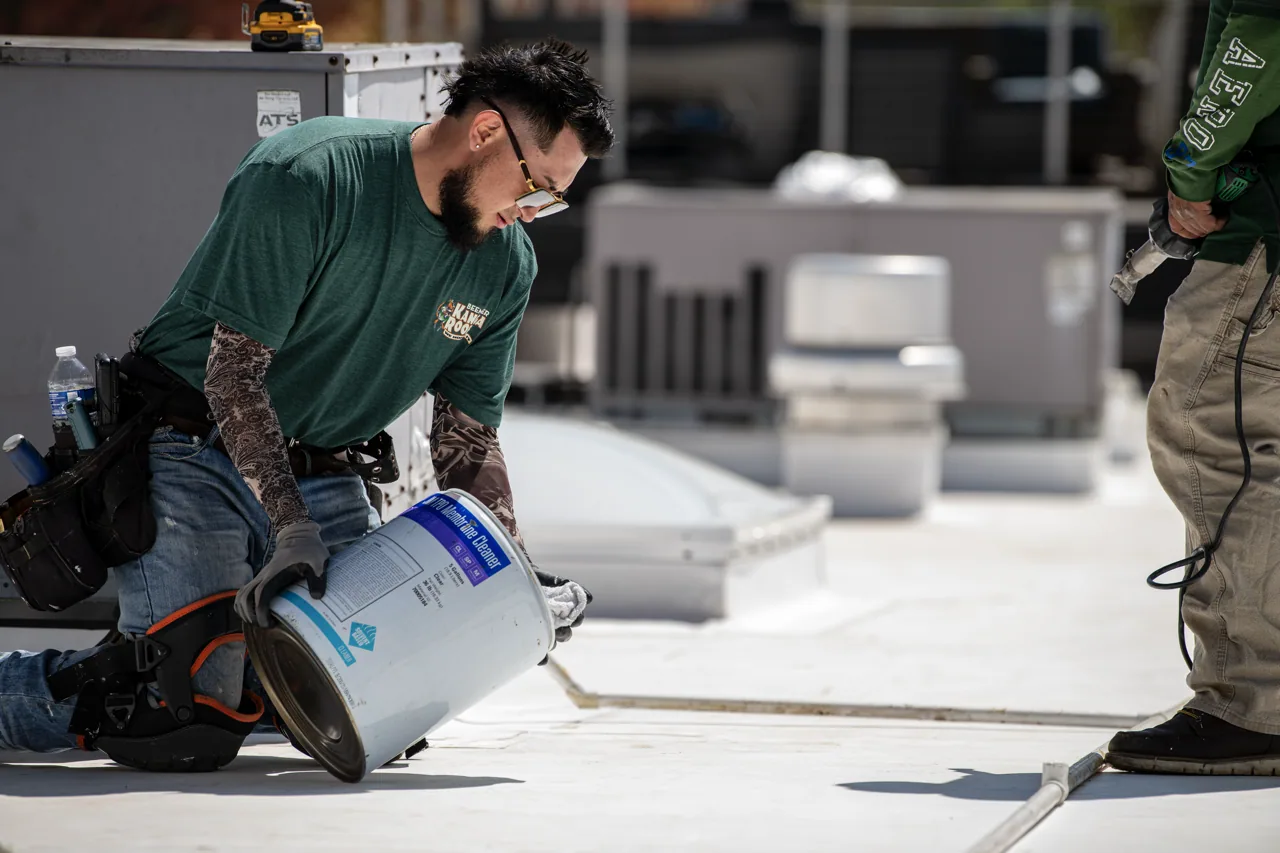
An EPDM seam or patch uses materials and preparation appropriate to the system. Dirt, loose material and contamination can affect the bond area. We identify the existing roof and previous repair products where possible, then specify compatible cleaners, primers and accessories as required. Preparation should produce a suitable connection without damaging the retained sheet.
A split beside an old repair needs closer examination. The patch may have stopped short of damaged material, or movement may still be stressing the connection. We inspect the surrounding sheet and accessible support before deciding the new footprint. Soft or wet layers can require removal. The repair must reach material that can support the detail rather than only cover the first visible gap.
The condition at a seam differs from a pipe or curb flashing connection. We assess the particular detail and the accessory requirements for it. Weathered material may need additional preparation or a wider correction. The manager receives the method and the limits that determine it. Where the material cannot be identified or made suitable, the next step may be investigation or removal rather than an unsupported promise that any rubber surface accepts the same repair product.
Inspect curbs and perimeter details
A curb corner can split where material is stressed or the connection no longer suits the equipment arrangement. We examine the base, vertical flashing and termination. The equipment may obscure an area that needs access by another trade. The roofing repair should follow a coordinated sequence so the component can be handled and the opening closed correctly.
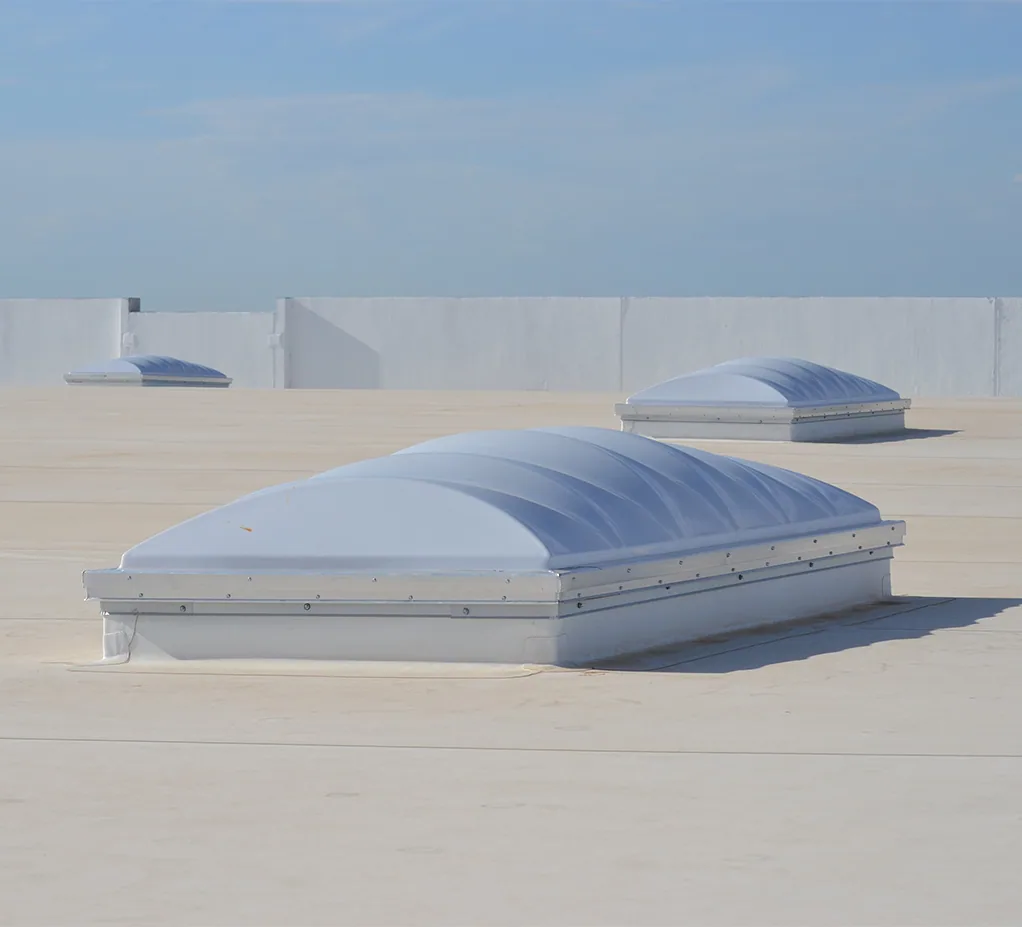
Penetration flashing work should use accessories and methods compatible with the EPDM assembly. An added roof layer can reduce the exposed height of a curb, while a fixed drain may require a new approach from a raised field. We evaluate those relationships before choosing the repair or replacement detail. The selected surface cannot compensate for inadequate clearance or an unresolved equipment defect.
Perimeter components need suitable attachment and support. We inspect accessible edge conditions and identify whether metal or substrate work is needed beside the membrane. A connection should remain serviceable after the repair. Walk routes and equipment traffic can affect vulnerable details, so we discuss their protection with the manager. Keeping drainage and maintenance access usable is part of the finished assembly, not a separate concern to be considered only after a new leak appears.
Establish dry supporting layers
Wet insulation beneath a rubber membrane can extend beyond an opening in the surface. We assess the concealed questions that change the repair and discuss authorized testing. Suitable confirmation helps establish removal limits. Sealing a top defect does not restore material below it that has lost its useful condition. The permanent connection needs a suitable supporting assembly.
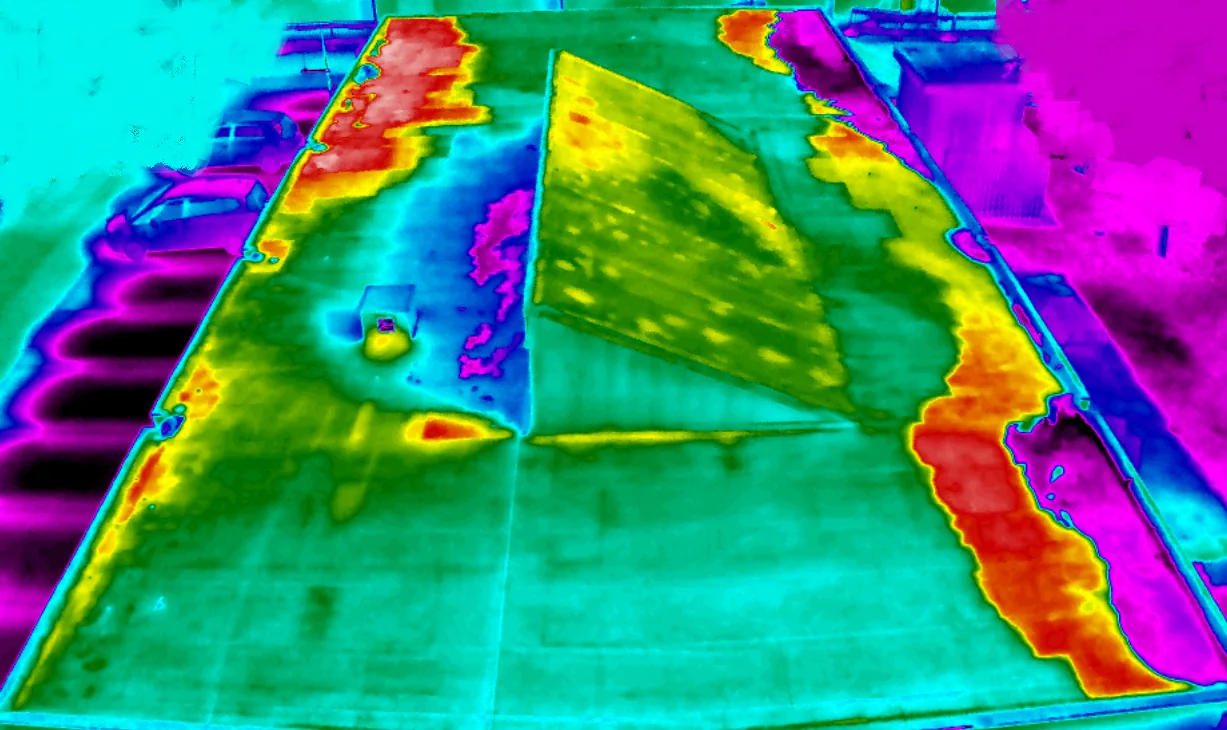
A moisture investigation may direct further checks when the construction and environmental conditions support the method. Thermal patterns must be interpreted against the roof and confirmed appropriately. We distinguish those suspect areas from established wet material. Deck concerns also need attention where accessible findings indicate another evaluation is required.
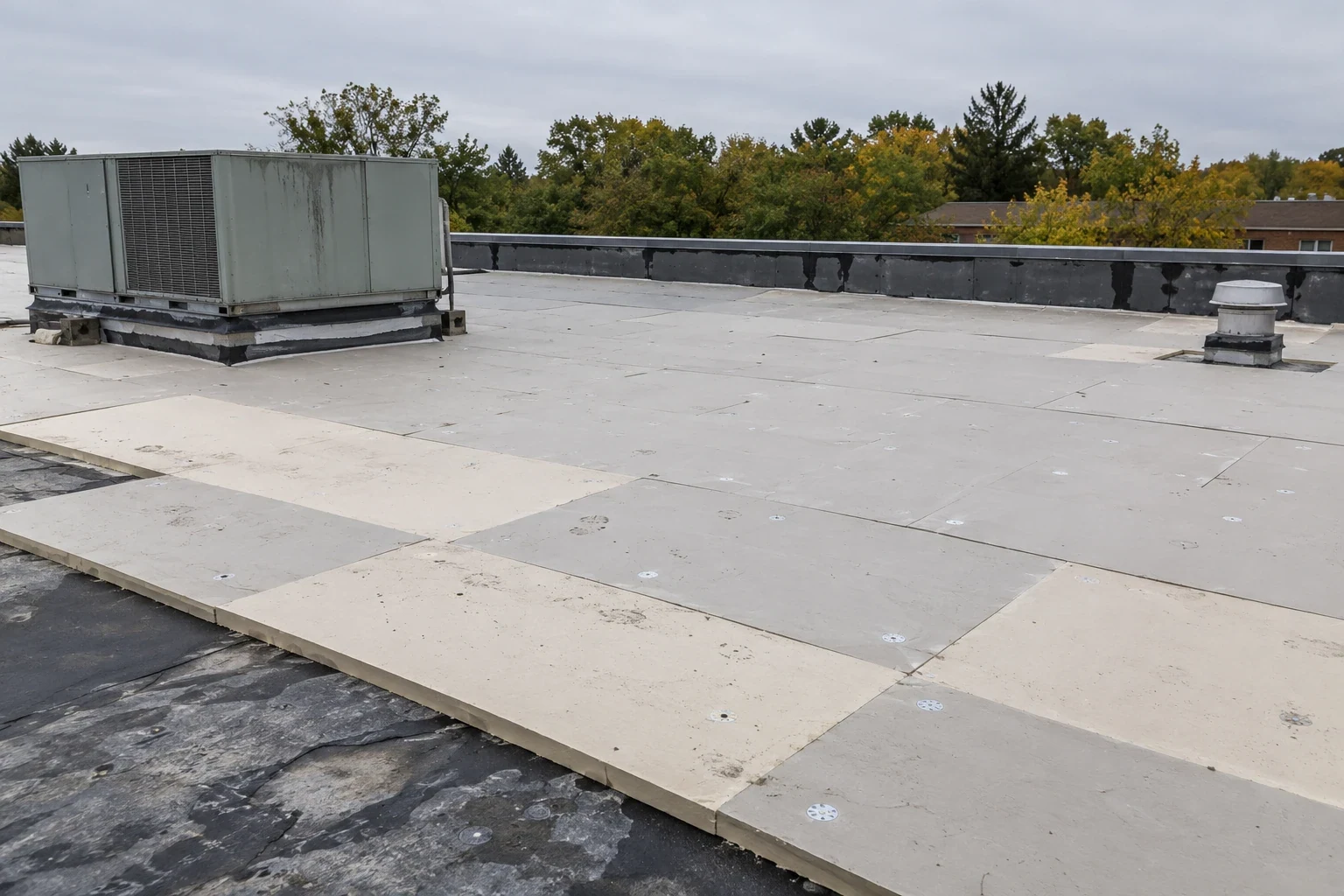
Insulation and substrate preparation affect attachment and the finished surface. An adhered assembly requires suitable bonding surfaces and compatible materials. Other attachment approaches need the appropriate supporting construction. The scope should explain the layers being retained and replaced. That allows the manager to compare complete roof work rather than assume the same membrane name means the same preparation, attachment or thermal result across different proposals.
Compare repair with another assembly
A stable surrounding roof may support a targeted EPDM correction. Extensive deterioration or repeated failures can make a wider project worth evaluating. We explain the finding that changes the decision. The roof condition, wet-area extent and usable substrate matter more than a broad preference for one membrane. The manager needs a reason for the scope proposed.
A TPO system uses different joining methods and properties. A modified-bitumen assembly introduces other layer and surfacing considerations. We compare those options against the actual building, exposure and retained construction. Chemical discharge or service traffic can require additional suitability checks for the selected material and detail.
The city adopted locally amended 2024 building and energy codes. We assess applicable requirements when repair becomes a recover or replacement decision. Added insulation can change drains, equipment clearance and wall transitions. Those details belong in the comparison. The initial price should identify removal, disposal, preparation and adjustment work. Comparing only the new surface can hide different assumptions about the material underneath it and the work needed to form reliable connections at the building.
Schedule the rubber roofing work
Surface moisture and temperature affect application and preparation. We review the chosen system instructions and forecast before setting the work window. Regional cold and snowfall create different conditions from summer heat. The opening limit needs to fit the time available for suitable closure. Temporary protection must also account for water arriving from retained sections around the repair.
At retail properties along the 135th Street corridor, customer routes and deliveries can limit staging. We agree the access arrangement with the property manager and identify equipment restrictions. Noise, material handling and the rooms below an opening need coordination. A practical schedule should allow detail work to be completed correctly rather than leave a difficult connection until the last available hour.
The finished roof needs inspection of its seams, flashing and drain path. We document completed details and identify remaining concerns outside the authorized scope. Keep material information and later alterations with the roof record so future repairs can remain compatible. Arrange the EPDM condition visit with leak history and access details. We will inspect the connection surfaces and supporting layers, then define a repair or installation scope that fits the actual assembly.
Commercial Roofing Questions
Can an EPDM patch bond over a previous coating?
The coating and intended repair area need checking for compatibility and condition. Unsuitable material may require removal or another detail. We select preparation against the actual surface rather than assume any bond area is usable.
Why inspect beyond a split in the rubber sheet?
The surrounding membrane or support may be affected by moisture, movement or old repair limits. We establish the usable material around the defect. The footprint follows the condition needed for a permanent connection.
Should an old roof specification decide the new attachment?
Existing documents help identify construction, but present condition and project requirements still need assessment. We compare the proposed attachment with the actual deck, retained layers and supporting arrangement.
How do equipment service routes affect an EPDM repair?
Traffic and tools can damage vulnerable surfaces or flashing. We review the route and needed protection. A completed repair should remain accessible without becoming the default place to step or store equipment.
Related Roofing Work
Set the work limits
Schedule the EPDM inspection with the roof history and access restrictions. We will establish compatible preparation and the permanent connection footprint.