
Drone Roof Inspection in Overland Park, KS
Home / Commercial Roofing Services / Drone Roof Inspection
Get a Free Roof Assessment - Call 555-555-5555
What Property Owners Should Know
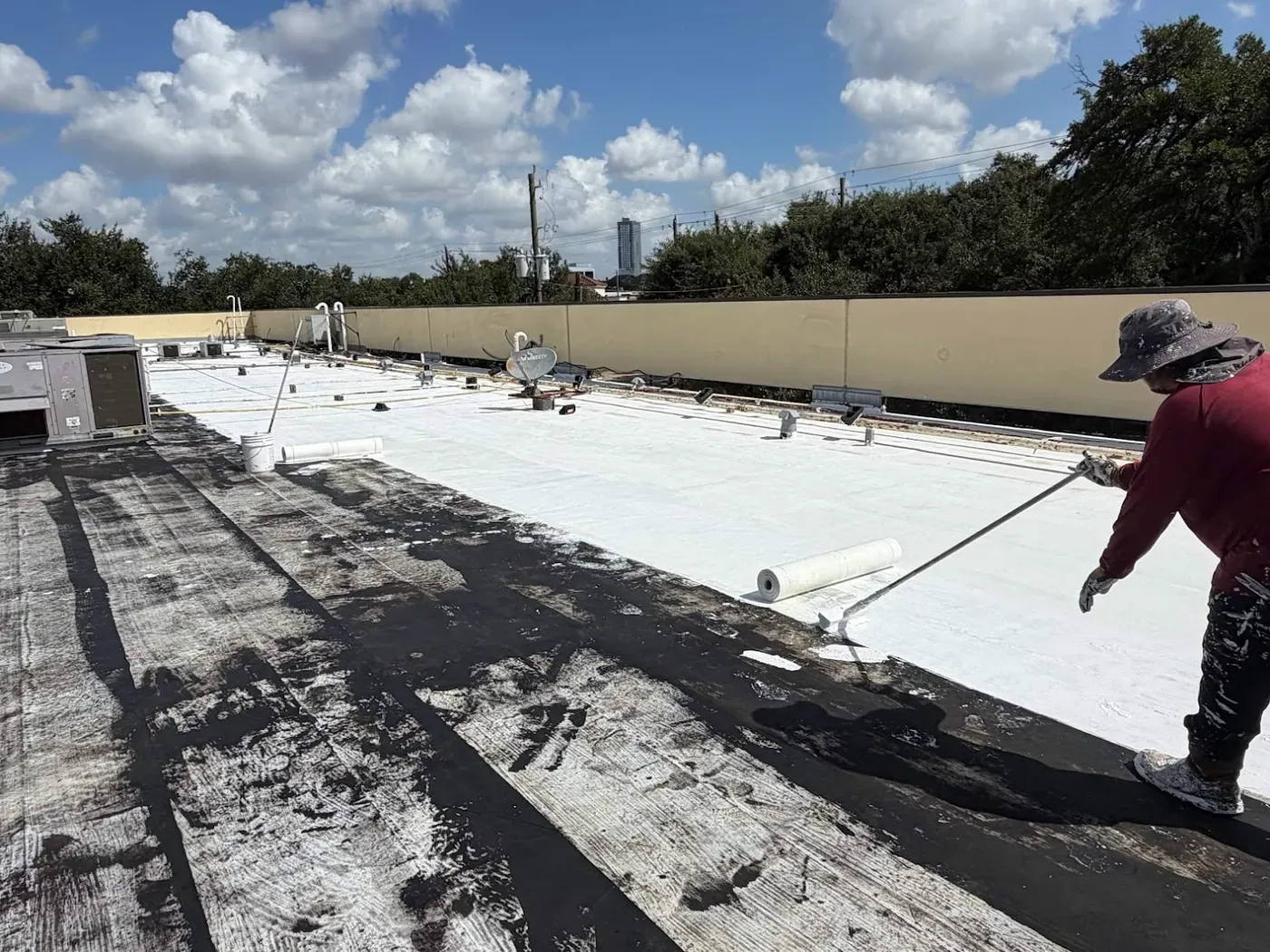
A restricted roof access point can delay a condition check. An aerial view can document the layout while the manager arranges safe access for the details that need hands-on work. Drone roof inspection in Overland Park, KS, helps establish where equipment, drainage features and visible defects sit on the building. It is useful for planning an investigation. It is not a substitute for every examination needed to specify a repair.
Retail properties along 151st Street and offices along the Metcalf Avenue corridor create different access and occupancy limits. We review the actual site before arranging the flight. People, adjacent property, weather and applicable flight restrictions affect what can proceed. The survey should answer a defined roof question and produce images that the manager can use. Where a visible defect needs closer examination, we connect it to a hands-on roof inspection rather than treating the image as a finished diagnosis.
Set the question before the flight
A roof layout image can help position a damaged edge, equipment curb or area of standing water. It can also show how different roof sections connect. Before flying, we identify the condition being investigated and the images needed to document it. A general overhead photograph may be useful for orientation, while a particular defect needs a different angle and scale. The intended use should guide the survey.
The property manager can provide interior leak locations, previous repair records and known access restrictions. We compare those details with the visible roof layout. The flight can help direct the next inspection toward an affected section or identify places where equipment obscures the surface. A leak investigation still needs examination of the likely entry detail and, where appropriate, the assembly beneath it.
Roof slope, shadows and equipment can hide conditions from a camera. We explain where visibility is limited and what additional access is needed. The report should identify useful observations without implying that an unseen seam or concealed insulation layer has been checked. A defined question keeps the survey practical. You can decide whether the images settle the immediate planning need or whether the next visit must include testing at a specific location.
Plan a safe operating area
Customers moving between a parking lot and an entrance affect the flight arrangement. We consider people, vehicles, rooftop activity and adjacent occupied property before selecting the operating area. Weather and flight restrictions can change the schedule. The manager needs to know which access or activity may need control during the survey and who can authorize those arrangements.
The 151st Street corridor includes retail activity and access to U.S. 69 express lanes. Those broad connections help explain the commercial setting, but the site visit determines the actual operating space. We do not infer a roof layout or flight permission from a road name. A survey at a shopping center needs the particular tenant and vehicle conditions considered. A corporate office may have different security and employee access restrictions.
Strong wind, precipitation and poor visibility can prevent a useful or safe flight. Post-storm urgency does not remove those limits. We arrange the next workable window and explain how urgent roof protection can be handled separately where necessary. A survey should not interfere with another crew working on the roof. Coordinating that activity prevents the imaging task from becoming a distraction at an open work area or near moving equipment.
Read visible defects carefully
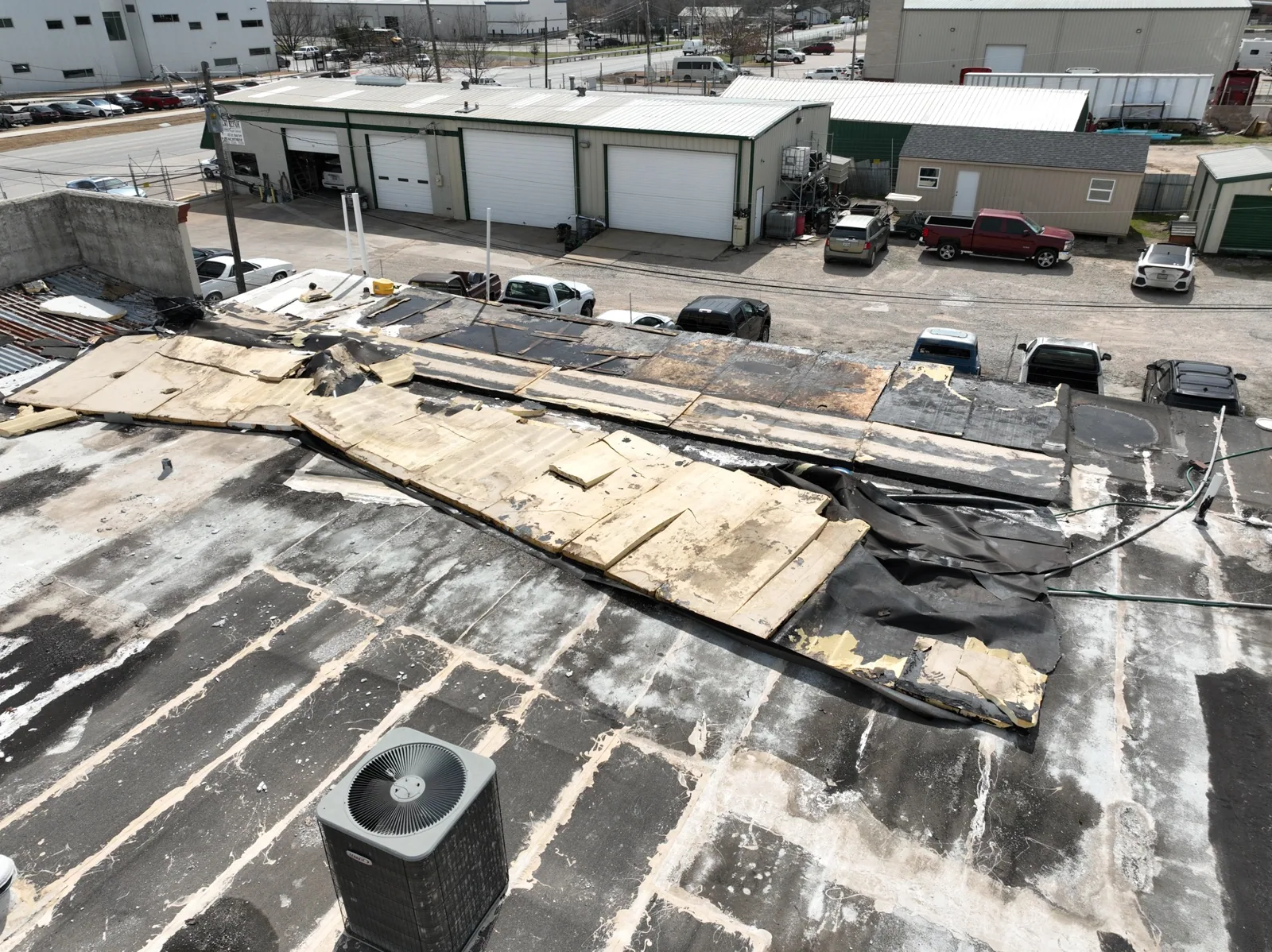
A lifted sheet or displaced edge component can be visible in an aerial image. We document its position and inspect the surrounding context. The image may help establish where closer access is needed. It may not show the attachment beneath the surface or the condition of supporting insulation. We distinguish visible evidence from concealed questions in the written findings.
Overland Park has documented local hail and a tornado path through the city. After a current storm, an aerial view can help locate debris and obvious roof damage where access permits. It should not label every mark as storm damage without examination. Hail damage assessment requires the actual material condition to be evaluated. Small punctures, seams and flashing connections may need close inspection beyond what the photograph resolves.
Standing water shown in an image needs similar care. The survey records the condition at that time. It does not establish how long the water remains or whether an outlet is obstructed below the visible surface. We may recommend a drainage check or a visit after a suitable interval. The manager gets a useful observation and the action that can resolve the uncertainty. That is better than converting a single image into an unsupported whole-roof conclusion.
Connect images with moisture testing
A wet assembly cannot be confirmed simply because its surface looks darker. Shadows, coatings, debris and different materials can affect an image. Thermal equipment has separate requirements, and a standard visual drone survey should not be described as moisture testing. We explain the survey method before using its results to guide removal or repair decisions.
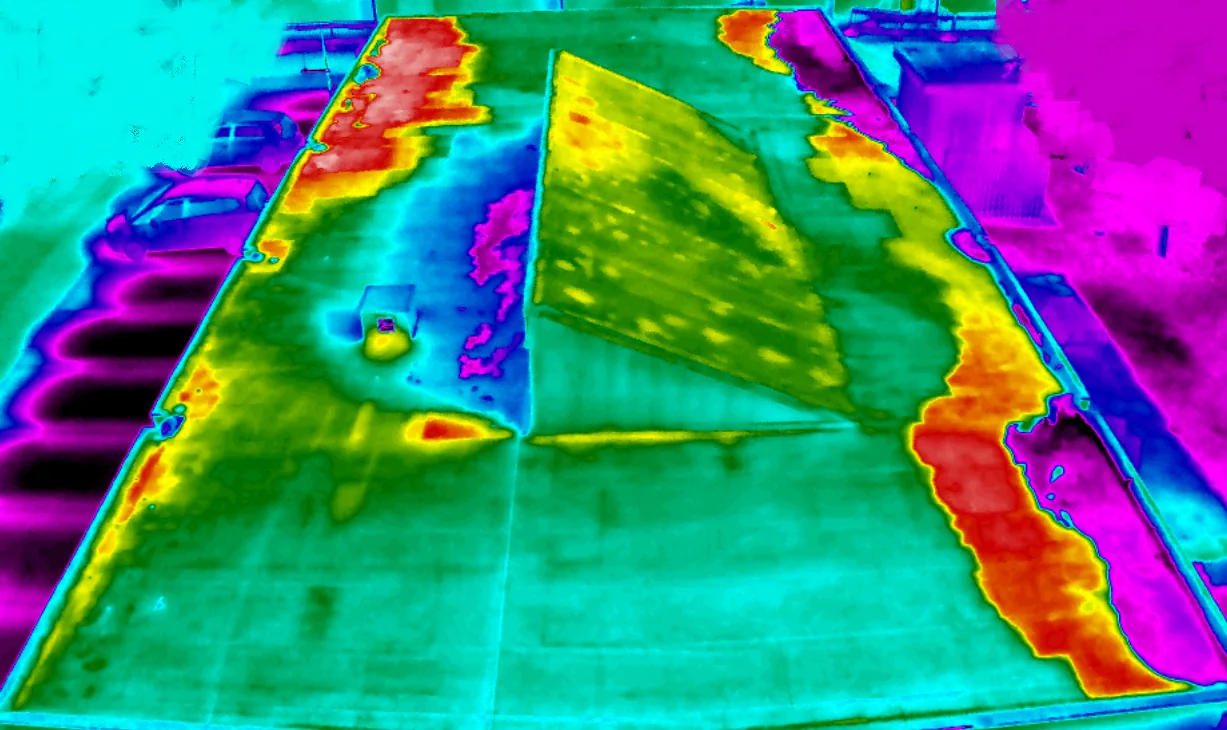
An infrared roof survey may be appropriate where the roof assembly and environmental conditions support it. Thermal patterns still need suitable confirmation. A core opening or another verification method can establish the condition beneath a suspect area. The aerial view and the moisture investigation answer different questions. They can be used together without pretending that one replaces the other.
At an occupied office building, testing may need more coordination than the imaging flight. Interior spaces, roof equipment and access restrictions affect where openings can be made. We settle those conditions with the manager. The proposed next step should state the question, the method and the closure procedure. That gives you a way to authorize investigation without approving broad removal based on imagery that has not established the concealed condition.
Keep the image record practical
A usable aerial record needs orientation and enough detail to locate each reported condition. We relate the images to roof sections, equipment and access points. The written report explains what was observed and where closer inspection remains necessary. Keep the survey date with the record so later roof alterations and new equipment can be distinguished from conditions shown during the flight. The manager can then connect a repair proposal to the area shown instead of interpreting an unlabeled collection of photographs.
Along the Metcalf Avenue corridor, office and retail uses require different access arrangements for follow-up work. Give us the building schedule and the issue you need settled. We will plan the survey, document visible conditions and identify the next inspection that can establish the repair limits.
Commercial Roofing Questions
Can drone images replace a roof walk before pricing repairs?
They can locate visible concerns and help plan access. Material compatibility, seam condition and concealed layers may still require hands-on inspection. We explain what must be checked before pricing the repair.
Will an aerial survey confirm hail damage?
The images may show obvious damage or debris, but smaller defects need closer examination. We identify the material condition and supporting evidence before calling an observation hail damage.
Can a flight proceed while tenants are receiving deliveries?
Vehicle and pedestrian activity affects the operating arrangement. We review the actual site and may need a different work window or controlled area. Flight restrictions and weather also apply.
What should we request from the finished record?
Ask for oriented images, the visible findings and the areas needing additional access. We connect those observations to practical next steps so the manager can decide what investigation or repair to authorize.
Related Roofing Work
Set the work limits
Arrange a drone survey with the roof question and site access limits. We will identify what imagery can establish and what needs closer inspection.