
Commercial Roofing in Raymore, MO
Home / Service Areas / Commercial Roofing in Raymore, MO
Get a Free Roof Assessment - Call 555-555-5555
What Property Owners Should Know
Industrial openings need a repair limit before equipment leaves the ground. In Raymore, the city identifies flex-industrial space along Interstate 49, with additional phases still proposed. We inspect the existing building rather than treating a proposal as completed stock. At the roof, we locate the reported leak, test the surrounding membrane, check the curb and follow the drain path. That sequence separates a wet repair footprint from a larger removal decision. An estimate can then state what gets opened, how the area closes and what remains protected. A commercial roof inspection gives the manager a written starting point before work enters an occupied operation.
Set the work boundary
A flex-industrial building can have receiving, office and production activity under one roof. The property walk confirms the loading door, equipment route and area that must stay clear. We mark the proposed opening, set a daily closeout point and agree on who can release the work zone. A short repair can stay local when insulation around it is dry and the membrane remains sound. If the wet area continues past the first cut, we document the changed limit before expanding the removal.
Raymore's industrial commerce area sits along Interstate 49, while the Highway 58 and Kentucky Road area is identified for commercial, office and multifamily redevelopment. Those distinct development areas make access an early question, and the property walk establishes what sits beneath each roof. We confirm delivery timing, roof entry, pedestrian separation and whether rooftop equipment can remain available during the work window. When operations cannot pause, the work sequence needs a small opening, temporary protection and a clear end-of-day condition instead of a broad unsupported promise.
Trace water past the curb
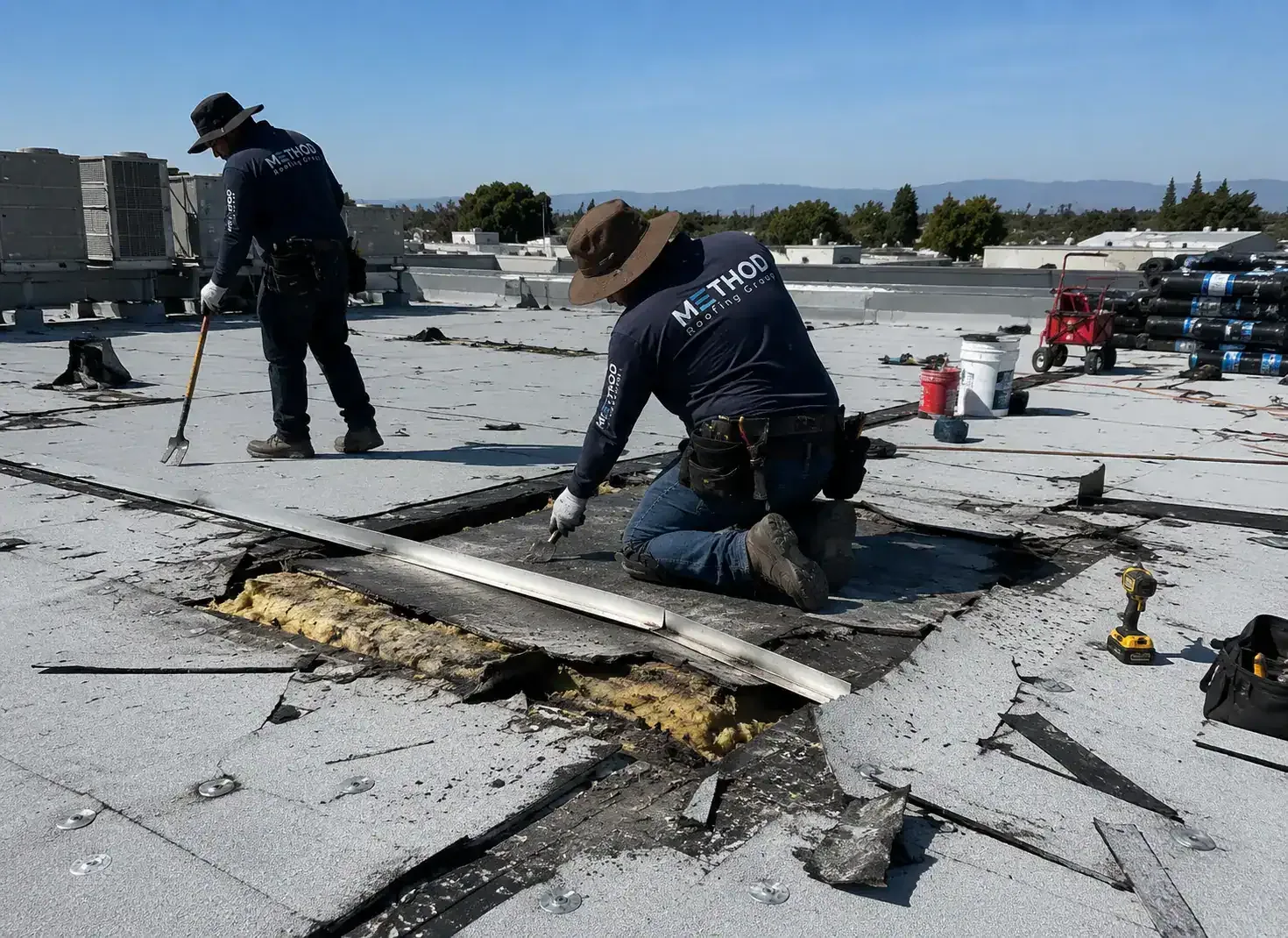
Water can travel across a low-slope roof before it reaches a ceiling stain. We check laps, seams, penetrations, wall transitions and the drain path that serves the wet area. A photograph from inside helps point to a starting zone, but the roof surface decides where the repair footprint belongs. We note open seams, split flashing, loose edge metal, punctures and soft insulation separately. Those observations matter because a patch over a dry, stable assembly solves a different problem from removal over saturated board. Each item receives a photo and a recommended next step.
Commercial buildings near a developing corridor can change use while their roof stays in service. New equipment, added exhaust and altered drainage can put load or water movement at a detail that was previously quiet. We compare the current curb and flashing with the assembly around it before selecting a repair material. TPO, PVC and EPDM need compatible cleaning and patch methods. Metal transitions call for a different fastening and sealant detail. A TPO repair or an EPDM repair starts with identifying the membrane, not choosing a product by appearance alone.
Plan for the regional season
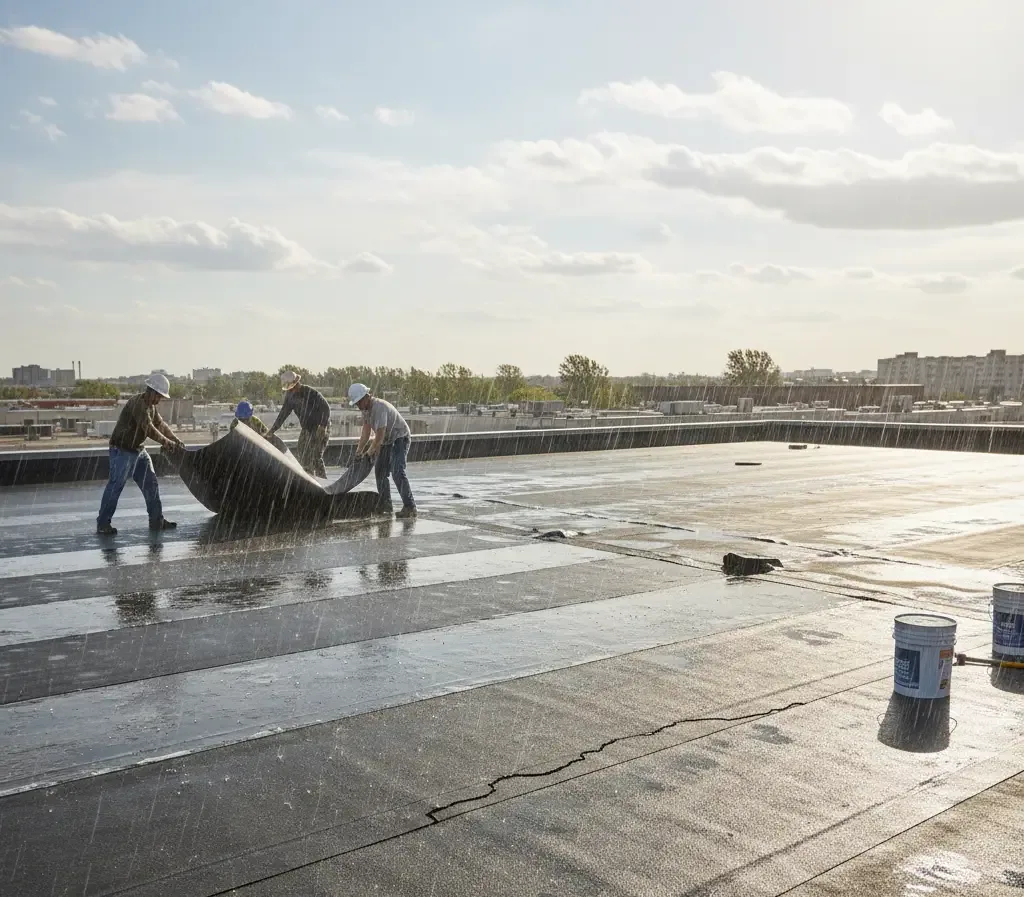
Winter work in Raymore still needs a defined closeout when cold conditions affect adhesive behavior, cure time and temporary protection. We set the work window around the selected material's requirements and the forecast at the job. When a cut remains exposed as temperatures drop, the crew closes it with a secured cover that sheds water past the opening until work resumes. Overland Park averages 4.9 inches of January snowfall. Use that regional seasonal context alongside the Raymore forecast; the actual roof condition and forecast decide the sequence at the property. A temporary cover must shed water beyond the cut and attach without damaging sound adjoining membrane, so we include its limits in the daily plan.
Overland Park records a normal July precipitation total of 4.58 inches. Summer heat, therefore, still calls for a weather plan. A coating may need a dry surface and an application window that fits its instructions. A membrane replacement may require staged removal and same-day closure. A live leak gets emergency roof repair first: we protect the interior and seal the opening against the next weather change. Snow and ice checks focus on drainage, edge details and any opening that needs temporary cover before the next work period.
Compare a repair with a larger scope
Repair is reasonable when the damage is bounded and the surrounding assembly can still perform. Replacement becomes a stronger option when wet insulation extends across several areas, seams keep opening, or prior patches leave no sound surface for another tie-in. We document the limits before recommending either path. The city inventory distinguishes existing flex-industrial space from proposed development phases; the same discipline applies to roof planning. A manager should be able to tell what is present, what is a future possibility and what the inspection actually found.
Cost and schedule move with removal depth, insulation condition, access, curb work, edge metal and the amount of protection needed for occupied operations. A recover can avoid some tear-off when code, assembly and moisture conditions allow it. It cannot bury trapped water or fix a weak substrate. A recover review checks those limits before a new layer is considered. If a roof is nearing a capital decision, a roof capital plan can organize condition, priority and timing without pretending that every section needs the same treatment.
Leave the next decision clear
A useful report ties each photo to a roof area, observed condition and proposed action. We separate immediate leak work from maintenance items and longer-range replacement needs. That gives a property manager a way to compare bids and revisit the same locations after service. If the roof protects office or multifamily use near Raymore's Highway 58 and Kentucky Road redevelopment area, access and occupant paths deserve their own notes. The site contact confirms the tenant schedule, and our inspection verifies the roof assembly and records the operating limit.
A leak call can come in outside a planned shift. We respond day or night, including holidays, and first protect the occupied space. Then we photograph the roof opening, record the repair boundary and tell the manager what remains exposed. For a planned project, we schedule material delivery, roof access, daily closure and the handoff of photos and findings. Preventive roof maintenance can keep drains and flashing on a recurring check list. Nearby Olathe and Belton are separate service-area markets in the same broader region, while Raymore's own roof needs remain the focus. Ask us to schedule the inspection that sets the work limits and the next decision.
Commercial Roofing Questions
Does the flex-industrial inventory show the roof condition?
No. The city identifies existing flex-industrial space and proposed phases, but neither describes a specific roof. We inspect the membrane, insulation, curbs and drainage at the property before setting a repair limit.
What changes the size of a leak repair?
The wet area and the surrounding assembly set the footprint. We trace the water route, test the membrane and check insulation at the opening. If moisture continues beyond the first cut, we photograph the limit and review the added removal with the manager.
Can work proceed while receiving stays active?
Yes, when access and closure can be controlled. We agree on the delivery route, keep a clear path to the receiving area and close the roof opening at the end of each work period. If safe separation is not possible, the schedule needs a different window.
When should a recover be ruled out?
A recover needs a sound, dry enough assembly and an acceptable code path. Saturated insulation, unstable attachment or concealed damage can make another layer the wrong choice. We document the substrate and removal limits before recommending a recover or replacement.
Related Roofing Work
Set the inspection limit
Schedule a roof check in Raymore. We will document the wet area, access needs and repair options before the work window is set.