
Commercial Roofing in Spring Hill, KS
Home / Service Areas / Spring Hill
Get a Free Roof Assessment - Call 555-555-5555
What Property Owners Should Know
Commercial and industrial work in Spring Hill needs a roof plan that fits the site's delivery schedule. The city designates 191st and 199th Streets as truck routes from its eastern boundary to U.S. 169. Those routes can help a manager think through regional movement, but they do not tell us which drive reaches an individual roof. We confirm the gate, dock, lift position and approved work window before deciding how much membrane can open in one shift.
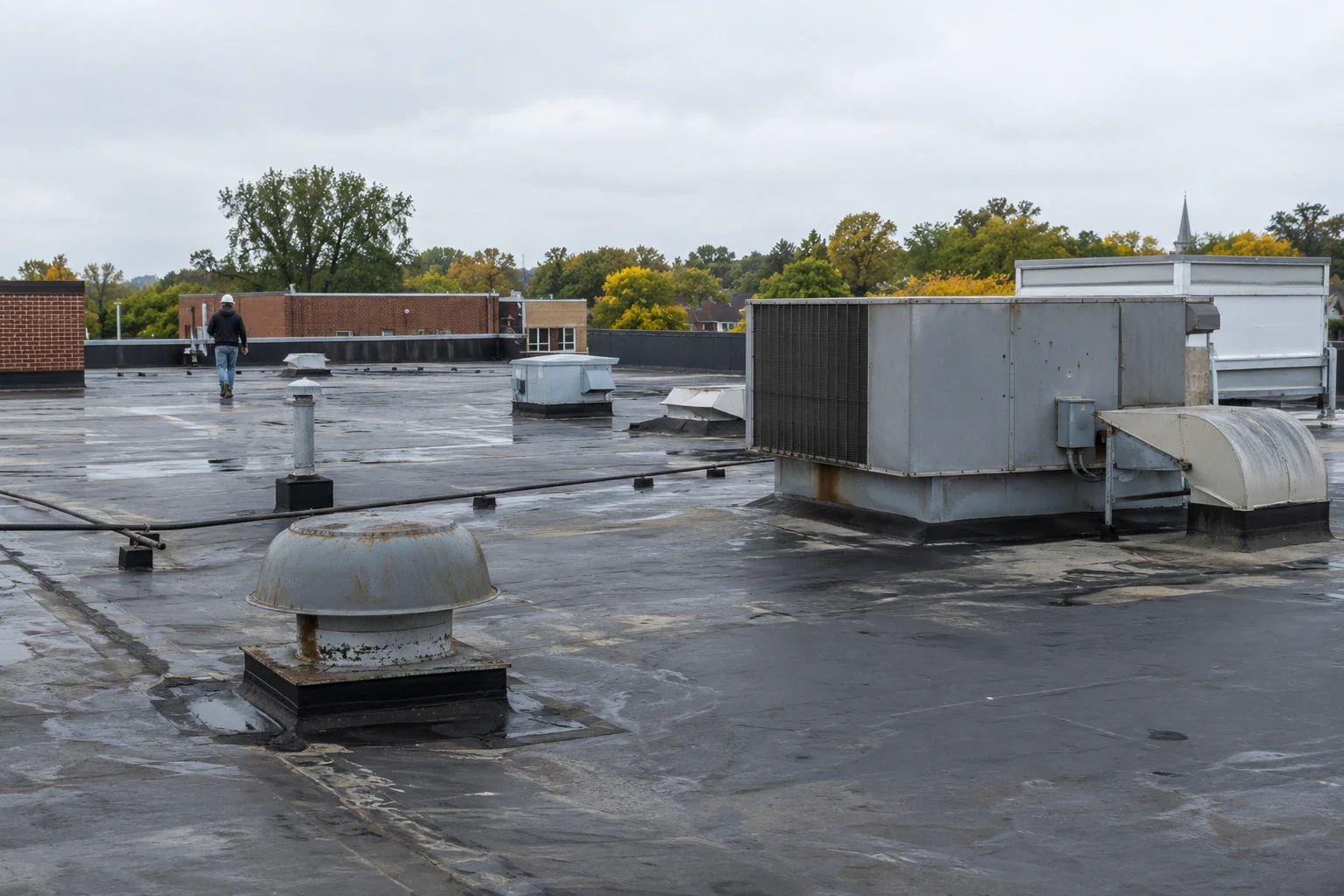
Spring Hill's economic-development program describes commercial, industrial and residential development opportunities. That range is city context, not a description of any one building. We inspect the roof in front of us: membrane and edge details, curbs, drains, wet areas and previous repairs. The report ties photos to locations on the roof so an owner can compare a small repair with a recover or replacement using the same access limits. A commercial roof inspection sets that baseline.
Plan around truck movement
A truck route matters to roofing when deliveries, lifts or debris removal touch a working drive. We ask which paths must stay open, whether a delivery appointment is required and where material can wait without interfering with other users. If the property uses 191st or 199th Street for freight movement, the site contact can confirm the connection from that public route to the building. We do not plan a lift from a road designation alone.
The work window should name the access point, arrival time, staging boundary and daily closing step. A crew can phase an occupied roof into sections if each one can be made weather-tight before the shift ends. A phased occupied-building scope also needs a contact who can approve a change when deliveries, service calls or tenant activity shift. We put that contact and the affected roof area in the job record so the opening limit is clear to everyone.
Locate the source before opening
Water on a ceiling is not necessarily below the roof defect. We record when and where it appeared, then inspect the membrane field, seams, penetrations, perimeter and drainage above that point. A drain blockage can send water toward a detail that is otherwise intact. A curb may admit water at one corner while the surrounding membrane remains sound. Photos and a roof sketch keep those possibilities separate until the inspection supports one cause.
Spring Hill's development plans do not establish an assembly, roof age or leak history. We identify those items at the property. If the surface review cannot determine whether insulation is wet, the report calls out the next access step rather than pricing a blind removal. When the defect is limited, a focused repair may restore the detail. Repeated movement or moisture beyond the visible area can call for a broader boundary and a different approval.
Keep each building's use in the scope
Spring Hill describes a diverse economy and opportunities across commercial, industrial and residential development. A manager still needs a roof scope for one property, not a citywide assumption. We check the activities beneath the work zone, identify any sensitive room or delivery path and set the daily closure around those constraints. If an exhaust fan or service line needs to remain available, we include its protection and clearance in the plan.
The job file should distinguish work in progress from completed work. We mark temporary tie-ins, record each day's exposed area and show the final condition in photographs. If weather closes a shift early, the owner can see what has been secured and what remains. That record can support a roof condition report for later budgeting, without generalizing about other Spring Hill properties.
Check the assembly before choosing a system
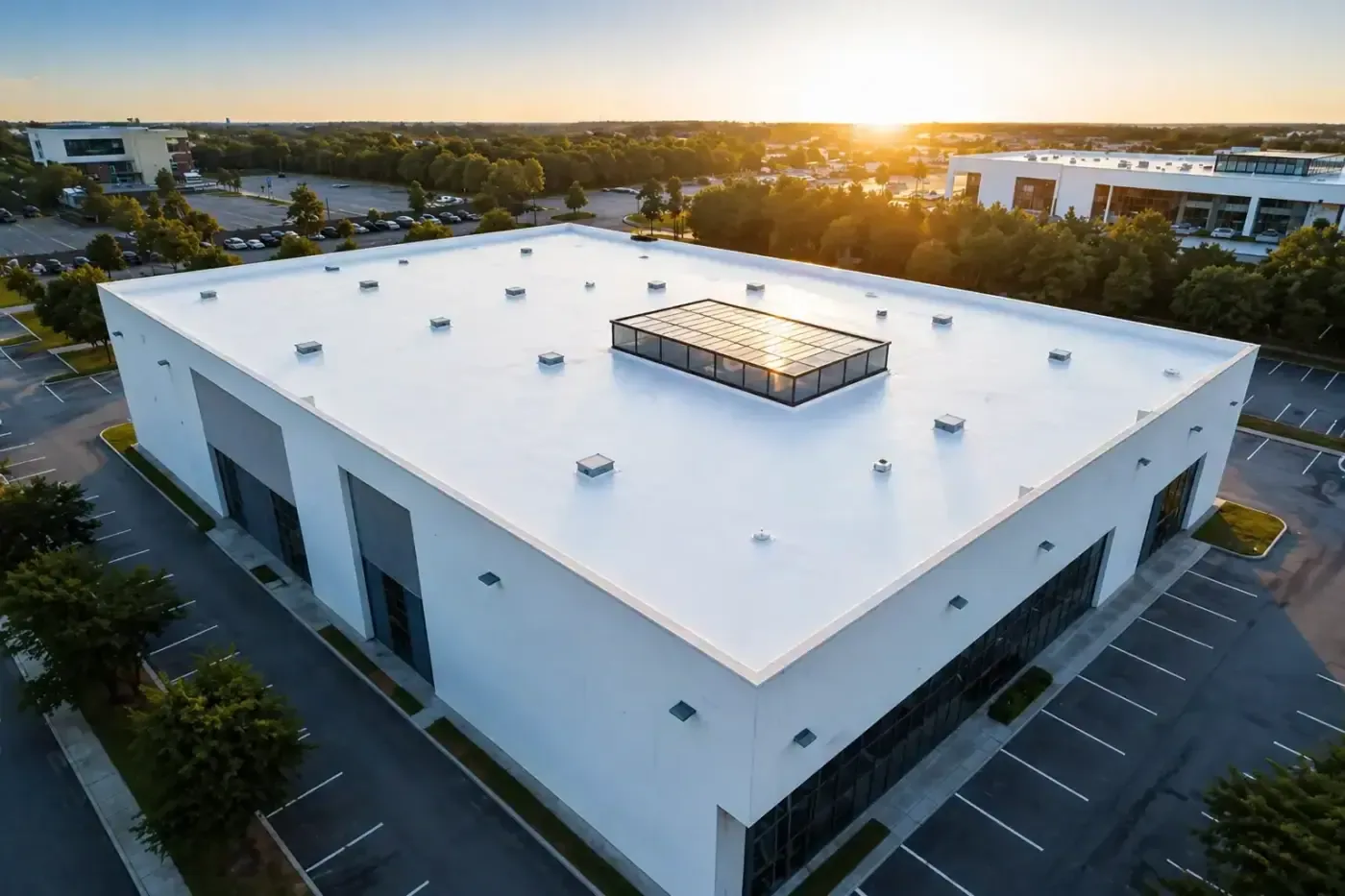
A patch, coating or new membrane must suit the roof already installed. We identify whether the field is TPO, PVC, EPDM, modified bitumen, built-up or metal, then check seams, attachment, insulation and edge transitions. A coating can extend a suitable surface only after adhesion and moisture conditions are understood. It cannot correct an unstable base. A recover adds height, which can change the fit at drains, curbs, doors and perimeter metal.
Regional Kansas City winters and summer rain both influence the work sequence. The local climate record gives Kansas City January snowfall as regional context, and July normals include meaningful precipitation. Those records are not measurements for Spring Hill or a work-day forecast. We confirm product limits against actual temperatures and protect open areas if a storm interrupts the shift. A TPO assembly is considered only after the material on the building is identified.
Price the actual repair boundary
The repair boundary follows the verified damage and the surrounding roof condition. We inspect the nearby field, check how far moisture extends where access permits and note whether the edge or seam can accept a compatible patch. If those areas are sound, the manager can compare the limited repair with a wider treatment. If the substrate is compromised or the same detail has failed repeatedly, the estimate explains the evidence for expanding the removal area.
Replacement and recover estimates should also state their assumptions. We identify existing layers, drainage adjustments, perimeter work and any detail that needs approval before installation. That makes the owner decision about scope, not just a line item. A replacement plan can be divided by building or roof section; a recover plan must first show that the base and added height are acceptable. The schedule then reflects material lead time and site access.
Leave the next decision documented
At closeout, we record the roof area, assembly, repair material and final detail, then attach photographs that let the property manager find the work later. Any limit remains visible: a concealed layer not opened, a drain that needs a separate correction or an area deferred for another shift. That note keeps a future leak investigation from repeating the first visit without new information.
Spring Hill and Gardner both connect to U.S. 169 and regional freight movement, yet each property has a different access plan. The Gardner service area has its own loading context. For work in De Soto, the K-10 approach and site rules need their own confirmation. We keep the Spring Hill scope attached to the building contact, truck route and opening limit actually approved for that job.
Commercial Roofing Questions
Do the 191st and 199th Street truck routes control roof access?
They describe city truck routing, not the entrance or staging point for a particular property. We confirm the approach from the route to the gate, dock and lift area with the site contact before scheduling delivery.
Can roof work continue while a building is occupied?
We identify the areas and routes that need to remain open, then phase the roof work around them where conditions permit. Each shift has an opening limit and a closing step. The estimate states when an interruption or temporary restriction is required.
What does a leak inspection tell the owner?
It records the reported interior location, roof details examined, visible moisture indicators and any limit on access. The finding may support a local repair or a larger investigation. We distinguish an observed defect from a concealed condition that needs another test.
Can a coating solve recurring ponding?
A coating is not a drainage correction. We check slope, drain function, surface condition and moisture before pricing one. If water remains because a drain or low area needs work, that scope has to be resolved alongside any membrane treatment.
How is a recover screened before pricing?
We inspect the existing layers, attachment, moisture and the details that would gain height. Drains, curbs and perimeter metal must still work after the new assembly is installed. If the base cannot support the added system, removal is priced instead.
Related Roofing Work

Set a site work window
Schedule a roof walk to confirm Spring Hill access, the truck route and the condition that should define the repair boundary.