
Tornado Damage Roof Repair in Overland Park, KS
Home / Roof Damage Repair / Tornado Damage Roof Repair
Get a Free Roof Assessment - Call 555-555-5555
What Property Owners Should Know
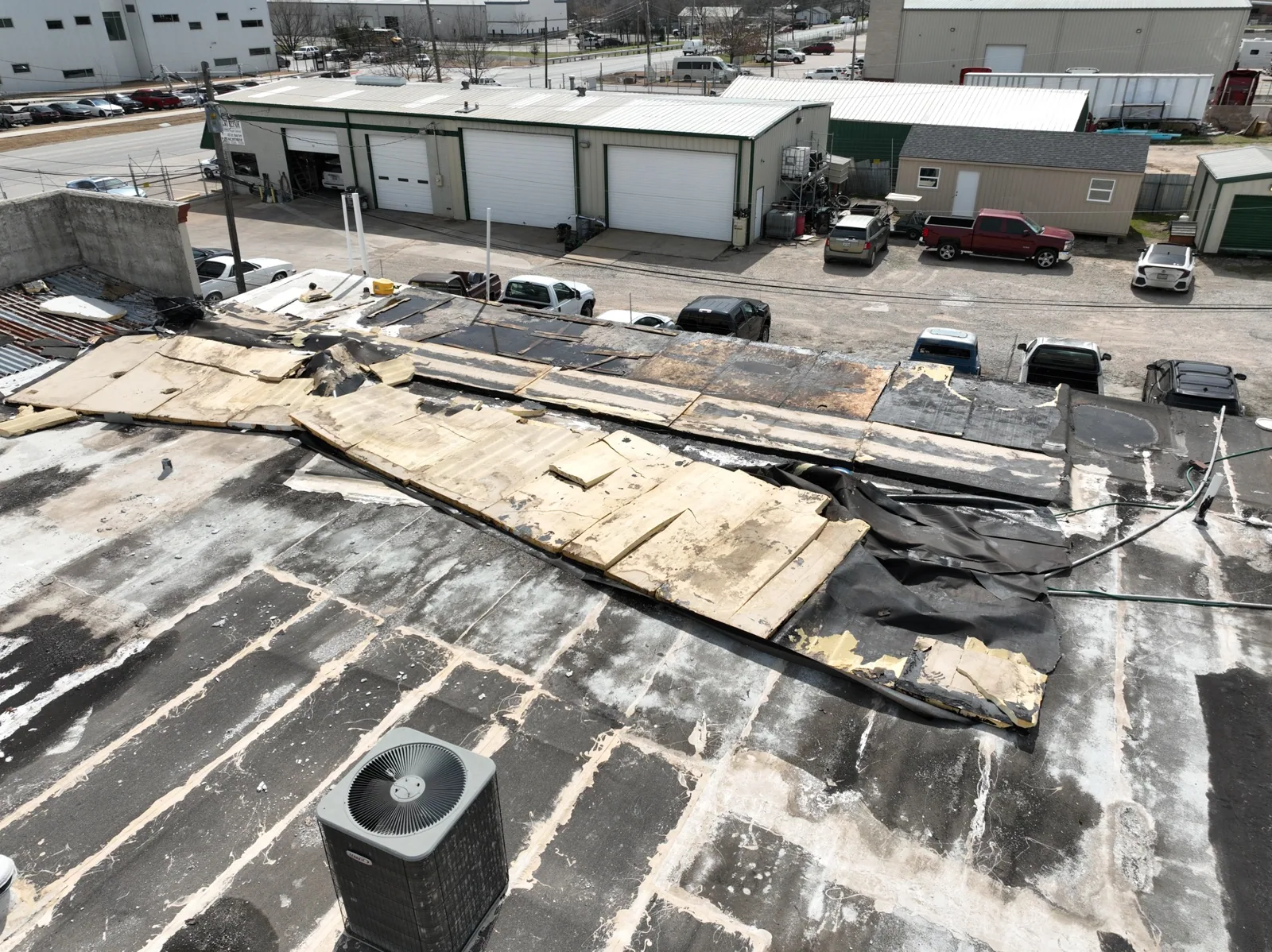
A torn roof edge above a loading or entry area needs a controlled response. Keep people clear of loose material, then arrange safe access for an inspection. Tornado damage roof repair in Overland Park, KS, begins with the building's openings, roof attachment and interior use. We identify exposed areas, unstable components and active water entry. The first visit sets a temporary protection plan and the information needed for permanent repairs.
On June 8, 2022, an EF-1 tornado traveled from Lenexa through Overland Park. The National Weather Service estimated peak winds near 100 mph. That event gives local context, but each current roof needs its own inspection. The U.S. 69 corridor includes access between 103rd and 151st Streets, while downtown buildings have a different mix of entries and occupied uses. We coordinate roof access and daily closure with the property manager. An emergency roofing visit can secure active exposure when the site is safe to reach.
Control the first opening
A displaced sheet, punctured membrane or broken skylight curb can let weather into the building. We mark the area below, confirm roof access and identify what can be protected without increasing the damage. Loose metal and unstable debris need a safe handling plan. Temporary covers must be fastened for the conditions at the time of installation and remain accessible for inspection. We explain what the cover protects and what still needs a permanent correction.
Office, healthcare and retail operations may continue while the roof is stabilized. The manager needs an entry route, restricted zone and end-of-shift closure point. We set those limits before material moves onto the roof. If the storm damaged mechanical supports or electrical equipment, the appropriate trade needs to evaluate those components. We record how that work affects the roofing sequence. An exposed roof area can be made weather-tight temporarily without treating the surrounding roof as repaired.
Inspect the attachment pattern
After a tornado, damage may appear at edges, corners, penetrations or field seams. We inspect the membrane attachment and the metal that secures the perimeter. We look for lifted laps, fastener movement, sheet displacement, broken seals and impact marks. The pattern helps define how far to inspect, but it does not establish that every section has lost attachment. We record observed conditions by location and note any area that cannot be reached safely.
The roof perimeter deserves a careful pass because terminations and corner details carry separate connections from the field sheet. We check whether fasteners remain seated, metal pieces are still joined and the membrane can be reattached to a stable edge. A loose coping section may need securement before nearby membrane work can close. If the roof plan is unavailable, we mark findings by section or fixed rooftop reference so the manager can locate them later. The inspection record should make each repair location easy to revisit.
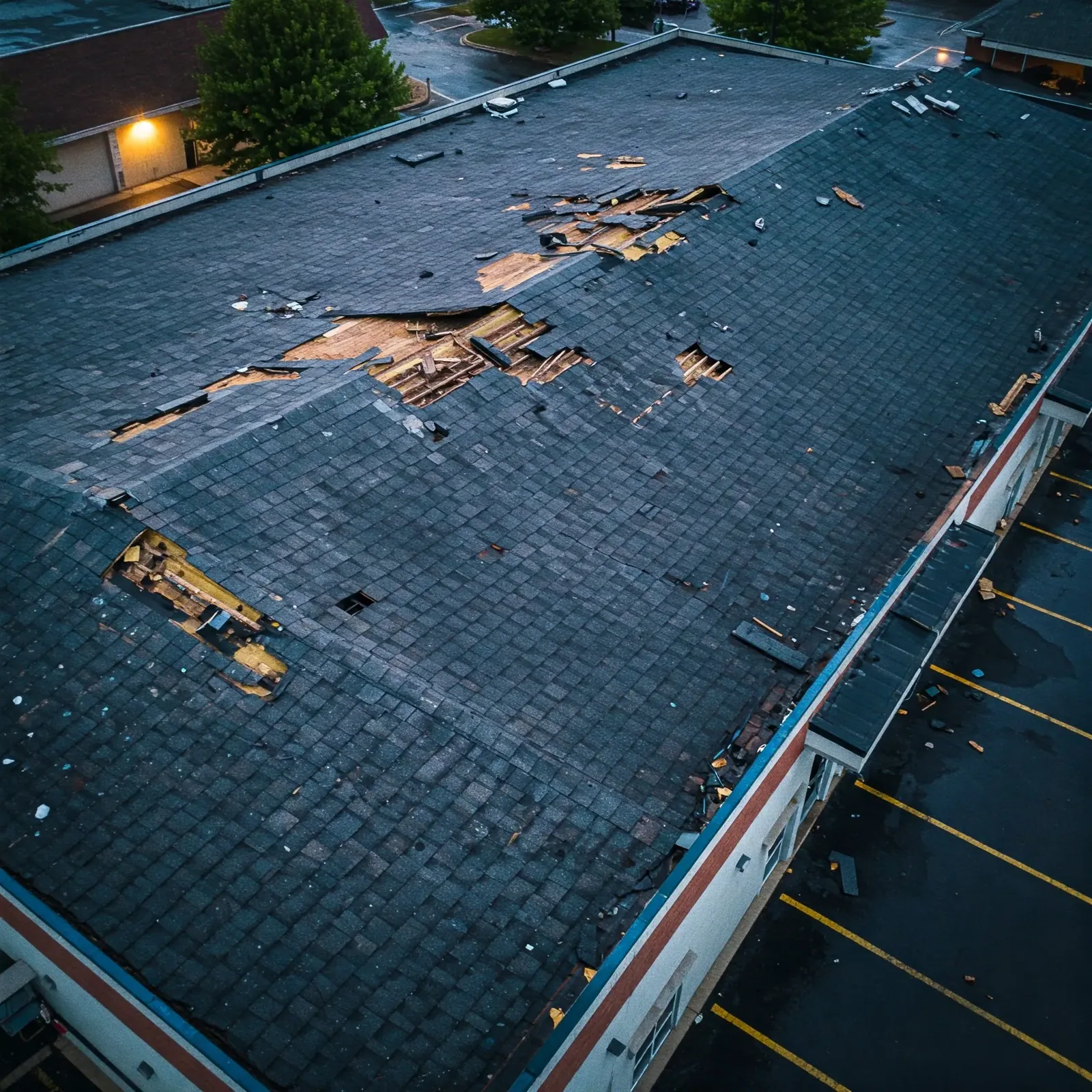
A documented 2022 tornado passed through Lenexa and Overland Park. If the current property has wind damage, we inspect whether the roof detail failed at the connection or whether a separate impact created the opening. A wind damage repair review can describe a local lift or torn edge. Hail can create another surface condition, so hail impact findings should be mapped separately. The repair scope should name each affected component rather than assign all roof wear to the storm.
Trace water into the assembly
Rain can enter through a small opening and travel along insulation, deck flutes or a roof slope. We compare ceiling reports with penetrations, seams and drainage routes above. A visible roof tear does not show how far moisture has spread. Suitable testing or an authorized opening can confirm whether insulation needs removal. We mark the tested area and keep suspected moisture separate from material that has been confirmed wet.
Regional July conditions include both warm days and normal monthly precipitation, while January brings regional overnight cold. A temporary cover must protect an opening through the weather window, and permanent materials need conditions that fit their requirements. We coordinate the work sequence around the actual roof surface and forecast. If the exposed area is above an operating room or retail space, we agree on interior protection and daily closure before extending the opening. The manager receives the known work limits and the possible change if concealed damage appears.
Build a permanent scope
A permanent repair may need new membrane, insulation, flashing or perimeter attachment. We identify the existing roof system and connect new material to sound assembly. Where the substrate or deck is affected, we identify that requirement before closing the opening. Each added component belongs in the estimate with its reason and its boundary. That gives the owner a repair decision based on observed damage and known concealed conditions.
The scope should separate what is ready to install from work that depends on structural or mechanical review. If the opening exposes damaged deck, we photograph the condition and coordinate the next trade before covering it. If water has affected insulation, we identify the removal and replacement limits. A new membrane should close onto a suitable substrate and connect to the existing assembly with a method intended for those materials. This sequence lets the manager review the work area, schedule other trades and keep the roof opening protected while the correction is completed.
Overland Park's 95th Street and Metcalf area has corporate office construction and retail activity. Those properties can have deliveries, equipment service and tenants to coordinate. We schedule staging and roof access with the manager. If the work is part of a claim review, roof damage documentation can include dated photos, temporary work and the proposed permanent scope. The insurer decides policy coverage. We explain the construction and keep any newly exposed condition separate until its repair is approved.
Close the work area
Before releasing the roof area, we inspect the repaired connection and confirm that temporary protection has been removed only where the permanent detail is complete. We check drains, access routes and nearby terminations. Photos show the work and any condition left outside the scope. If another part of the roof remains inaccessible, the closeout says so and identifies what access would be needed for a follow-up.
Storm records are useful for maintenance planning when they stay tied to inspected components. We can organize the roof findings into a condition report with priorities, photographs and open questions. For a building that operates through repair work, the report should also preserve access restrictions and the approved work sequence. Schedule a follow-up when the permanent repair needs a check after rain or when the first visit could not inspect the whole roof.
Commercial Roofing Questions
What should happen before anyone climbs onto the roof?
The building contact should confirm the area is released and access is safe. We identify the restricted zone below and inspect the roof without moving unstable material until a handling plan is set.
Can a temporary cover stay in place until the claim is settled?
Temporary protection can reduce exposure while the permanent scope is reviewed. We record its purpose and limits, then identify when it needs inspection or replacement.
Does a tornado report prove every leak came from the event?
No. We compare dates, roof findings and prior maintenance records, then describe which conditions support storm-related work and which remain unresolved.
How do you handle damage found after removal starts?
We photograph the exposed layers, state how the new condition changes the work and pause at the agreed limit until additional work is authorized.
Related Roofing Work
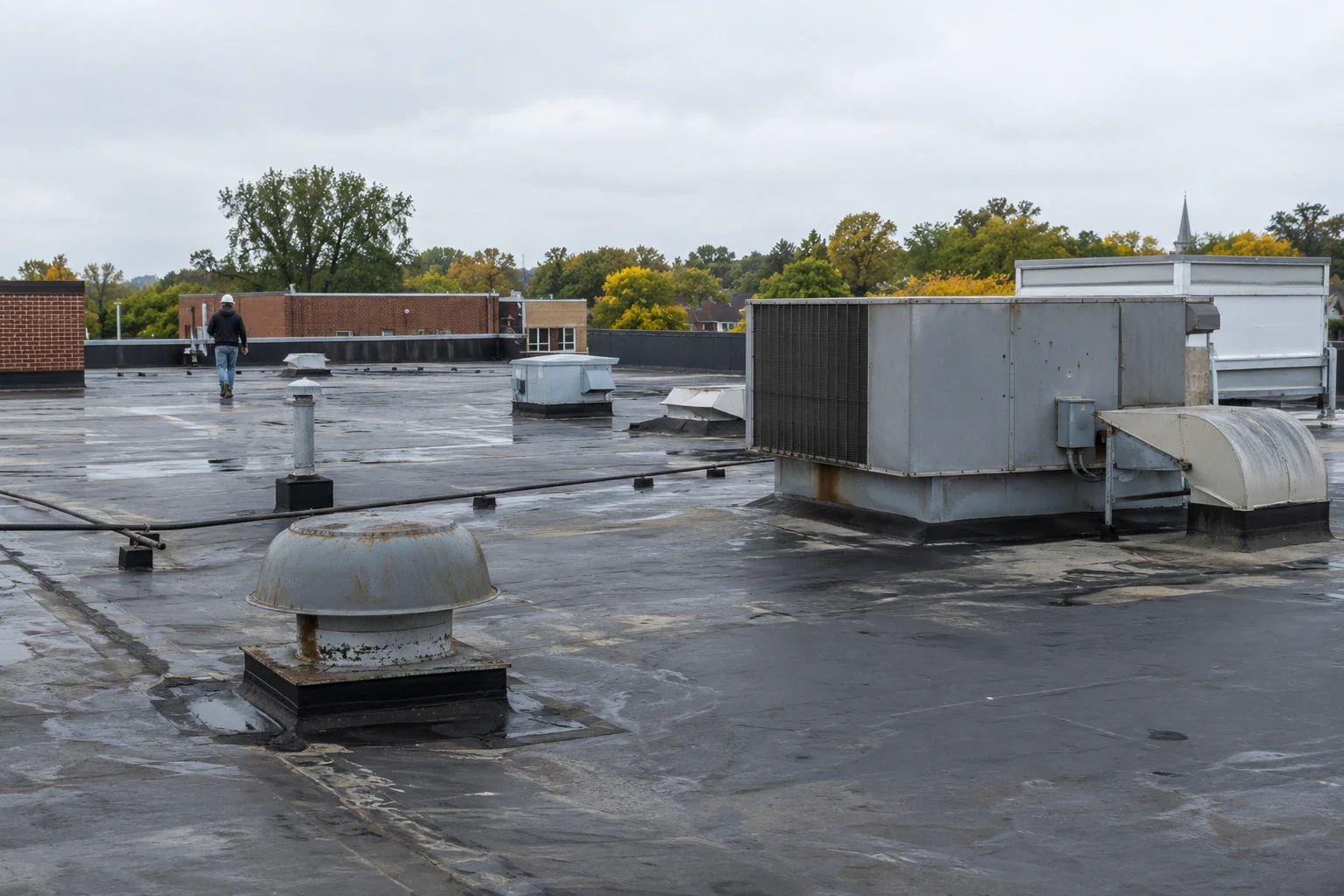
Secure the roof and define the repair
Schedule a post-tornado roof inspection with access restrictions, interior leak reports and prior roof records. We will document openings, temporary measures and the permanent scope.