
Commercial Roofing in Edgerton, KS
Home / Service Areas / Edgerton
Get a Free Roof Assessment - Call 555-555-5555
What Property Owners Should Know
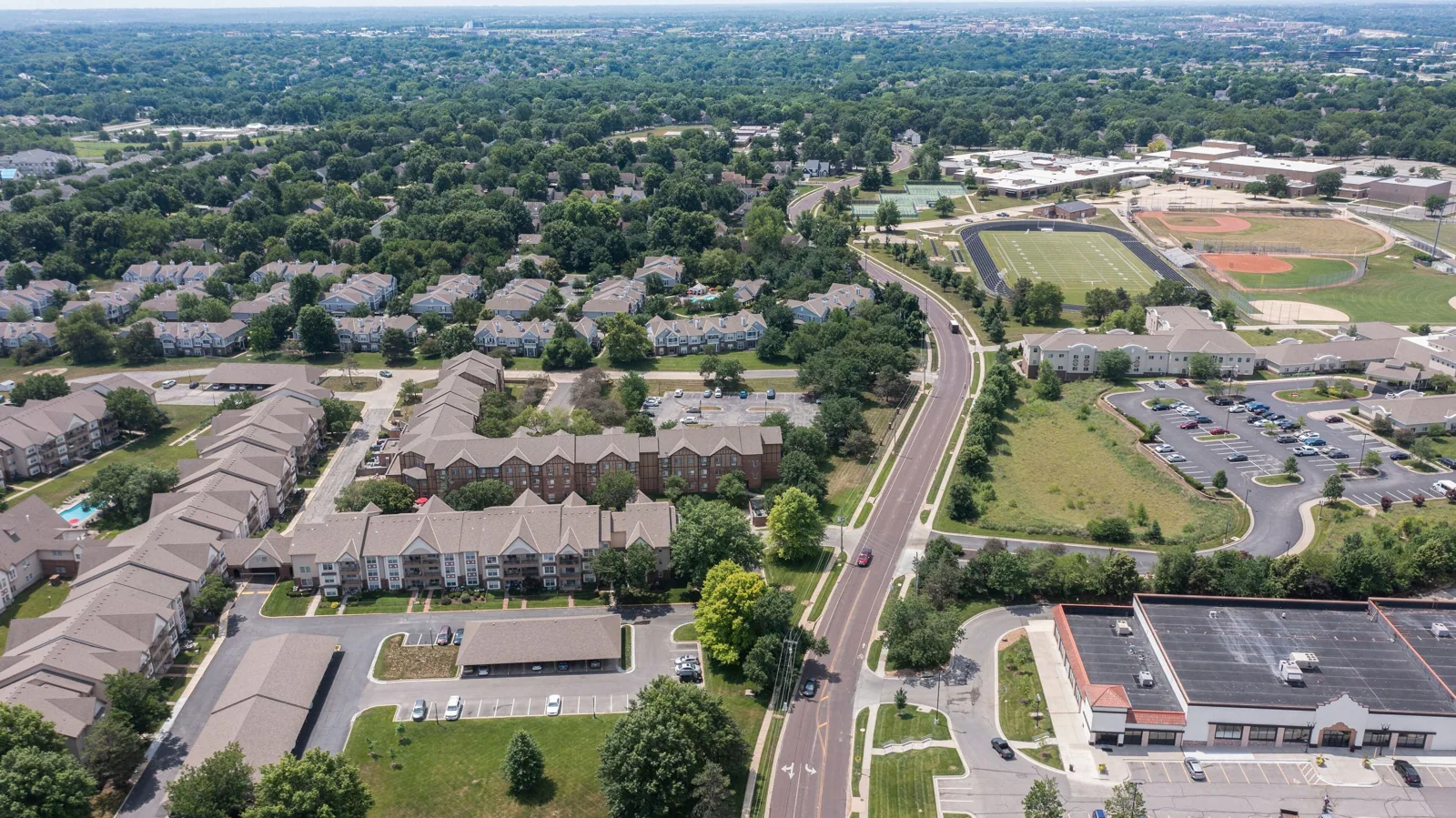
Distribution roofs in Edgerton need a material and staging plan that keeps freight movement clear. The city describes an industrial and distribution economy linked to an intermodal rail terminal, which makes loading and work sequencing relevant to property managers across the municipality. That context does not tell us how a particular building is built. We verify its roof assembly, drains, perimeter and access route before setting an opening limit or lift position.
Edgerton is in southwest Johnson County, within the Kansas City region. The first visit identifies the reported leak, checks the nearest seam or penetration and follows the drain path. We also confirm where vehicles can move while roofing material is unloaded. If the roof is wet beyond one detail or repeated repairs have grown, a commercial roof inspection gives the owner a record to compare a local repair, recover and replacement scope without assuming the roof condition from its use.
Protect freight circulation
Roof work should not turn a freight route into a storage lane. We ask which drives, dock positions and fire access must remain available, then place the staging point outside those boundaries. A lift may need a reserved window or a different position if trailers are moving through the same area. We confirm those details with the property contact and put the approved route in the estimate. If a dispatch change is likely, the manager should know who can move the delivery before the crew arrives.
The rail-oriented distribution activity in Edgerton makes a schedule useful, but the actual building controls the plan. We walk the approach from the public street to the staging area, check turning space and mark pedestrian separation. If the roof hatch sits on the opposite side of the structure, the work sequence may change. For an occupied facility, a section-by-section reroof plan can keep a daily opening within the time the manager can protect the interior and maintain the loading route.
Follow water to the drain
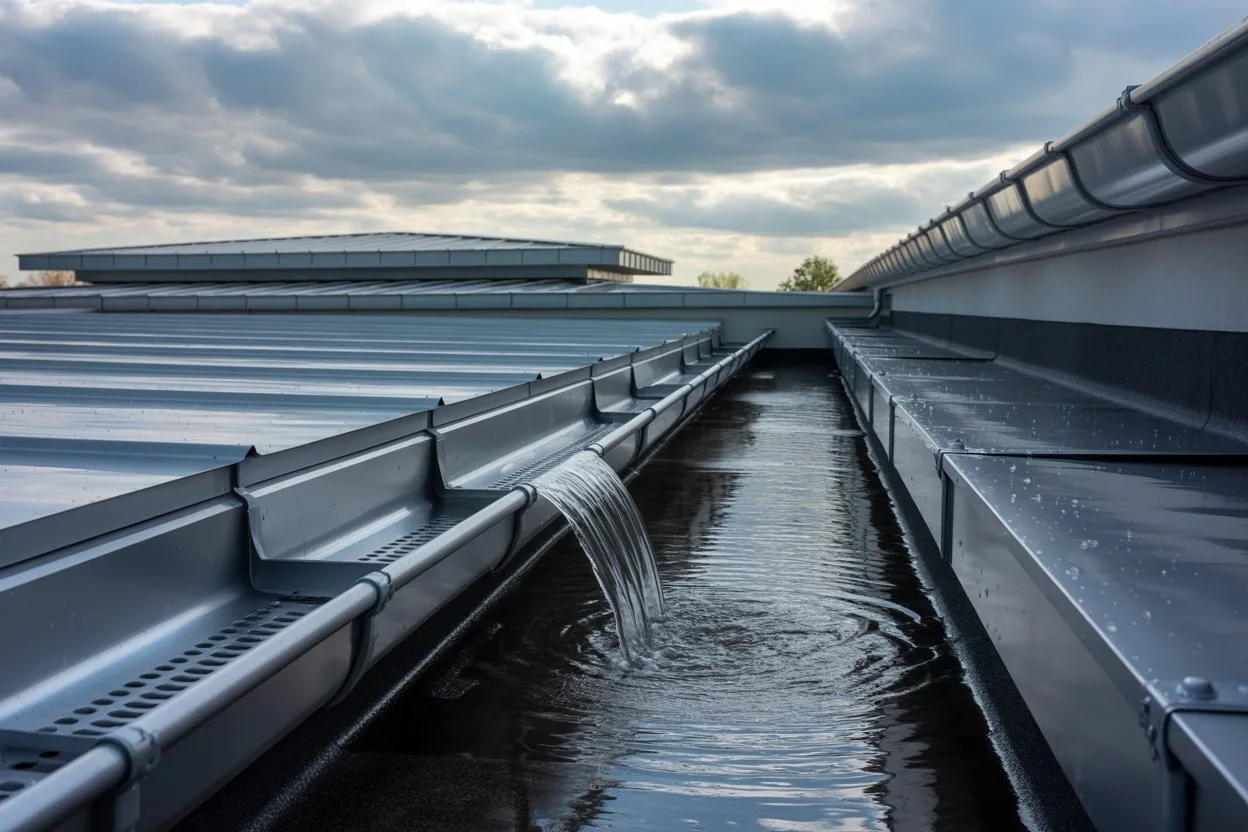
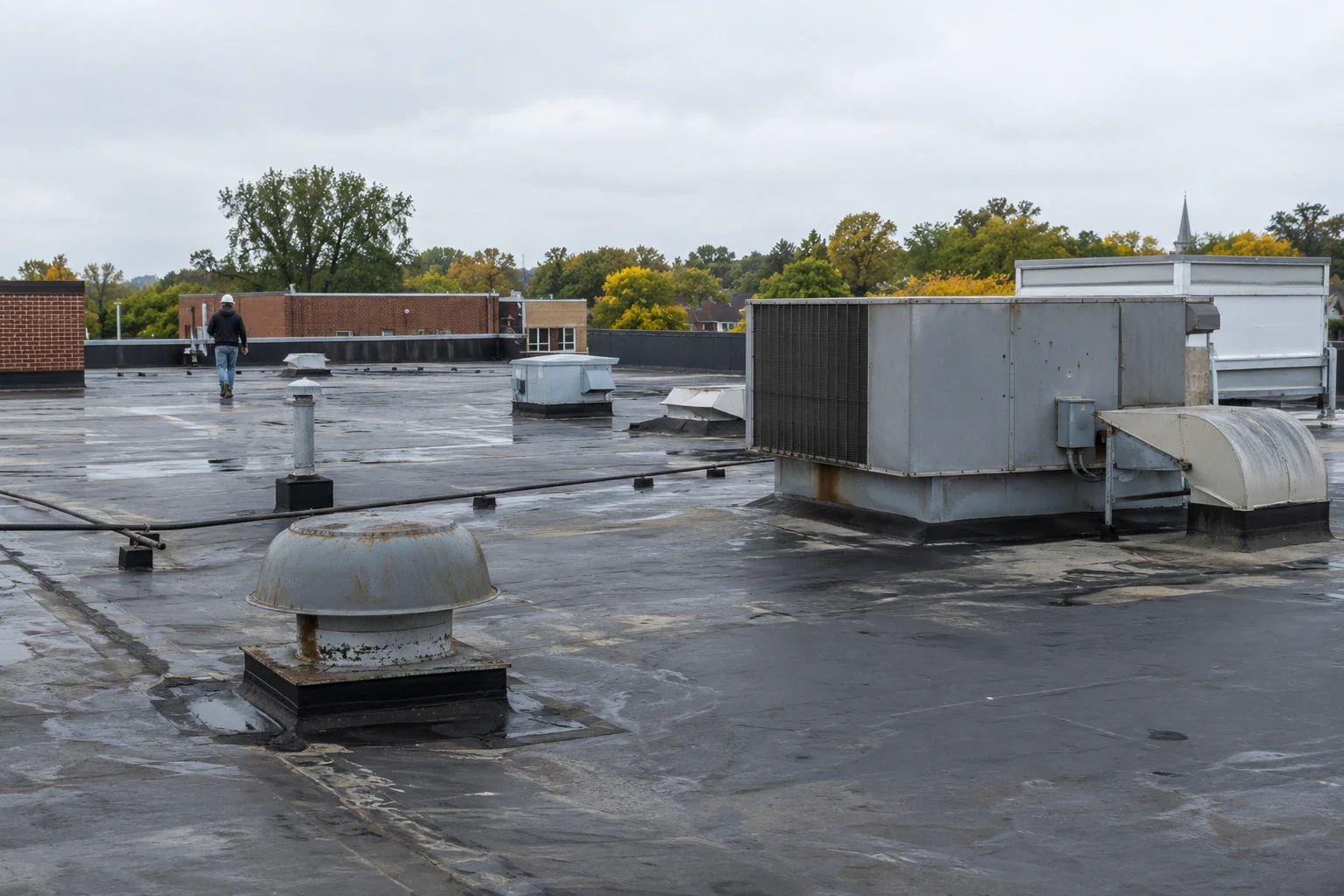
On a broad roof, water can move well beyond the ceiling mark that starts a leak call. We inspect the roof field, seams, curb flashings and wall transitions, then check strainers, scuppers and the route to each drain. Debris, a displaced termination or a low area can change how runoff reaches the reported location. We photograph the surface and note any standing water without treating one observation as proof of a concealed defect.
Edgerton's industrial and distribution context does not establish a roof slope or membrane type. We identify both at the property and record the surrounding conditions. Where a drain is blocked, we separate cleaning from membrane repair. Where a seam or penetration has opened, we check whether adjacent insulation is wet and whether a patch can bond to the existing surface. A drain and scupper correction may be priced beside the membrane work when each scope has a distinct purpose.
Separate surface evidence from concealed layers
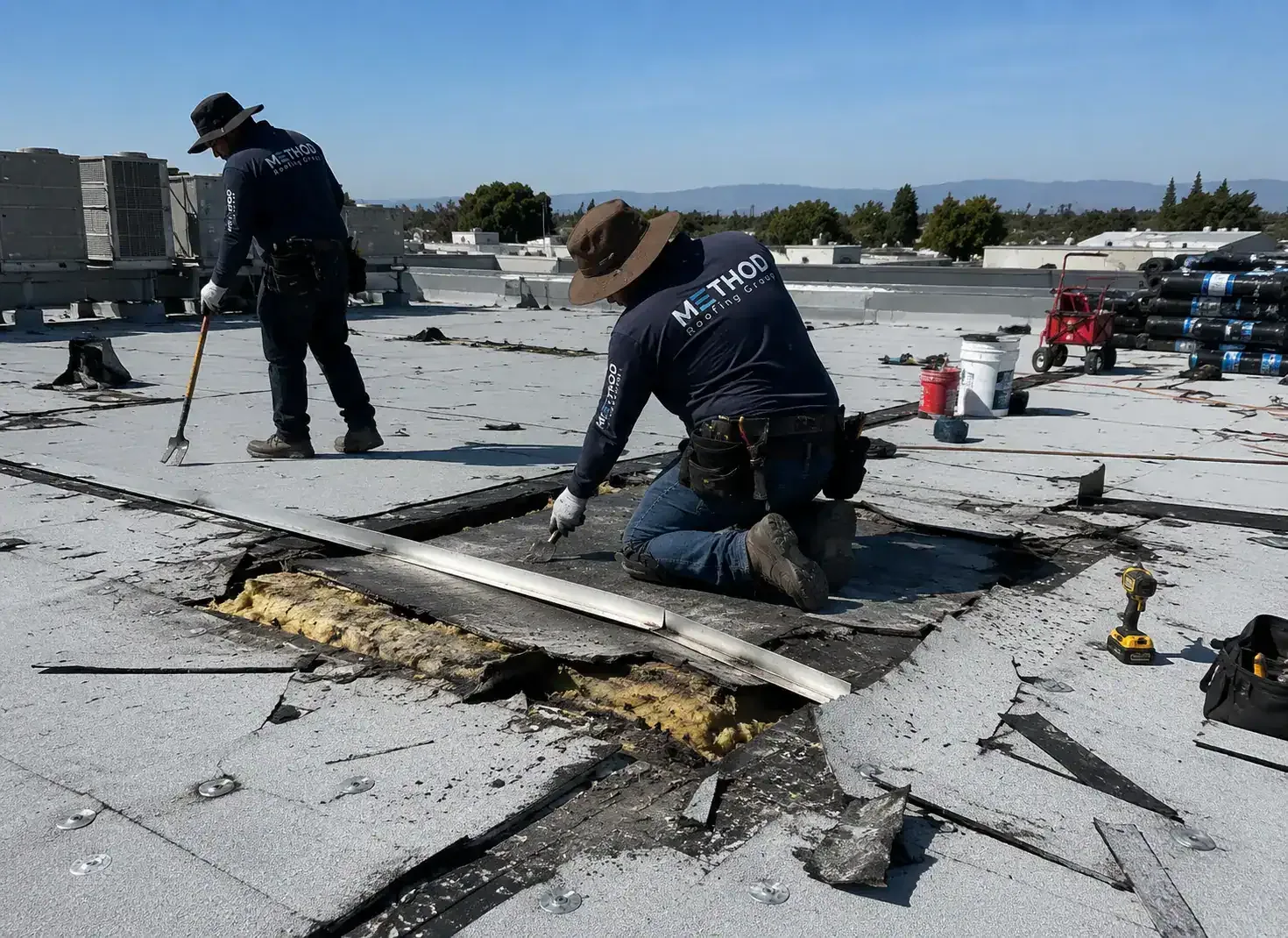
A visual walk tells us what can be seen and where access stops. We record the assembly, seam condition, edge metal and penetrations, then compare the interior report with likely water paths. If the roof surface shows a puncture but the ceiling stain is distant, we trace the deck slope and check transitions before selecting the repair footprint. When insulation or deck condition needs confirmation, we request an approved test opening and state how that opening will close.
Our written report uses roof locations the manager can find again. Photos show the defect beside a reference point, and a sketch marks the inspected area. We state whether the repair is isolated or whether more examination is needed. If a broader budgeting decision follows, a roof condition report can organize observed conditions without turning a visible surface into an unsupported forecast about hidden layers. The owner sees what is known, what remains open and which approval settles it.
Select a detail the roof can accept
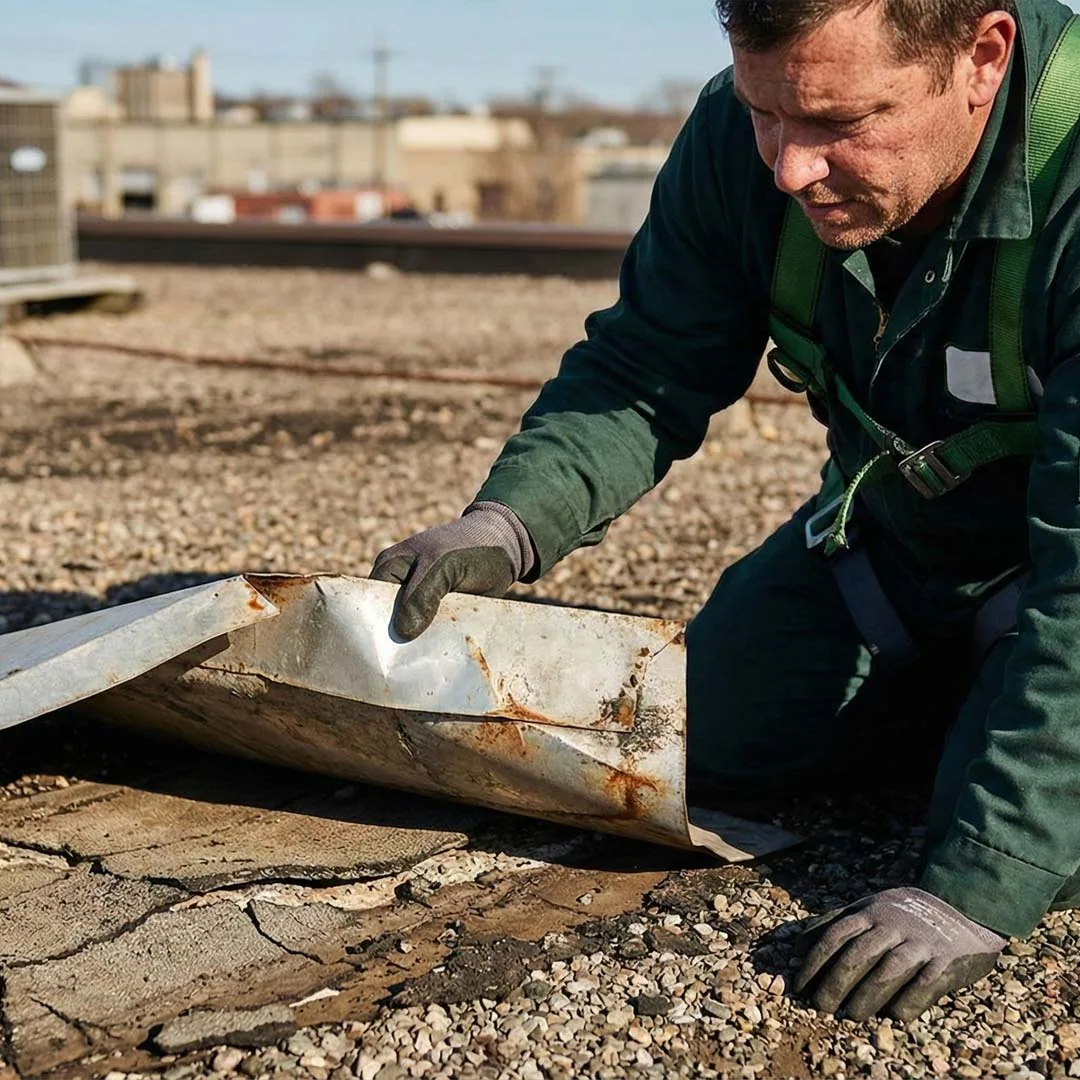
We identify TPO, PVC, EPDM, modified bitumen, built-up or metal before choosing a repair material. Surface chemistry, attachment and seam construction affect what can bond. A patch over a weak substrate can move with the damaged area. A coating can be appropriate only where adhesion and moisture checks support it. We test the proposed detail against the existing assembly and include the necessary preparation in the scope.
Regional Kansas City winter and summer conditions affect material timing. January station normals include monthly snowfall, while regional July records include warm conditions and measurable rain. These are Kansas City climate references, not an Edgerton forecast. The product requirement and the actual shift temperature decide whether adhesive or coating work can proceed. If rain interrupts an open section, we close the tie-in and document protection before leaving the roof. A compatible EPDM repair detail is selected only after the membrane is confirmed.
Compare the smallest workable scope
A local repair works when the defect is defined and nearby materials remain sound. We probe the surrounding area where access allows and record whether moisture extends past the opening. A repair estimate names the patch boundary, prep work and any drain or flashing correction that belongs with it. Repeated leaks in separate areas, widespread moisture or seam movement may justify a larger removal scope. The owner can compare those alternatives because the inspection records the condition behind each one.
A recover adds a new layer and changes detail height. Before pricing it, we review existing layers, attachment, moisture, edge metal, drains and curb transitions. If the perimeter cannot be raised cleanly, or the base is not suitable, replacement may be a more direct option. A recover scope and a replacement scope should carry the same access and freight assumptions. That keeps an apparent schedule benefit from masking a roof condition or delivery requirement that still needs resolution.
Record the shift and the final tie-in
At the end of each shift, we identify what opened, what was completed and how the remaining edge was protected. The manager receives photos of the repaired seam, flashing or drain and a note showing its position on the roof. If an operating route forced a change, the daily record states which area moved and who approved the adjustment. That detail makes the next crew handoff easier to follow.
Edgerton, Gardner and De Soto each sit within the regional distribution network, but no two loading plans are interchangeable. A Gardner property has its own route and roof access. A De Soto building uses the approach confirmed with its manager. In Edgerton, the closeout ties the repair footprint to the freight schedule, material, weather protection and follow-up item for this property.
Commercial Roofing Questions
How do you keep roof material clear of freight lanes?
We confirm the active dock and drive plan with the property contact, then select a staging area and delivery window outside the required route. The lift position, pedestrian boundary and change contact go into the estimate before material is ordered.
Can a large roof be repaired in sections?
Yes, when the assembly and weather plan allow each section to close safely. We set the daily opening limit, identify the tie-in and protect the next area before shifting. A moisture finding that spreads beyond the section may change the planned boundary.
Does standing water prove the membrane has failed?
No. It directs the inspection toward slope, drains, strainers and nearby details. We record where water sits and whether the drain path is clear, then test the membrane and transitions for an actual opening or separation.
What is needed before a recover is priced?
We check existing layers, attachment, moisture, roof edge height and the fit around drains and curbs. Those conditions determine whether a new layer can be installed without leaving unresolved details. The estimate states any test or correction needed first.
What should the manager receive at closeout?
The closeout identifies repaired areas, material, photos, daily protection and any follow-up action. It also notes changes to the work window or staging plan so the owner has a clear record of what happened on the roof.
Related Roofing Work
Set the loading and roof walk
Schedule an Edgerton roof inspection to confirm freight access, drainage findings and the daily closure the facility can support.