Commercial Roofing in Lenexa, KS
Home / Service Areas / Lenexa
Get a Free Roof Assessment - Call 555-555-5555
What Property Owners Should Know
Office and industrial roof work in Lenexa must fit the building operation and the route used to reach the work area. A leak above equipment or a production space needs a defined opening limit, a protection plan and a closure check before the crew starts. We inspect the membrane, seams, curbs and drains, then connect the visible roof condition with the reported water entry. The manager receives a written repair footprint and a work sequence tied to the actual assembly.
Lenexa sits in southwest Johnson County. The city identifies major transportation routes as an important factor in office and industrial development, and lists I-35, I-435, I-70, K-10, K-7 and U.S. 69 as regional connections. Those routes provide context for commercial activity, but they do not establish a specific property’s access or roof type. We verify both on site. When water recurs or a repair boundary is in doubt, book a commercial roof inspection in Lenexa.
Identify the repair surface
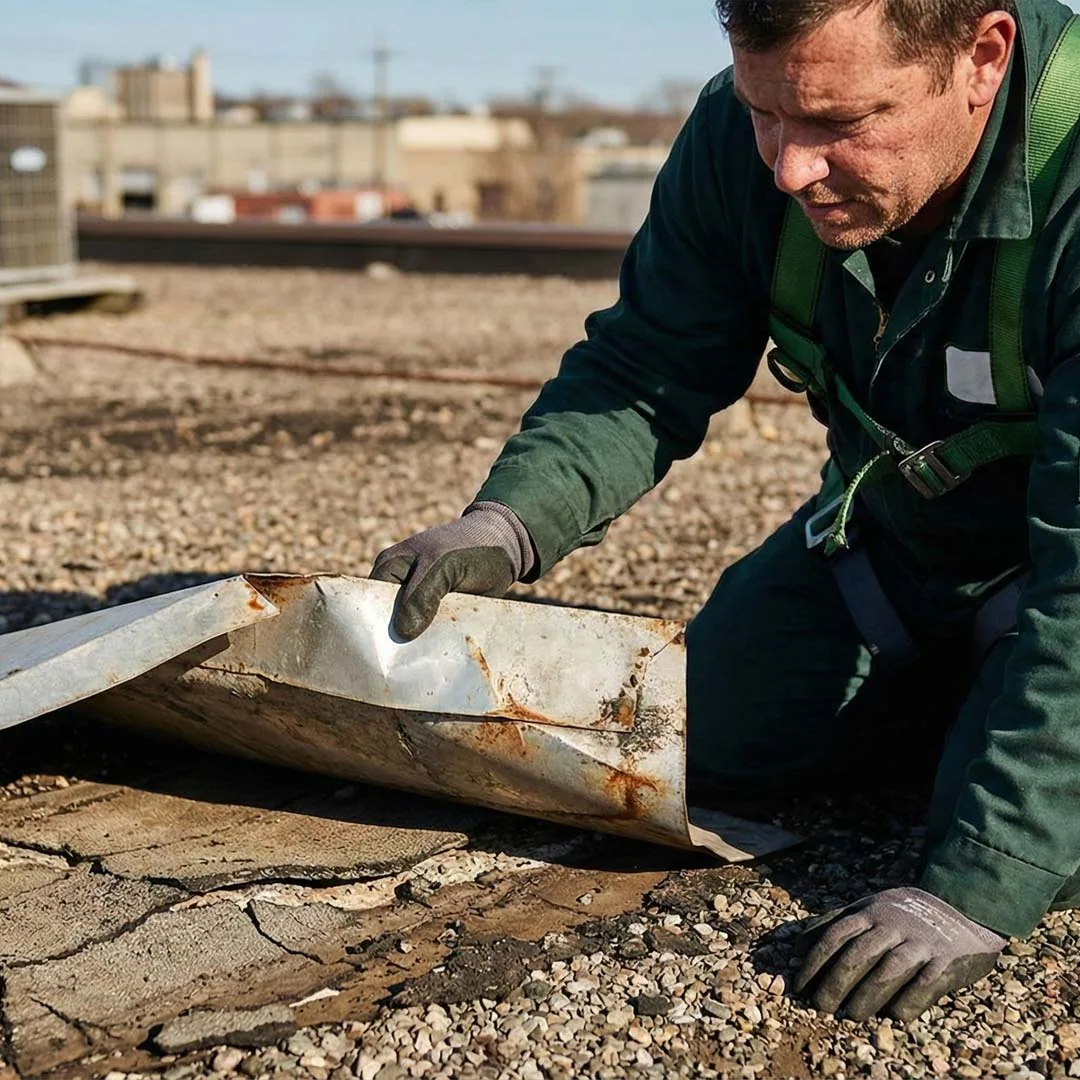
Before selecting a material, we identify the installed system and check how it meets walls, curbs, drains and roof edges. A roof may have several layers or prior repairs that change what can be tied into. We inspect representative seams, penetrations and transitions, then compare the findings with available plans or maintenance records. Photos show the roof condition and where the repair would meet existing material.
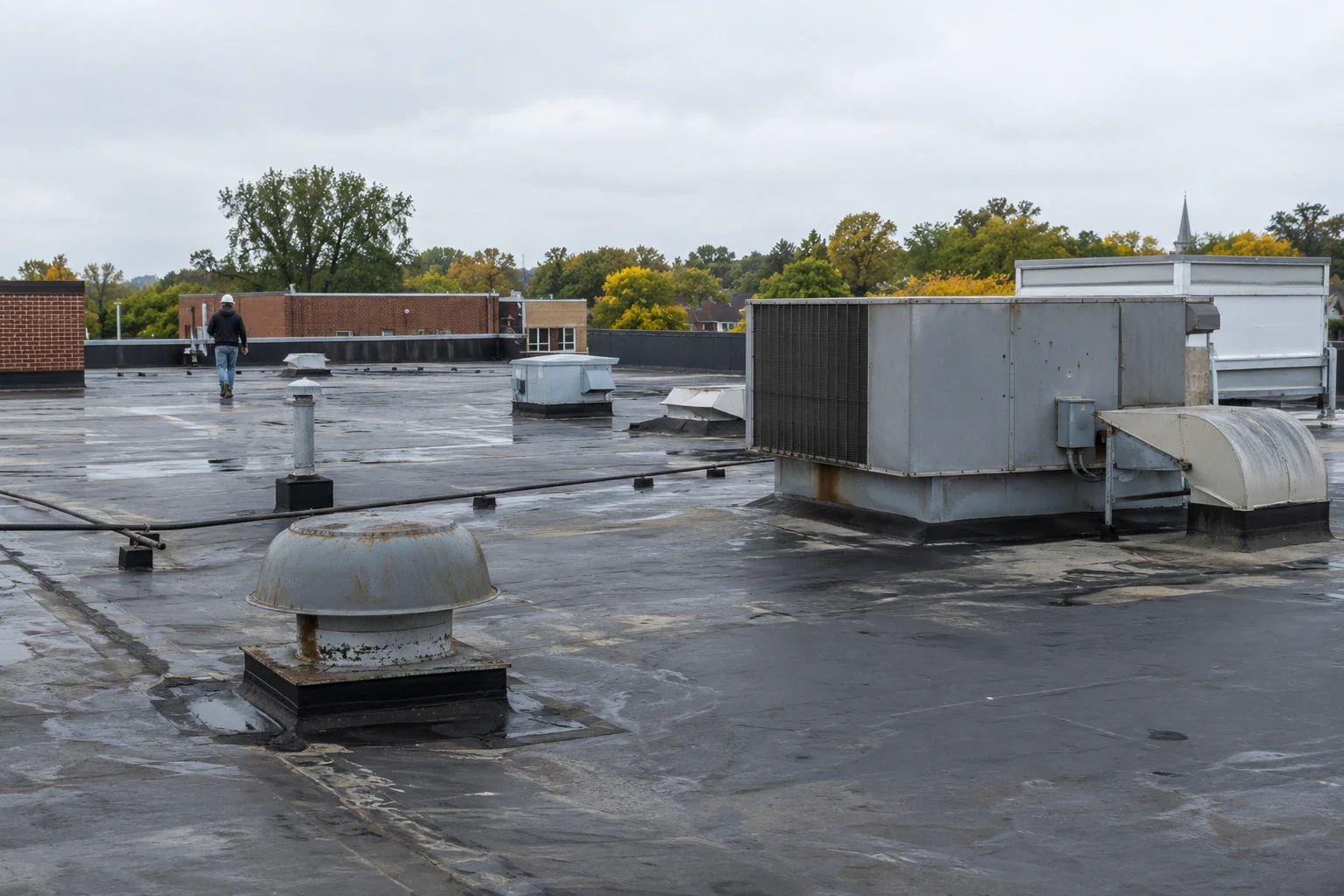
Lenexa’s office and industrial development is connected to several major transportation routes, but building use alone does not tell us whether the roof is membrane, metal or another assembly. The inspection does. A thermoplastic seam may need cleaning and welding; an EPDM or modified bitumen detail uses a different repair method. If the assembly has been altered over time, we note the transition rather than assume one system across the entire roof. The metal retrofit option should only be considered after checking the existing roof, drainage and structure.
Coordinate the work window
Industrial use can make roof access a scheduling question as much as a repair question. We ask which equipment must stay online, whether the work zone is above a sensitive process and how material can reach the roof without crossing restricted operations. For offices, we confirm entry procedures, noise constraints and areas that need protection below. These details set the opening limit and daily closure steps.
Access from I-35, I-435, I-70, K-10, K-7 or U.S. 69 may support regional travel, but a property still controls its own gate, loading area, roof hatch and contractor approvals. The manager should confirm those requirements before mobilization. We identify a staging point, define the route to the roof and record who can authorize a scope change. A reroof on an occupied building needs the same clear sequence, with each opened section closed before crews leave for the day.
Separate water entry from damage
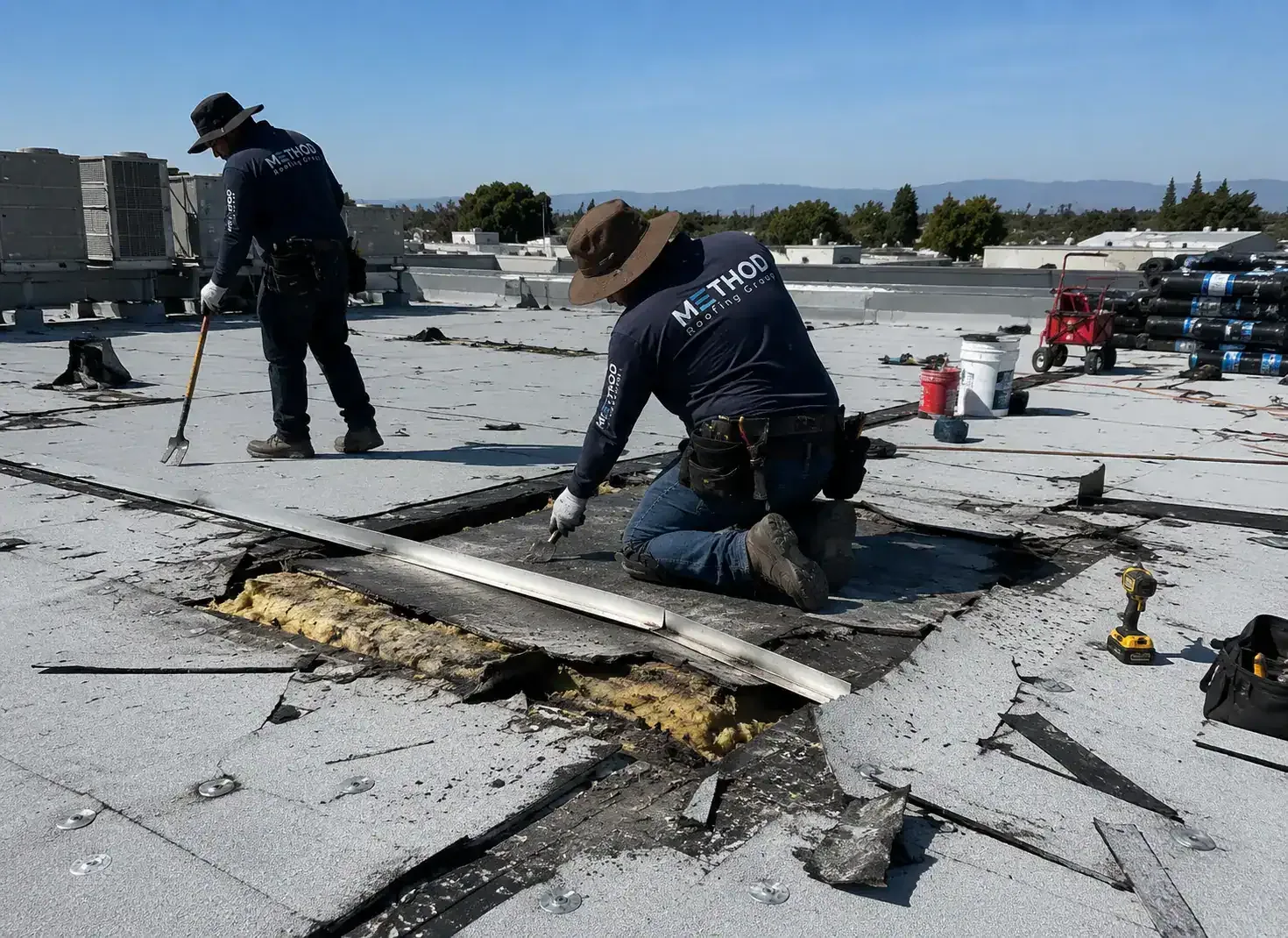
A ceiling stain marks where water arrived, not necessarily where it crossed the roof. We inspect the nearby membrane, penetrations and drainage path, then look for a route through the assembly. If water reached insulation or deck material, the visible opening may understate the repair area. We note what is wet, what appears dry and where additional testing would change the removal scope.
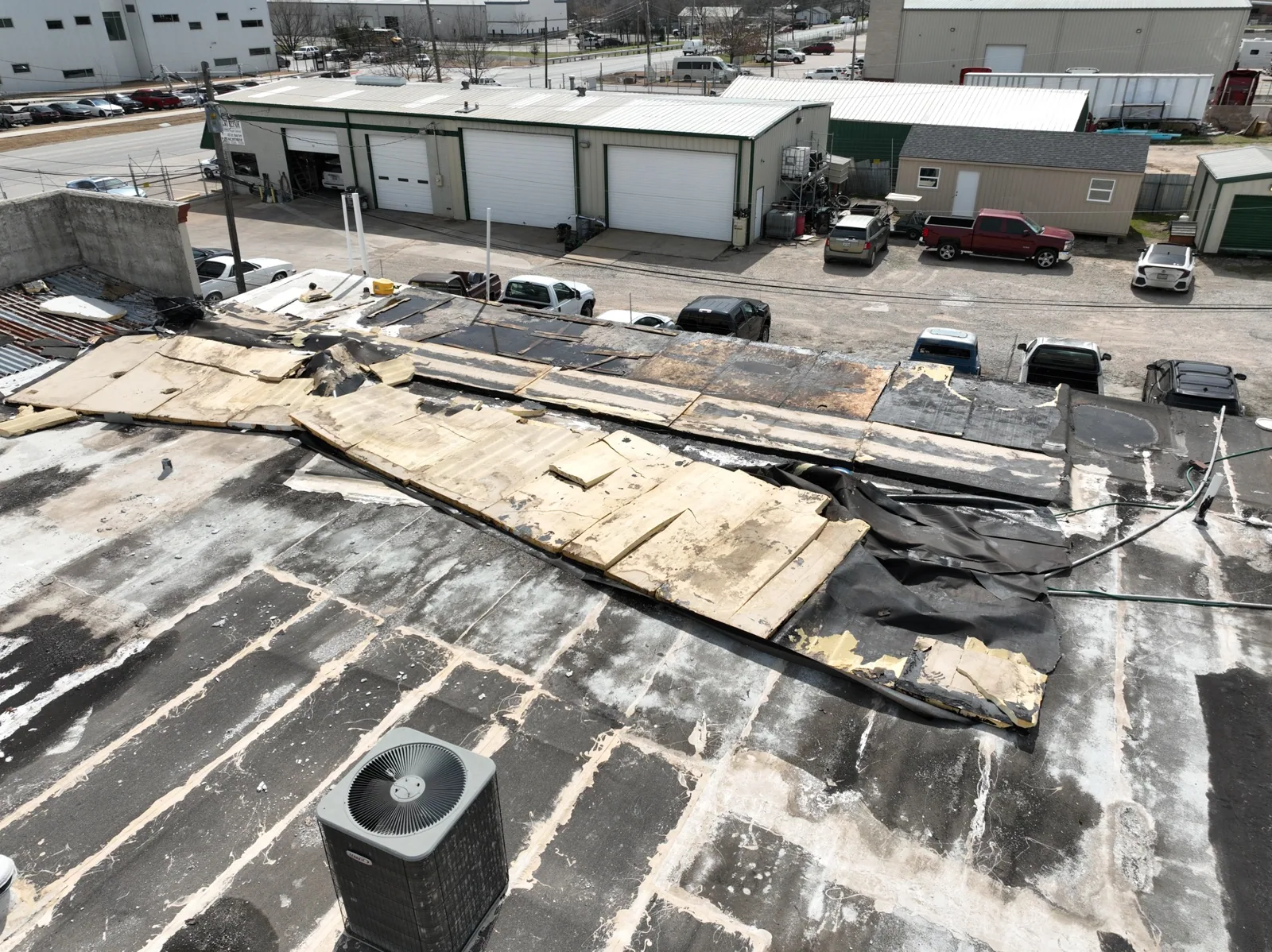
Lenexa is named in the National Weather Service record of a June 2022 EF-1 tornado that traveled from Lenexa through Overland Park, with estimated peak winds of 100 mph. That history does not establish damage to an individual building. We inspect current conditions for displaced edge metal, loose flashing, punctures or new water entry. When a storm file is involved, the report distinguishes event information from visible roof findings. Wind-damage repair starts with the present attachment and flashing conditions, followed by a repair that matches the system.
Set limits before removal
A localized repair may be appropriate where the surrounding membrane and substrate are sound. When moisture extends beneath the surface, removal needs to reach dry, stable material so the new tie-in has a reliable base. We state the area to be opened, the material needed and the details included in the repair. If hidden damage could expand the work, the estimate explains how that finding will be reported before additional removal.
For broad deterioration, compare repeated repair, sectional replacement and full replacement using the roof record and inspection findings. Cost and schedule depend on removal depth, material compatibility, access, insulation and the work window. A recover can reduce removal only when the existing layers, moisture condition, attachment and drainage support another system. It cannot make wet material sound. A condition report can organize the roof areas, photos and priorities for capital planning. We keep the report tied to observable conditions and note what still needs confirmation.
Protect the opening
For January roof work, Kansas City’s station record has early-month highs near 38 or 39 degrees and overnight lows around 19 to 21. Monthly snowfall averages 4.9 inches. Regional July normals reach daily highs of 87 to 89 degrees, with 4.58 inches of normal monthly precipitation. Those figures are regional context rather than a Lenexa day forecast. They show why neither cold nor summer heat removes the need to plan for moisture and temperature.
We select an installation window that suits the system and the forecast. If rain threatens an exposed area, the plan needs a temporary cover and a clear closure check. Cold weather can change how adhesives or coatings are applied. High heat can affect safe scheduling and material handling. The crew opens only the area that can be protected and closed in the planned window. If conditions shift, the manager gets a revised sequence before work resumes. Those steps reduce avoidable exposure while preserving a clear record of what was installed.
Make the next decision clear
Share the leak location, repair history, roof access restrictions and any operation that must continue during work. We inspect the affected area, document the roof details and identify whether the evidence supports a targeted repair or a broader scope. If additional testing is needed to establish wet-area limits, we explain what it will answer before proceeding. The property team can then compare work options with a defined starting point.
Lenexa’s route network supports a broad mix of office and industrial development. Nearby Olathe and Shawnee share regional ties, but every roof still needs its own condition record. We coordinate the material route, staging and approvals with the property manager and state the opening and daily closure requirements. A repair should leave the roof watertight at the end of each work period and the manager with a report of completed work and any open condition. Schedule the inspection before an expanding leak or repeated repair consumes another work window.
Commercial Roofing Questions
Can you plan roof work around industrial operations?
Yes. We identify equipment, processes and access limits that affect the work zone. The sequence states what can remain active, what must be protected and how the roof will close at the end of each day.
Do Lenexa transportation routes determine when crews can access a building?
They help describe regional connections. Property access still depends on the site rules, gate or loading approval, roof access and staging arrangement. We confirm those details before scheduling material delivery.
What did the 2022 tornado mean for roofs in Lenexa?
The NWS record documents the tornado route through Lenexa and Overland Park. It does not prove damage at a property. We inspect current roof conditions and document displaced materials, flashing changes or water entry that are actually present.
When is a recover suitable for a Lenexa roof?
Only after checking existing layers, moisture, attachment and drainage. If insulation is wet or the assembly cannot support another layer, a recover does not solve the underlying condition. We compare it with repair and replacement after inspection.
What should a condition report include?
It should map observed roof areas, photos, material condition, repair priorities and known limits. We also state what could not be confirmed without testing or opening so the manager can set the next authorization.
Related Roofing Work
Inspect the Lenexa roof
Schedule a roof inspection in Lenexa. We will document the assembly, identify the repair footprint and coordinate access and closure around the building operation.